HRID 177600als Produkt
Daten werden ergänzt – lade die Seite später neu, um den aktuellen Stand zu sehen

25067-30-5C=C(C#N)C(=O)OCCFGBJXOREULPLGL-UHFFFAOYSA-NEthyl cyanoacrylate is a chemical compound of cyanide. It is used as the main component of certain cyanoacrylate glues, such as the well known Super Glue and Krazy Glue. (L605)
25067-30-5、7085-85-0DTXSID1025279CHEMBL156492082.78 °C (closed cup)
75 °C c.c.
55 °C at 3 mm Hg
BP: 54-56 °C (0.21-0.40 kPa)
54-56 °C
54-56 °C
When heated to decomposition it emits vapors of /Nitrogen oxides/.
Decomposition: degradation products include formaldehyde; thermal decomposition products may include highly toxic fumes of hydrogen cyanide and toxic oxides of carbon and nitrogen
Sicherheitsangaben dienen nur zur Orientierung und ersetzen weder das Sicherheitsdatenblatt (SDB) des Lieferanten noch geltende Vorschriften oder eine fachliche Bewertung.
Warning
H315: Causes skin irritation [Warning Skin corrosion/irritation]
P261, P264, P264+P265, P271, P280, P302+P352, P304+P340, P305+P351+P338, P319, P321, P332+P317, P337+P317, P362+P364, P403+P233, P405, and P501 (click each P-code to see the statement)
Warning
H315 (100%): Causes skin irritation [Warning Skin corrosion/irritation]
P261, P264, P264+P265, P271, P280, P302+P352, P304+P340, P305+P351+P338, P319, P321, P332+P317, P337+P317, P362+P364, P403+P233, P405, and P501 (click each P-code to see the statement)
Chemical: 2-Propenoic acid, 2-cyano-, ethyl ester
2-Propenoic acid, 2-cyano-, ethyl ester is listed on the EPA's Chemical Data Reporting (CDR) system. Manufacturers and importers of 2-Propenoic acid, 2-cyano-, ethyl ester are required to report information about their production and use of this chemical to the EPA under the Toxic Substances Control Act (TSCA). (40 eCFR Part 711)
REACH registered substance: Ethyl 2-cyanoacrylate (EC: 230-391-5)
Ethyl cyanoacrylate: Does not have an individual approval but may be used under an appropriate group standard
The New Jersey Worker and Community Right to Know Act requires public and private employers to provide information about hazardous substances at their workplaces. (N.J.S.A. 34:5A-1 et. seq.)
WHO; Concise International Chemical Assessment Document 36, Methyl Cyanoacrylate and Ethyl Cyanoacrylate (2001). CICADs are concise documents that provide summaries of the relevant scientific information concerning the potential effects of chemicals upon human health and/or the environment. The primary objective of CICADs is characterization of hazard and dose-response from exposure to a chemical.[Available from, as of February 15, 2011: http://www.inchem.org/documents/cicads/cicads/cicad36.htm]
Section 8(a) of TSCA requires manufacturers of this chemical substance to report preliminary assessment information concerned with production, exposure, and use to EPA as cited in the preamble in 51 FR 41329. Effective date 1/26/94; Reporting date: 3/28/94.
Pursuant to section 8(d) of TSCA, EPA promulgated a model Health and Safety Data Reporting Rule. The section 8(d) model rule requires manufacturers, importers, and processors of listed chemical substances and mixtures to submit to EPA copies and lists of unpublished health and safety studies. 2-Propenoic acid, 2-cyano-, ethyl ester is included on this list. Effective date: 1/26/94; Sunset date: 12/19/95.
Skin Irrit. 2 (100%)
Eye irritation - category 2
Flammable liquids - Category 4
Flammable liquids - Category 4
Flammable liquids - Category 4
Flammable agents - 2nd degree, Reactive agents - 2nd degree
Fresh air, rest. Refer for medical attention.
Refer for medical attention .
First rinse with plenty of water for several minutes (remove contact lenses if easily possible), then refer for medical attention.
Refer for medical attention .
Personal precautions: Use personal protective equipment. Avoid breathing vapors, mist or gas. Ensure adequate ventilation. Environmental precautions: Do not let product enter drains. Methods and materials for containment and cleaning up: Soak up with inert absorbent material and dispose of as hazardous waste. Keep in suitable, closed containers for disposal.
SRP: The most favorable course of action is to use an alternative chemical product with less inherent propensity for occupational harm/injury/toxicity or environmental contamination. Recycle any unused portion of the material for its approved use or return it to the manufacturer or supplier. Ultimate disposal of the chemical must consider: the material's impact on air quality; potential migration in soil or water; effects on animal and plant life; and conformance with environmental and public health regulations.
Handle in accordance with good industrial hygiene and safety practice. Wash hands before breaks and at the end of workday.
Avoid contact with skin and eyes. Avoid inhalation of vapor or mist. Keep away from sources of ignition - No smoking. Take measures to prevent the build up of electrostatic charge.
Antidotes to cyanide poisoning include hydroxocobalamin and sodium nitrite, which release the cyanide from the cytochrome system, and rhodanase, which is an enzyme occurring naturally in mammals that combines serum cyanide with thiosulfate, producing comparatively harmless thiocyanate. Oxygen therapy can also be administered. (L97)
Exposure to high levels of cyanide for a short time harms the brain and heart and can even cause coma, seizures, apnea, cardiac arrest and death. Chronic inhalation of cyanide causes breathing difficulties, chest pain, vomiting, blood changes, headaches, and enlargement of the thyroid gland. Skin contact with cyanide salts can irritate and produce sores. (L96, L97)
TERRESTRIAL FATE: Based on a classification scheme(1), an estimated Koc value of 6.8(SRC), determined from a structure estimation method(2), indicates that ethyl cyanoacrylate is expected to have very high mobility in soil(SRC). However, movement of ethyl cyanoacrylate through soil will be hindered by its rapid polymerization as it comes into contact with moisture or other weakly basic substances(3,4). Since ethyl cyanoacrylate polymerizes rapidly on contact with moisture, volatilization from moist soil surfaces is not a relevant environmental process for this substance. Ethyl cyanoacrylate is not expected to volatilize from dry soil surfaces(SRC) based upon a vapor pressure of 0.31 mm Hg at 20 °C(3).
AQUATIC FATE: Based on a classification scheme(1), an estimated Koc value of 6.8(SRC), determined from a structure estimation method(2), indicates that ethyl cyanoacrylate is not expected to adsorb to suspended solids and sediment(SRC). However, the 2-cyanoacrylate esters polymerize rapidly on contact with moisture or other weakly basic substances(3,4). Therefore, environmental processes such as biodegradation, volatilization from water surfaces and bioconcentration in aquatic organisms are not relevant for this substance(SRC).
ATMOSPHERIC FATE: According to a model of gas/particle partitioning of semivolatile organic compounds in the atmosphere(1), ethyl cyanoacrylate, which has a vapor pressure of 0.31 mm Hg at 20 °C(2), is expected to exist solely as a vapor in the ambient atmosphere. Vapor-phase ethyl cyanoacrylate is degraded in the atmosphere by reaction with photochemically-produced hydroxyl radicals(SRC); the half-life for this reaction in air is estimated to be 3.5 days(SRC), calculated from its rate constant of 4.5X10⁻¹² cu cm/molecule-sec at 25 °C(SRC) that was derived using a structure estimation method(3). Ethyl cyanoacrylate contains chromophores that absorb strongly at wavelengths >290 nm, and therefore may be susceptible to direct photolysis by sunlight(4).
The substance can be absorbed into the body by inhalation of its vapour.
Oral (L96) ; inhalation (L96) ; dermal (L96)
Organic nitriles decompose into cyanide ions both in vivo and in vitro. Consequently the primary mechanism of toxicity for organic nitriles is their production of toxic cyanide ions or hydrogen cyanide. Cyanide is an inhibitor of cytochrome c oxidase in the fourth complex of the electron transport chain (found in the membrane of the mitochondria of eukaryotic cells). It complexes with the ferric iron atom in this enzyme. The binding of cyanide to this cytochrome prevents transport of electrons from cytochrome c oxidase to oxygen. As a result, the electron transport chain is disrupted and the cell can no longer aerobically produce ATP for energy. Tissues that mainly depend on aerobic respiration, such as the central nervous system and the heart, are particularly affected. Cyanide is also known produce some of its toxic effects by binding to catalase, glutathione peroxidase, methemoglobin, hydroxocobalamin, phosphatase, tyrosinase, ascorbic acid oxidase, xanthine oxidase, succinic dehydrogenase, and Cu/Zn superoxide dismutase. Cyanide binds to the ferric ion of methemoglobin to form inactive cyanmethemoglobin. (L97)
Redness. Pain.
Redness. Pain.
Cyanide poisoning is identified by rapid, deep breathing and shortness of breath, general weakness, giddiness, headaches, vertigo, confusion, convulsions/seizures and eventually loss of consciousness. (L96, L97)
Using a structure estimation method based on molecular connectivity indices(1), the Koc of ethyl cyanoacrylate can be estimated to be 6.8(SRC). According to a classification scheme(2), this estimated Koc value suggests that ethyl cyanoacrylate is expected to have very high mobility in soil. However, movement of ethyl cyanoacrylate through soil will be hindered by its rapid polymerization as it comes into contact with moisture or other weakly basic substances(3,4).
/HUMAN EXPOSURE STUDIES/ 27 patients (26 women and 1 man), all in contact with artificial nails, were tested for acrylic compounds, known to be present in nail cosmetics. The patch test results obtained in these patients demonstrated that 2-hydroxyethyl methacrylate and ethyl cyanoacrylate were the only 2 allergens needed to diagnose contact allergy to acrylic-containing nail cosmetics, except for 1 patient who reacted only to her nail preparation...
/CASE REPORTS/ ... A young hairdresser ... developed an occupational allergic contact dermatitis to 2 "instant glues" used to attach false hair. The eczematous eruption involved the fingers and face slightly but mainly the eyelids. Patch test reactions were strongly positive to ethyl cyanoacrylate adhesives.
/CASE REPORTS/ An apprentice cobbler with an occupational allergic contact dermatitis from an ethyl cyanoacrylate glue, in which the major monomer was shown to be the sensitizer, is reported. Initial patch testing with the cyanoacrylate glue dissolved in acetone with the Finn Chamber (aluminium) technique yielded false-negative reactions. Positive test reactions were obtained with the same preparations using Van der Bend chambers. With petrolatum as vehicle for the glue, there was no difference between Finn Chamber technique and Van der Bend chamber technique. The role of aluminium in the false-negative reactions is discussed.
/CASE REPORTS/ ... An individual ... showed a skin reaction associated with occupational exposure to an ethyl cyanoacrylate (ECA)-based adhesive (90% ECA), initially on the backs of hands but later progressing to all of the hands, lower arms, and abdomen. The only positive skin reaction in a patch testing series was to ECA. Negative reactions were reported for a group of 20 control subjects patch-tested with 100% adhesive.
For more Human Toxicity Excerpts (Complete) data for Ethyl cyanoacrylate (29 total), please visit the HSDB record page.
Section 8(a) of TSCA requires manufacturers of this chemical substance to report preliminary assessment information concerned with production, exposure, and use to EPA as cited in the preamble in 51 FR 41329. Effective date 1/26/94; Reporting date: 3/28/94.
Pursuant to section 8(d) of TSCA, EPA promulgated a model Health and Safety Data Reporting Rule. The section 8(d) model rule requires manufacturers, importers, and processors of listed chemical substances and mixtures to submit to EPA copies and lists of unpublished health and safety studies. 2-Propenoic acid, 2-cyano-, ethyl ester is included on this list. Effective date: 1/26/94; Sunset date: 12/19/95.
ECA is ... hydrolyzed to yield formaldehyde and alkyl cyanoacetate. ... The cyanoacetate may be further degraded to yield calcium malonate, and the cyano group converted to cyanide and excreted as thiocyanate.
Organic nitriles are converted into cyanide ions through the action of cytochrome P450 enzymes in the liver. Cyanide is rapidly absorbed and distributed throughout the body. Cyanide is mainly metabolized into thiocyanate by either rhodanese or 3-mercaptopyruvate sulfur transferase. Cyanide metabolites are excreted in the urine. (L96)
Agents acting to arrest the flow of blood. Absorbable hemostatics arrest bleeding either by the formation of an artificial clot or by providing a mechanical matrix that facilitates clotting when applied directly to the bleeding surface. These agents function more at the capillary level and are not effective at stemming arterial or venous bleeding under any significant intravascular pressure.
Used in glues in the electronic industry and wound sealants in medical practice; [Marks, p. 179]
Working with Glues and Adhesives [Category: Other]
Woodworking [Category: Hobbies]
ECA is used as an adhesive to bond a variety of materials, e.g., glass, metals, plastic, rubber, and biological tissue.
In adhesives, manufacture of plastics, electronics, scientific instruments, jewelry, sports equipment; in cable joining, manicuring, dentistry, mortuaries, fingerprint development. Polymer nanoparticles as pharmaceutic aid for controlled release drug delivery.
Ethyl cyanoacrylate is used as the main component of certain cyanoacrylate glues, such as the well known Super Glue and Krazy Glue. (L605)
2023: 1,000,000 - <2,500,000 lb
2-Propenoic acid, 2-cyano-, ethyl ester is listed as a High Production Volume (HPV) chemical (65FR81686). Chemicals listed as HPV were produced in or imported into the U.S. in >1 million pounds in 1990 and/or 1994. The HPV list is based on the 1990 Inventory Update Rule. (IUR) (40 CFR part 710 subpart B; 51FR21438).
Production volumes for non-confidential chemicals reported under the Inventory Update Rule. [Table#7745]
Production volume for non-confidential chemicals reported under the 2006 Inventory Update Rule. Chemical: 2-Propenoic acid, 2-cyano-, ethyl ester. Aggregated National Production Volume: 500,000 to < 1 million lbs.
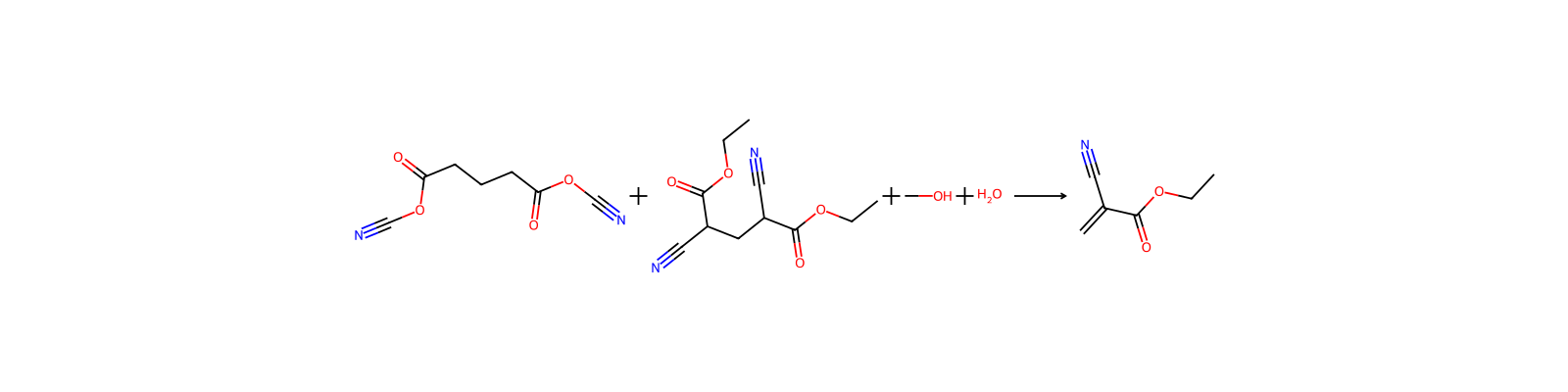
The important step in most of the published syntheses is the classical Knoevenagel reaction using formaldehyde and a cyanoacetic ester. In this first step oligomeric cyanoacrylates, water, and other byproducts are formed. The reaction can be catalyzed by bases (e.g., amines), alkali metal tetraborates, metal carbonyls, or phase-transfer catalysts. The raw condensation product from the first reaction is depolymerized thermally (either continuously or discontinuously) and purified by distillation, chromatography on alumina or silica gel, crystallization in polyethylene columns, or treatment with zinc chloride. Alternatively, 2-cyanoacrylates can be manufactured by the ethoxycarbonylation of cyanoacetylene in the presence of nickel carbonyl. /2-Cyanoacrylates/
Adhesive Manufacturing
2-Propenoic acid, 2-cyano-, ethyl ester: ACTIVE
Prepn: Ardis US Patent 2,467,927 (1949 to B.F. Goodrich); McKeever US Patent 2,912,454 (1959 to Rohm & Haas)
Main constituent of super glue
VerwendenIn adhesives; in manufacture of plastics, electronics, scientific instruments, jewelry, sports equip; in cable joining, manicuring, dentistry, mortuaries, fingerprint development. Polymer nanoparticles as pharmaceutic aid for controlled release drug delivery.