
HRID 949055als Produkt
Daten werden ergänzt – lade die Seite später neu, um den aktuellen Stand zu sehen
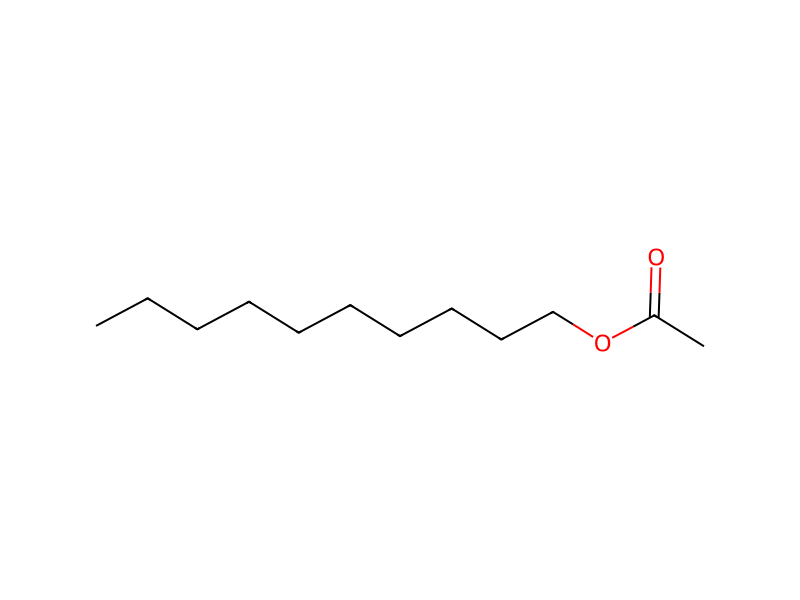
112-17-4CCCCCCCCCCOC(C)=ONUPSHWCALHZGOV-UHFFFAOYSA-NDecyl acetate is a carboxylic ester.
112-17-4DTXSID8047189CHEMBL2228458CHEBI:179750insoluble in water
1 ml in 2 ml 80% alcohol (in ethanol)
126.00 to 127.00 °C. @ 20.00 mm Hg
272 °C
Sicherheitsangaben dienen nur zur Orientierung und ersetzen weder das Sicherheitsdatenblatt (SDB) des Lieferanten noch geltende Vorschriften oder eine fachliche Bewertung.
This chemical does not meet GHS hazard criteria for 98.2% (1547 of 1576) of all reports.
Not Classified
Aggregated GHS information provided per 1576 reports by companies from 4 notifications to the ECHA C&L Inventory.
Chemical: Acetic acid, decyl ester
REACH registered substance: Decyl acetate (EC: 203-942-2)
Decyl acetate: Does not have an individual approval but may be used under an appropriate group standard
Fragrance Ingredients
Flavouring Agent -> FLAVOURING_AGENT -> JECFA Functional Classes
Flavoring Agents -> JECFA Flavorings Index
Flavouring Agent -> FLAVOURING_AGENT -> JECFA Functional Classes
OccurrenceReported found in orange, lemon, melon, apple, plums, citrus peel oils, grapefruit, orange, grapefruit juice, strawberry fruit, blue cheese, cognac and cardamom.
VerwendenDecyl acetate finds little use in perfume compositions as a modifier for Linalyl acetate and generally as a ‘“fresh’” note in delicate florals (Muguet, etc. ) or in aldehydic top note compositions. It blends excellently with Dodecanal (Aldehyde C-1 2, Laurie). Finds some use in flavour compositions, mainly for imitation Apple, Berry, Honey, Orange, Peach, Plum, etc. and also in Rum flavours. The concentration of Decyl acetate in the functional product amounts usually to traces only.
synthetischeBy direct acetylation on n-decanol with acetic acid via azeotropic conditions or using acetic anhydride.
