Trimethylsilylcarbonitril
Trimethylsilyl cyanide
Daten werden ergänzt – lade die Seite später neu, um den aktuellen Stand zu sehen

Grundinformationen
- CAS
7677-24-9- Standard-SMILES
C[Si](C)(C)C#N- InChIKey
LEIMLDGFXIOXMT-UHFFFAOYSA-N- Summenformel
- C4H9NSi
- Durchschnittliche Molmasse
- 99,21 g/mol
- Monoisotopische Masse
- 99,05042582
Überblick
Trimethylsilyl cyanide is a chemical compound of cyanide. It is used in organic synthesis. (L106)
Namen und Bezeichner
- Bevorzugter Name
- Trimethylsilyl cyanide
- IUPAC
- trimethylsilylformonitrile
- Lokaler Name
- Trimethylsilylcarbonitril
- Englischer Name
- Trimethylsilyl cyanide
- Summenformel
- C4H9NSi
- Molmasse
- 99.21
Namen und Synonyme
Trimethylsilyl cyanide7677-24-9TrimethylsilanecarbonitrileSilanecarbonitrile, trimethyl-TrimethylsilylnitrileTMSCNTrimethylsilylcarbonitrileDTXSID9064766RefChem:899908DTXCID4047915231-657-3Cyanotrimethylsilane
Weitere Namen anzeigen
trimethylsilylmethanenitrileDK897TrimethylsilanecarTrimethyl cyanogen
TrimethylsilylcyanidetrimethylsilylformonitriletrimethylcyanosilaneC4H9NSiMFCD00001765trimethylsilane carbonitrileTrimethylsilylCyanide-13C,15NTMS cyanide
Datenbank-Bezeichner
- CAS
7677-24-9- PubChem CID
- 82115
- DTXSID
DTXSID9064766- UNII
- X7M2DZS7WZ
- EC Number
- 231-657-3
- Nikkaji
- J81.438E
Eigenschaften
Berechnete StruktureigenschaftenWird ergänzt
- Polarare Oberfläche (TPSA)
- 23,8 Ų
- H-Brücken-Donoren
- 0
- H-Brücken-Akzeptoren
- 1
- Frei drehbare Bindungen
- 0
- Schwere Atome
- 6
- Formalladung
- 0
- Komplexität
- 81,5
Experimentelle und physikochemische Eigenschaften
Chemical ClassesNitrogen Compounds -> Nitriles
SpringerMaterials Properties29Si nuclear magnetic resonance spectrum
Physical DescriptionColorless liquid; mp = 11-12 deg C; [MSDSonline]
Physikochemische Eigenschaften
- Schmelzpunkt
- 8 to · 8 to 11 °C (46 to 52 °F; 281 to 284 K)
- Siedepunkt
- 114 to · 114 to 117 °C (237 to 243 °F; 387 to 390 K)
- Dichte
- 0.793 g/mL · 0.793 g/mL at 20 °C
- Brechungsindex
- 1.392 · 1.392
- Flammpunkt
- 1 °C · 1 °C (34 °F; 274 K)
- storage temp.
- 2 · Inert atmosphere,2-8°C
- Löslichkeit
- Miscible with organic solvents.
- Aggregatzustand
- liquid
- Farbe
- Colorless
Sicherheit und Regulatorisches
Sicherheitsangaben dienen nur zur Orientierung und ersetzen weder das Sicherheitsdatenblatt (SDB) des Lieferanten noch geltende Vorschriften oder eine fachliche Bewertung.
GHS-Klassifizierung
GHS Classification
Danger
H225 (100%): Highly Flammable liquid and vapor [Danger Flammable liquids]
P210, P233, P240, P241, P242, P243, P260, P262, P264, P270, P271, P273, P280, P284, P301+P316, P302+P352, P303+P361+P353, P304+P340, P316, P320, P321, P330, P361+P364, P370+P378, P391, P403+P233, P403+P235, P405, and P501 (click each P-code to see the statement)
Aggregated GHS information provided per 82 reports by companies from 8 notifications to the ECHA C&L Inventory. Each notification may be associated with multiple companies.
Gefahrenhinweise
Regulatory Information
Chemical: Silanecarbonitrile, trimethyl-
Status: Active Update: 25-10-2022 https://echa.europa.eu/registration-dossier/-/registered-dossier/34122
Trimethylsilyl cyanide: HSNO Approval: HSR004750 Approved with controls
Hazards SummaryReacts violently with water; Highly toxic by inhalation, skin absorption, and ingestion; An irritant; [MSDSonline] See NITRILES.
Hazard Classes and CategoriesFlam. Liq. 2 (100%)
Toxikologische Informationen
Treatment
Antidotes to cyanide poisoning include hydroxocobalamin and sodium nitrite, which release the cyanide from the cytochrome system, and rhodanase, which is an enzyme occurring naturally in mammals that combines serum cyanide with thiosulfate, producing comparatively harmless thiocyanate. Oxygen therapy can also be administered. (L97)
Health Effects
Chemie und Industrie
Pharmakologische Informationen
Metabolism/Metabolites
Organic nitriles are converted into cyanide ions through the action of cytochrome P450 enzymes in the liver. Cyanide is rapidly absorbed and distributed throughout the body. Cyanide is mainly metabolized into thiocyanate by either rhodanese or 3-mercaptopyruvate sulfur transferase. Cyanide metabolites are excreted in the urine. (L96)
Verwendung und Herstellung
UsesTrimethylsilyl cyanide is used in organic synthesis. (L106)
General Manufacturing InformationSilanecarbonitrile, trimethyl-: ACTIVE
Anwendungen
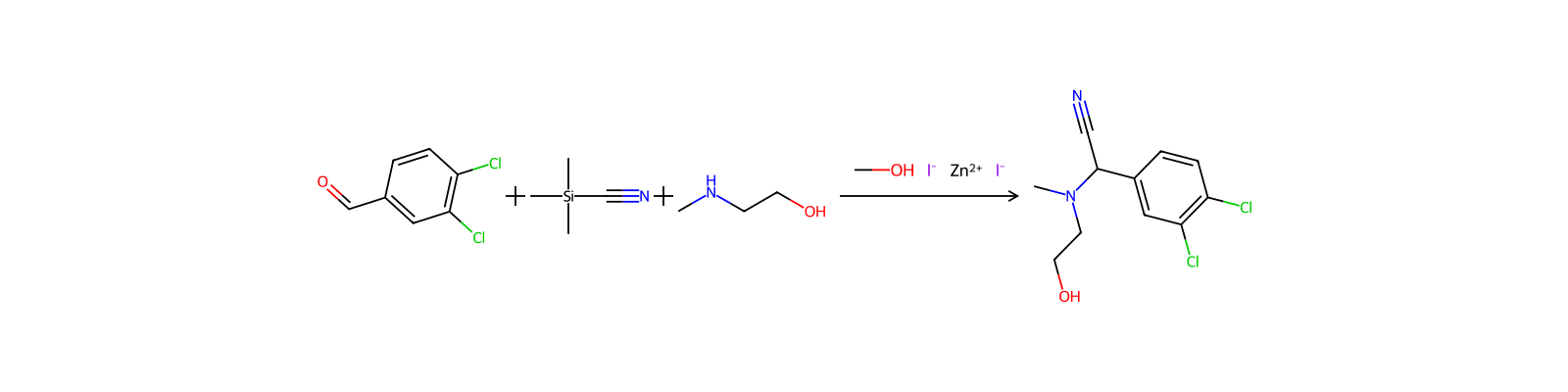
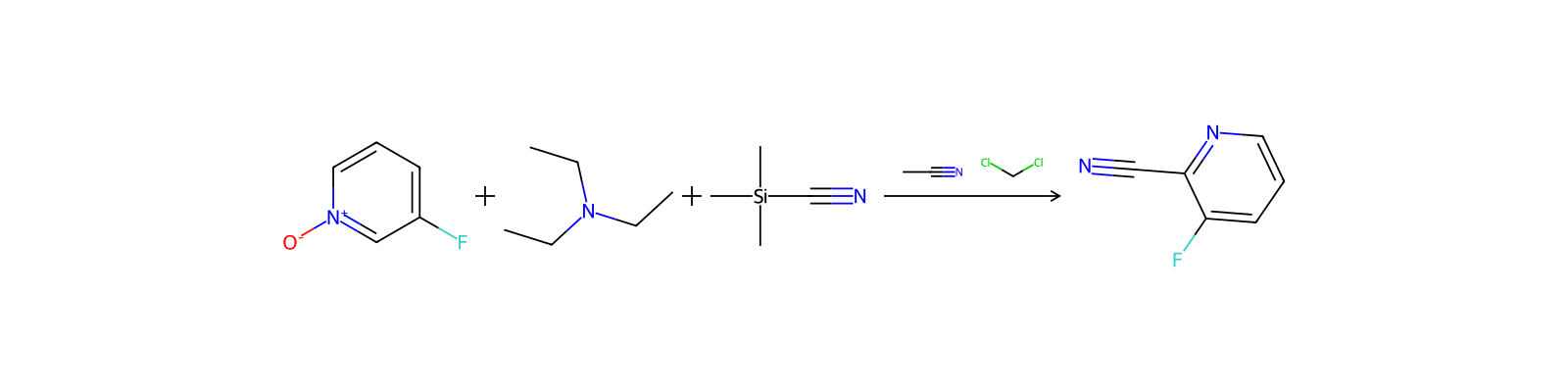
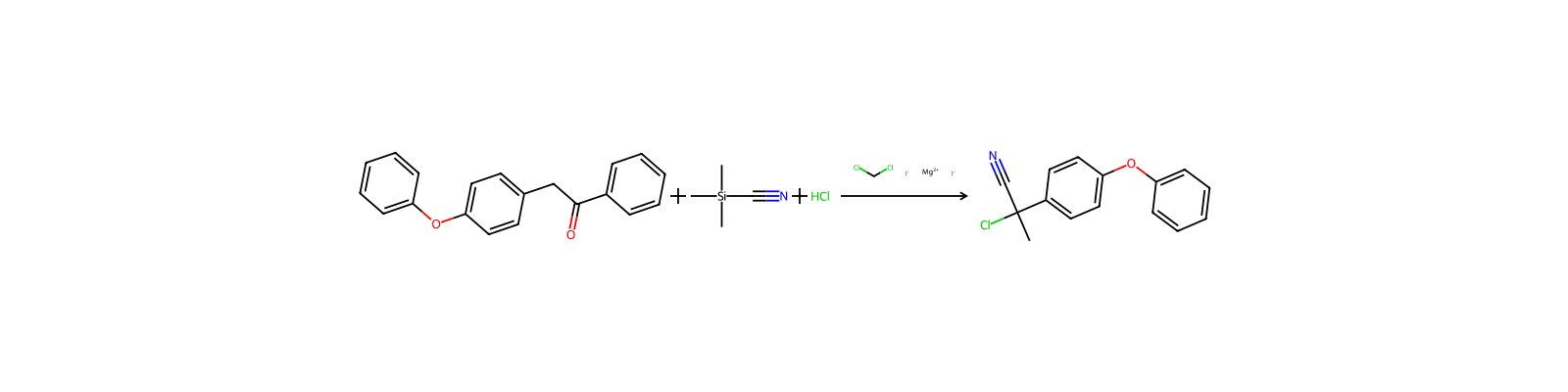
VerwendenReacts with aldehydes and ketones to give cyanohydrin-TMS ethers which can be reduced to β-aminoethyl alcohols.Trimethylsilyl cyanide (TMSCN) participates in carbonyl aminomethylation via α-silyloxy nitriles.TMSCN can be used as a reagent in the:Trimethylsilyl cyanide was used in the second step of an oxidative Michael addition of cyanide anion to Baylis–Hillman adducts. The importance of the addition of cyanide to α,β-unsaturated carbonyl derivatives is that the products can be converted into a variety of compounds including γ-aminobutyric acids. The reaction took place in a liquid ionic medium ([bmim]Br), which was reused several times without losing its activity. The β-cyano carbonyl compounds were obtained with high regioselectivity and yields (>79%).Cyanosilylation of carbonyl compounds using various catalysts.Synthesis of α-aminonitriles by one-pot, three-component Strecker reaction of ketones with various amines using Brønsted acid catalyst.Cyanation of aryl halides using palladium-complex as a catalyst.
Darstellung
Trimethylsilyl cyanide, (CH3)3 Si-CN, is obtained by reacting trimethylsilyl chloride with an approximately equimolar amount of an alkali metal cyanide in the absence of water and in the presence of catalytic, sub-stoichiometric amounts of both an alkali metal iodide and N-methylpyrrolidone, at a temperature of from 15°-25° C. Trimethylsilyl cyanide is very toxic. All reactions in this sequence should be carried out in a hood. Preparation of trimethylsilyl cyanide TRIMETHYLSILYL CYANIDE: CYANOSILATION OF p-BENZOQUINONE
Zugehörige Reaktionen
1.368



Notizen zur Verbindung
Wird geladen…