StartseiteMCPWorkbenchSkills
StartseiteWorkbenchBenachrichtigungenMein Bereich
llms.txt · MCP-AnleitungDatenschutz · Nutzungsbedingungen · Supportv1.8.0
  1. Startseite
  2. /Verbindung

2-Methyl-3-buten-2-ol

HCID 8257
Neue NotizNeue ReaktionAnfrage stellen
Druckvorschau

Daten werden ergänzt – lade die Seite später neu, um den aktuellen Stand zu sehen

GrundinformationenÜberblickNamen und BezeichnerEigenschaftenSicherheit und RegulatorischesChemie und IndustrieZugehörige ReaktionenNotizen zur Verbindung
TeilstruktursucheÄhnliche Strukturen suchen

Grundinformationen

CAS
115-18-4
Standard-SMILES
C=CC(C)(C)O
InChIKey
HNVRRHSXBLFLIG-UHFFFAOYSA-N
Summenformel
C5H10O
Durchschnittliche Molmasse
86,13 g/mol
Monoisotopische Masse
86,07316494

Überblick

Methyl butenol is a colorless liquid. (USCG, 1999)

Namen und Bezeichner

Bevorzugter Name
2-Methyl-3-buten-2-ol
IUPAC
2-methylbut-3-en-2-ol
Englischer Name
2-Methyl-3-buten-2-ol
Summenformel
C5H10O
Molmasse
86.13

Namen und Synonyme

2-METHYL-3-BUTEN-2-OL115-18-42-Methylbut-3-en-2-ol3-Buten-2-ol, 2-methyl-1,1-Dimethylallyl alcoholDimethylvinylcarbinolDimethylvinylmethanolVinyldimethylcarbinol3-Hydroxy-3-methylbutene1,1-Dimethyl-2-propenol2-Methyl-2-hydroxy-3-butene2-Methyl-3-buten-2-yl alcohol
Weitere Namen anzeigen
2-METHYL-3-BUTENE-2-OL2-methylbut-3-en3-HYDROXY-3-METHYL-1-BUTENE2-Methyl-3-buten-2-ol, 97% 250ML2-methylbut-Methyl-3-bute
alpha,alpha-Dimethylallyl alcoholDTXSID3047471SH64HE46L9NSC-15977DTXCID1027471RefChem:88074204-068-4Methylbutenol

Datenbank-Bezeichner

CAS
115-18-4、60766-00-9
PubChem CID
8257
DTXSID
DTXSID3047471
ChEMBL
CHEMBL4245903
ChEBI
CHEBI:132752
UNII
SH64HE46L9
EC Number
204-068-4
Nikkaji
J65.753K

Eigenschaften

Berechnete StruktureigenschaftenWird ergänzt

XLogP
0,8
Polarare Oberfläche (TPSA)
20,2 Ų
H-Brücken-Donoren
1
H-Brücken-Akzeptoren
1
Frei drehbare Bindungen
1
Schwere Atome
6
Formalladung
0
Komplexität
55

Experimentelle und physikochemische Eigenschaften

PolymersOther Classes -> Alcohols and Polyols, Other
SpringerMaterials PropertiesBoiling point
FragrancesFragrance Ingredient (2-Methyl-3-buten-2-ol) -> IFRA transparency List
Pesticides · 2 Einträge

Agrochemicals -> Pesticide active substances

Active substance -> EU Pesticides database: Not approved

LogP0.66
Food AdditivesFLAVORING AGENT OR ADJUVANT -> FDA Substance added to food
Density · 3 Einträge

0.824 (USCG, 1999) - Less dense than water; will float

0.8 g/cm³

Relative density of the vapour/air-mixture at 20 °C (air = 1): 1.06

Flavoring AgentsEU Flavoring substances
Solubility · 2 Einträge

1000 mg/mL

Sicherheit und Regulatorisches

Sicherheitsangaben dienen nur zur Orientierung und ersetzen weder das Sicherheitsdatenblatt (SDB) des Lieferanten noch geltende Vorschriften oder eine fachliche Bewertung.

GHS-Klassifizierung

GHS Classification · 6 Einträge

This chemical does not meet GHS hazard criteria for 1.3% (22 of 1724) of reports.

Danger

H225 (98.7%): Highly Flammable liquid and vapor [Danger Flammable liquids]

P210, P233, P240, P241, P242, P243, P264, P264+P265, P270, P280, P301+P317, P303+P361+P353, P305+P351+P338, P330, P337+P317, P370+P378, P403+P235, and P501 (click each P-code to see the statement)

Aggregated GHS information provided per 1724 reports by companies from 9 notifications to the ECHA C&L Inventory. Each notification may be associated with multiple companies.

Danger

Gefahrenhinweise

Regulatory Information · 5 Einträge

Chemical: 3-Buten-2-ol, 2-methyl-

Commission Regulation (EC) No 1565/2000 (Repealed by Com. Implementing Reg. (EU) No 872/2012)

2007/442

REACH registered substance: 2-methylbut-3-en-2-ol (EC: 204-068-4)

2-Methyl-3-buten-2-ol: Does not have an individual approval but may be used under an appropriate group standard

DOT LabelFlammable Liquid
Fire Hazards · 2 Einträge

Special Hazards of Combustion Products: Vapor may travel considerable distance to a source of ignition and flash back. (USCG, 1999)

Highly flammable. Heating will cause rise in pressure with risk of bursting. Vapour/air mixtures are explosive.

Health HazardsHarmful if inhaled or swallowed. Material is irritating to mucous membrane and upper respiratory tract. (USCG, 1999)
Hazards Summary · 1 Eintrag

An eye but not skin irritant in rabbits; Not a skin sensitizer in guinea pig maximization test; [IUCLID] Causes degenerative changes to brain, liver changes, changes in liver and kidney weights, and effects on transaminases in repeated-dose oral studies of rats; [RTECS] A mucous membrane and upper respiratory tract irritant; May cause smarting and reddening of skin if spilled and allowed to remain on clothes; High vapor concentrations may cause mild smarting of eyes and respiratory system; [CHRIS] An eye irritant; [ICSC] May cause mild skin irritation; A strong eye irritant; Toxic by ingestion; [Alfa Aesar MSDS]

Chemie und Industrie

Pharmakologische Informationen

Cellular LocationsCytoplasm

Verwendung und Herstellung

UsesNarcotic, sleep-producing principle from hops. [ChemIDplus] Used as a flavoring agent; [FDA]
Use ClassificationFragrance Ingredients
General Manufacturing Information3-Buten-2-ol, 2-methyl-: ACTIVE

Anwendungen

Verwenden2-Methyl-3-buten-2-ol was used to study the kinetics of the gas-phase reaction of OH radicals with 3-methyl-2-butenal.

Vor- und nachgelagerte Produkte

Nachgelagerte Produkte

cis-4-Hydroxy-α,α,4-trimethylcyclohexanmethanol2-Isopropenyl-5-methylhex-4-enylacetatGlykolaldehyd2,2-dimethylbut-3-enoic acidTrimethyloxiran3-Methylbut-3-en-1-ol5-Methyl-4-hexenoic acid methyl ester

Zugehörige Reaktionen

71
Reaktionsaufzeichnung erstellen
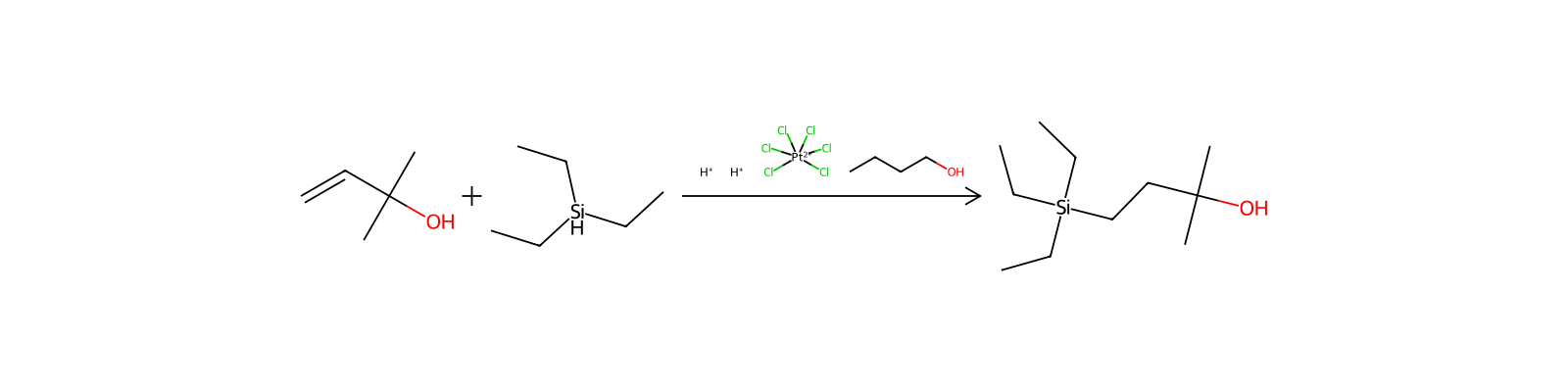
Reaktionsgleichung von HRID 2355
HRID 2355als Eduktuspto-grants-1998_03
Reaktionsgleichung von HRID 45981
HRID 45981als Eduktuspto-grants-2013_09
Reaktionsgleichung von HRID 46463
HRID 46463als Eduktuspto-grants-1979_11
Reaktionsgleichung von HRID 46464
HRID 46464als Produktals Eduktuspto-grants-1979_11
Reaktionsgleichung von HRID 46802
HRID 46802als Eduktuspto-grants-1979_11
Reaktionsgleichung von HRID 46803
HRID 46803als Eduktuspto-grants-1979_11
Reaktionsgleichung von HRID 107762
HRID 107762als EduktTraining data from https://doi.org/10.1039/C8SC04228D (2/10)
Reaktionsgleichung von HRID 108509
HRID 108509als EduktTraining data from https://doi.org/10.1039/C8SC04228D (2/10)
Seite 1 von 9

Notizen zur Verbindung

Wird geladen…

Auf dieser SeiteGrundinformationenÜberblickNamen und BezeichnerEigenschaftenSicherheit und RegulatorischesChemie und IndustrieZugehörige ReaktionenNotizen zur Verbindung
Weitere Aktionen
Neue NotizNeue ReaktionAnfrage stellen

Solubility in water, g/100ml at 20 °C: 19 (good)

Flash Point · 2 Einträge

56 °F (USCG, 1999)

10 °C c.c.

Boiling Point · 3 Einträge

208.4 to 210.2 °F at 760 mmHg (USCG, 1999)

97.00 to 99.00 °C. @ 760.00 mm Hg

97 °C

Melting Point · 2 Einträge

-28 °C

-28 °C

Physikochemische Eigenschaften

Schmelzpunkt
-43 °C · -43 °C
Siedepunkt
98 · 98-99 °C (lit.)
Dichte
0.824 g/mL · 0.824 g/mL at 25 °C (lit.)
Dampfdruck
51 mm · 51 mm Hg ( 25 °C)
Brechungsindex
20 · n20/D 1.416(lit.)
Flammpunkt
56 °F · 56 °F
storage temp.
30 °C · Store below +30°C.
Aggregatzustand
Liquid
pka
14.56 · 14.56±0.29(Predicted)
Farbe
Clear colorless to very slightly yellow
Geruch (Odor)
10 % · at 10.00 % in dipropylene glycol. herbal earthy oily
PH
9 · 9-10 (100g/l, H2O, 20℃)
Explosionsgrenze
1.5 · 1.5-9.4%(V)
Geruchsart
herbal
Biologische Quelle
synthetic
BRN
1698263 · 1698263
Henry's Law Constant
6.4 · 6.4×10-1 mol/(m3Pa) at 25℃, Iraci et al. (1999)
Major Application
flavors and fragrances
Kosmetik-Inhaltsstoffe Funktionen
PERFUMING
InChI
1S/C5H10O/c1-4-5(2,3)6/h4,6H,1H2,2-3H3
InChIKey
HNVRRHSXBLFLIG-UHFFFAOYSA-N
SMILES
CC(C)(O)C=C
LogP
0.66 at · 0.66 at 25℃
CAS Datenbank
115 · 115-18-4(CAS DataBase Reference)
NIST chemische Informationen
3 · 3-Buten-2-ol, 2-methyl-(115-18-4)
EPA chemische Informationen
2 · 2-Methyl-3-buten-2-ol (115-18-4)
Reactive GroupAlcohols and Polyols
UN ClassificationUN Hazard Class: 3; UN Pack Group: II
Reactivity AlertsHighly Flammable
Reactivity Profile · 1 Eintrag

An unsaturated aliphatic/alcohol. The unsaturated aliphatic hydrocarbons are generally much more reactive than the alkanes, which are saturated aliphatic hydrocarbons. Strong oxidizers may react vigorously with them. Reducing agents can react exothermically to release gaseous hydrogen. Flammable and/or toxic gases are generated by the combination of alcohols with alkali metals, nitrides, and strong reducing agents. They react with oxoacids and carboxylic acids to form esters plus water. Oxidizing agents convert them to aldehydes or ketones. Alcohols exhibit both weak acid and weak base behavior. They may initiate the polymerization of isocyanates and epoxides.

Chemical DangersReacts violently with oxidants.
Physical DangersThe vapour mixes well with air, explosive mixtures are easily formed.
Air and Water ReactionsHighly flammable. Slightly soluble in water.

Sicherheit und Schutzausrüstung

Fire Fighting · 2 Einträge

Fire Extinguishing Agents Not to Be Used: Water may be ineffective.

Use carbon dioxide, dry powder. In case of fire: keep drums, etc., cool by spraying with water.

First Aid Measures · 4 Einträge

Fresh air, rest.

Rinse skin with plenty of water or shower.

Rinse with plenty of water (remove contact lenses if easily possible).

Rinse mouth. Give one or two glasses of water to drink. Seek medical attention if you feel unwell.

First AidINHALATION: Call for medical aid. Remove to fresh air. If not breathing, give artificial respiration. If breathing is difficult, give oxygen.
Safe StorageFireproof. Separated from oxidants. Well closed. Ventilation along the floor. Store in an area without drain or sewer access.
Nonfire Spill ResponseExcerpt from ERG Guide 127 [Flammable Liquids (Water-Miscible)]:
Spillage Disposal · 1 Eintrag

Remove all ignition sources. Evacuate danger area! Consult an expert! Personal protection: complete protective clothing including self-contained breathing apparatus. Collect leaking liquid in sealable containers. Absorb remaining liquid in sand or inert absorbent. Then store and dispose of according to local regulations. Do NOT wash away into sewer.

Isolation and EvacuationExcerpt from ERG Guide 127 [Flammable Liquids (Water-Miscible)]:
Eye PreventionWear safety spectacles.
Fire PreventionNO open flames, NO sparks and NO smoking. Closed system, ventilation, explosion-proof electrical equipment and lighting. Use non-sparking handtools.
Inhalation RiskNo indication can be given about the rate at which a harmful concentration of this substance in the air is reached.
Skin PreventionProtective gloves.
Ingestion PreventionDo not eat, drink, or smoke during work.

Toxikologische Informationen

Adverse EffectsOccupational hepatotoxin - Secondary hepatotoxins: the potential for toxic effect in the occupational setting is based on cases of poisoning by human ingestion or animal experimentation.
Exposure RoutesThe substance can be absorbed into the body by ingestion.
Signs and Symptoms · 2 Einträge

Cough. Sore throat.

Redness.

Toxicity DataLC50 (rat) > 21,200 mg/m3/4hr

Sicherheitsdaten

wgk
1
tsca
TSCA listed
ridadr
UN 1987 3/PG 2
hs_code
29052990
RTECS-Nr.
EM9472000
risk_code
11-22-36
Toxizität
LD50 orally in Rabbit: 1800 mg/kg
hazard_code
F,Xn,F++
safety_code
16-26-36
hazard_class
3
packing_group
II
Speicherklasse
3 - Flammable liquids
Hazard Classifications
Acute Tox. 4 OralEye Irrit. 2Flam. Liq. 2Skin Irrit. 2
Selbstentzündungstemperatur
380 °C