
2-Methyl-3-butin-2-ol
2-Methyl-3-butyn-2-ol
Daten werden ergänzt – lade die Seite später neu, um den aktuellen Stand zu sehen
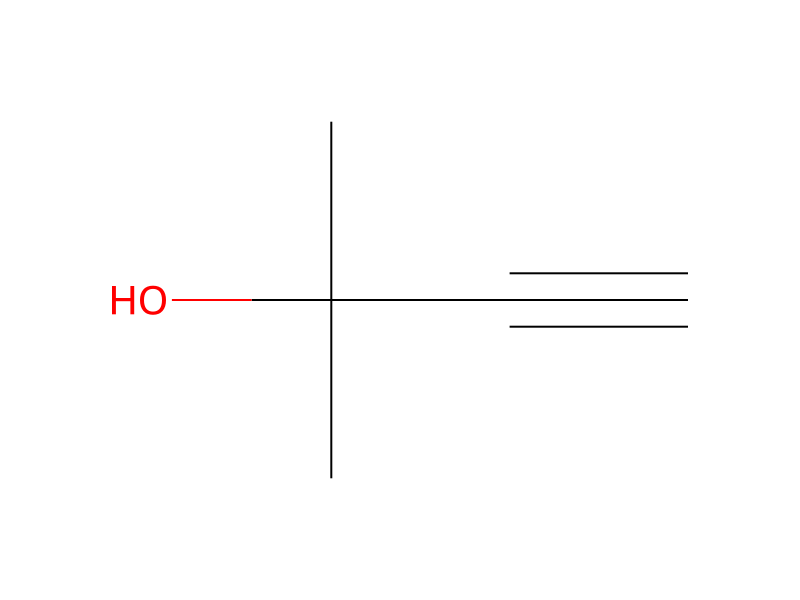
Grundinformationen
- CAS
115-19-5- Standard-SMILES
C#CC(C)(C)O- InChIKey
CEBKHWWANWSNTI-UHFFFAOYSA-N- Summenformel
- C5H8O
- Durchschnittliche Molmasse
- 84,12 g/mol
- Monoisotopische Masse
- 84,05751488
Überblick
2-methyl-2-hydroxy-3-butyne is a colorless to straw yellow liquid. (USCG, 1999)
Namen und Bezeichner
- Bevorzugter Name
- 2-Methyl-3-butyn-2-ol
- IUPAC
- 2-methylbut-3-yn-2-ol
- Lokaler Name
- 2-Methyl-3-butin-2-ol
- Englischer Name
- 3-Methyl butynol
- Summenformel
- C5H8O
- Molmasse
- 84.12
Namen und Synonyme
2-METHYL-3-BUTYN-2-OL115-19-52-Methylbut-3-yn-2-ol3-Butyn-2-ol, 2-methyl-2-Methyl-2-butynolEthynyldimethylcarbinolCarbavaneDimethylethynylcarbinolDimethylethynylmethanol2-Hydroxy-2-methyl-3-butyneDimethylacetylenecarbinolDimethylacetylenylcarbinol
Weitere Namen anzeigen
MBYMethyl butynol2-Methyl-3-Butyne-2-OlAB-322-MethylbutynolMethylbutylenol
1,1-Dimethylpropargyl alcoholDTXSID2021949EHB904XHKHNSC-523DTXCID701949RefChem:88076204-070-53-Methyl-1-butyn-3-ol
Datenbank-Bezeichner
- CAS
115-19-5- PubChem CID
- 8258
- DTXSID
DTXSID2021949- ChEMBL
CHEMBL3185871- UNII
- EHB904XHKH
- EC Number
- 204-070-5
- Nikkaji
- J38.146B
Eigenschaften
Berechnete StruktureigenschaftenWird ergänzt
- XLogP
- 0,3
- Polarare Oberfläche (TPSA)
- 20,2 Ų
- H-Brücken-Donoren
- 1
- H-Brücken-Akzeptoren
- 1
- Frei drehbare Bindungen
- 1
- Schwere Atome
- 6
- Formalladung
- 0
- Komplexität
- 83,4
Experimentelle und physikochemische Eigenschaften
PolymersOther Classes -> Alcohols and Polyols, Other
SpringerMaterials PropertiesBoiling point
LogP
0.318
0.28
Density
0.8672 (USCG, 1999) - Less dense than water; will float
Density (gas): 0.9 kg/m³
Relative density of the vapour/air-mixture at 20 °C (air = 1): 1.04
SolubilitySolubility in water: miscible
Flash Point
77 °F (USCG, 1999)
20 °C c.c.
Boiling Point
219.2 to 221 °F at 760 mmHg (USCG, 1999)
104-105 °C
Melting Point
36.7 °F (USCG, 1999)
2.6 °C
Vapor Density
Sicherheit und Regulatorisches
Sicherheitsangaben dienen nur zur Orientierung und ersetzen weder das Sicherheitsdatenblatt (SDB) des Lieferanten noch geltende Vorschriften oder eine fachliche Bewertung.
GHS-Klassifizierung
GHS Classification
This chemical does not meet GHS hazard criteria for 4.8% (24 of 500) of reports.
Danger
H225 (62.8%): Highly Flammable liquid and vapor [Danger Flammable liquids]
P203, P210, P233, P240, P241, P242, P243, P261, P264, P264+P265, P270, P271, P280, P301+P317, P302+P352, P303+P361+P353, P304+P340, P305+P351+P338, P305+P354+P338, P317, P318, P319, P321, P330, P332+P317, P337+P317, P362+P364, P370+P378, P403+P233, P403+P235, P405, and P501 (click each P-code to see the statement)
Aggregated GHS information provided per 500 reports by companies from 20 notifications to the ECHA C&L Inventory. Each notification may be associated with multiple companies.
Danger
Gefahrenhinweise
Regulatory Information
Chemical: 3-Butyn-2-ol, 2-methyl-
Status: Active Update: 18-03-2020 https://echa.europa.eu/registration-dossier/-/registered-dossier/12665
3-Butyn-2-ol, 2-methyl-: Does not have an individual approval but may be used under an appropriate group standard
Other Safety InformationIMAP assessments - 3-Butyn-2-ol, 2-methyl-: Human health tier I assessment
DOT LabelFlammable Liquid
Fire Hazards
Special Hazards of Combustion Products: Irritating and toxic gases, such as carbon dioxide and carbon monoxide, may be produced in fire. (USCG, 1999)
Highly flammable. Vapour/air mixtures are explosive. Risk of explosion on contact with copper.
Health HazardsContact will cause eye and skin irritation. Vapor exposure may cause eye and respiratory tract irritation. (USCG, 1999)
Chemie und Industrie
Verwendung und Herstellung
Uses
Has been used as a pheromone substitute in beetle control; [REPROTOX] Used as an intermediate, laboratory reagent, and in wood treatment; [ECHA REACH Registrations]
Applying Wood Preservatives [Category: Other]
General Manufacturing Information3-Butyn-2-ol, 2-methyl-: ACTIVE
Anwendungen
VerwendenStabilizer in chlorinated solvents, viscosity reducer and stabilizer, electroplating brightener, intermediate.
Darstellung
synthetische3-Methyl butynol is produced from Acetone and Acetylene in liquid Ammonia with Sodamide (or in Cellosolve with Potassium hydroxide). The process yields Methylbutynol which can be hydrogenated to Methylbutenol.
Vor- und nachgelagerte Produkte
Vorgelagerte Rohstoffe
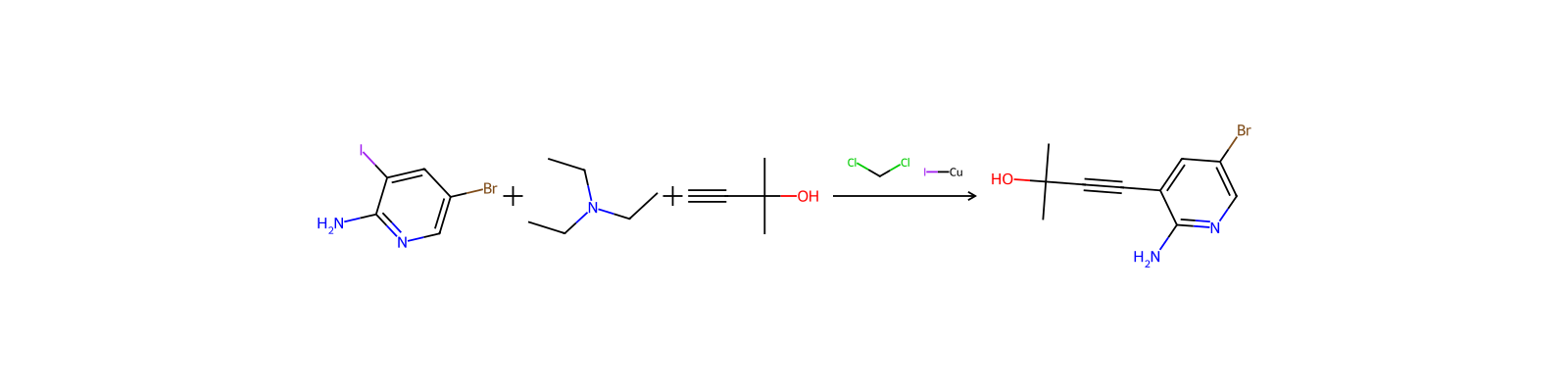
Zugehörige Reaktionen
483



Notizen zur Verbindung
Wird geladen…