HuagongsheHuagongshe Chemie-Druckbericht · Nur für Forschungszwecke
HCID 8317Erstellt: 30. Oktober 2026
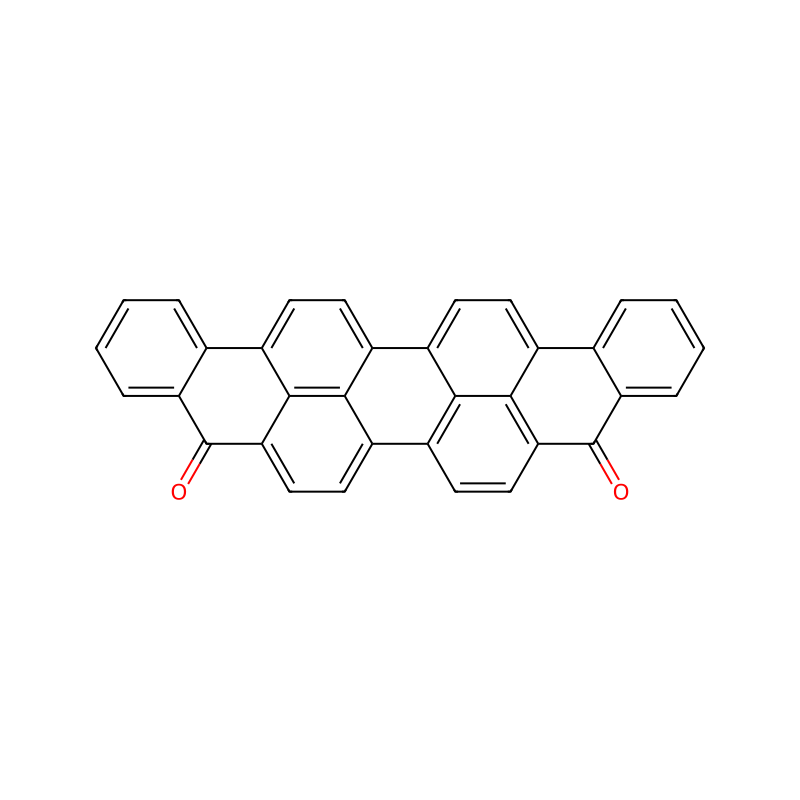
Anthra(9,1,2-cde)benzo(rst)pentaphene-5,10-dione
Blue BO · c.i.59800 · C.I. 59815 · C.I. 59800 · VAT BLUE 20 · Vat Blue 18 · bianthronea · vat blue BO
https://huagongshe.com/de/chemical/8317
Identifikatoren & physikalische Daten
| CAS No. | 116-71-2 |
|---|
| Summenformel | C34H16O2 |
|---|
| Durchschnittliche Molmasse | 456,5 g/mol |
|---|
| Monoisotopische Masse | 456,11502975 g/mol |
|---|
| SMILES | O=C1c2ccccc2-c2ccc3c4ccc5c6c(ccc(c7ccc1c2c73)c64)C(=O)c1ccccc1-5 |
|---|
| InChIKey | YKSGNOMLAIJTLT-UHFFFAOYSA-N |
|---|
| PubChem CID | 8317 |
|---|
| ChEMBL | CHEMBL344254 |
|---|
| EC No. | 204-152-0 |
|---|
| DTXSID | DTXSID7026281 |
|---|
Chemische & physikalische Eigenschaften
| XLogP | 8 |
|---|
| Polarare Oberfläche (TPSA) | 34,1 |
|---|
| H-Brücken-Donoren | 0 |
|---|
| H-Brücken-Akzeptoren | 2 |
|---|
| Frei drehbare Bindungen | 0 |
|---|
| Schwere Atome | 36 |
|---|
| Formalladung | 0 |
|---|
| Komplexität | 877 |
|---|
| SpringerMaterials Properties | Boiling point |
|---|
| Löslichkeit | less than 1 mg/mL at 66 °F (NTP, 1992) |
|---|
| Schmelzpunkt | 914 to 923 °F (decomposes) (NTP, 1992)338-339 °C |
|---|
| Physical Description | Vat blue 20 is a bluish-black to black powder. (NTP, 1992)Dry Powder |
|---|
| Siedepunkt | 522.64°C (rough estimate) |
|---|
| Dichte | 1.1055 (rough estimate) |
|---|
| Brechungsindex | 1.4875 (estimate) |
|---|
| Lagerbedingungen | Sealed in dry,Room Temperature |
|---|
| CAS Datenbank | 116-71-2(CAS DataBase Reference) |
|---|
| NIST chemische Informationen | Dibenzanthrone(116-71-2) |
|---|
| EPA chemische Informationen | Violanthrone (116-71-2) |
|---|
Sicherheit & Vorschriften
| GHS-Einstufung | This chemical does not meet GHS hazard criteria for 96% (24 of 25) of all reports.Not ClassifiedAggregated GHS information provided per 25 reports by companies from 2 notifications to the ECHA C&L Inventory. |
|---|
| Regulatorische Informationen | Chemical: Dinaphtho[1,2,3-cd:3',2',1'-lm]perylene-5,10-dioneAnthra[9,1,2-cde]benzo[rst]pentaphene-5,10-dione is listed on the EPA's Chemical Data Reporting (CDR) system. Manufacturers and importers of Anthra[9,1,2-cde]benzo[rst]pentaphene-5,10-dione are required to report information about their production and use of this chemical to the EPA under the Toxic Substances Control Act (TSCA). (40 eCFR Part 711)REACH registered substance: Violanthrene-5,10-dione (EC: 204-152-0)Anthra9,1,2-cdebenzorstpentaphene-5,10-dione: Does not have an individual approval but may be used as a component in a product covered by a group standard. It is not approved for use as a chemical in its own right. |
|---|
| Brandgefahren | Flash point data for this chemical are not available. It is probably combustible. (NTP, 1992) |
|---|
| Reaktive Gruppe | Hydrocarbons, Aromatic |
|---|
| Air and Water Reactions | Insoluble in water. |
|---|
| Hazard Classes and Categories | Not Classified |
|---|
| Brandbekämpfung | Fires involving this material can be controlled with a dry chemical, carbon dioxide or Halon extinguisher. (NTP, 1992) |
|---|
| Erste Hilfe | EYES: First check the victim for contact lenses and remove if present. Flush victim's eyes with water or normal saline solution for 20 to 30 minutes while simultaneously calling a hospital or poison control center. Do not put any ointments, oils, or medication in the victim's eyes without specific instructions from a physician. IMMEDIATELY transport the victim after flushing eyes to a hospital even if no symptoms (such as redness or irritation) develop. |
|---|
| Freisetung ohne Brand | SMALL SPILLS AND LEAKAGE: If you spill this chemical, you should dampen the solid spill material with water, then transfer the dampened material to a suitable container. Use absorbent paper dampened with water to pick up any remaining material. Seal your contaminated clothing and the absorbent paper in a vapor-tight plastic bag for eventual disposal. Wash all contaminated surfaces with a soap and water solution. Do not reenter the contaminated area until the Safety Officer (or other responsible person) has verified that the area has been properly cleaned. |
|---|