StartseiteMCPWorkbenchSkills
StartseiteWorkbenchBenachrichtigungenMein Bereich
llms.txt · MCP-AnleitungDatenschutz · Nutzungsbedingungen · Supportv1.8.0
  1. Startseite
  2. /Verbindung

2-Chlorbenzoesäure

2-Chlorobenzoic Acid

HCID 8374
Neue NotizNeue ReaktionAnfrage stellen
Druckvorschau

Daten werden ergänzt – lade die Seite später neu, um den aktuellen Stand zu sehen
GrundinformationenÜberblickNamen und BezeichnerEigenschaftenSicherheit und RegulatorischesChemie und IndustrieZugehörige ReaktionenNotizen zur Verbindung
TeilstruktursucheÄhnliche Strukturen suchen

Grundinformationen

CAS
118-91-2
Standard-SMILES
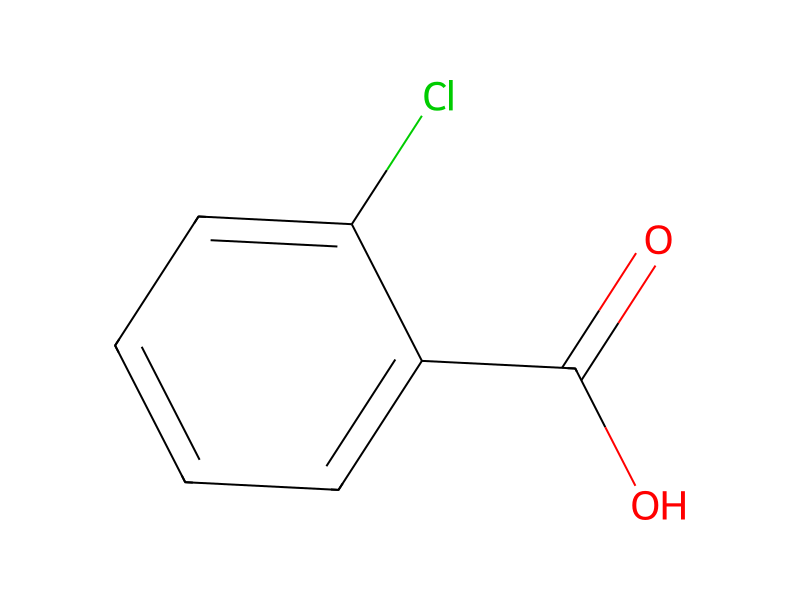
O=C(O)c1ccccc1Cl
InChIKey
IKCLCGXPQILATA-UHFFFAOYSA-N
Summenformel
C7H5ClO2
Durchschnittliche Molmasse
156,56 g/mol
Monoisotopische Masse
155,99780708

Überblick

Crystals or fine fluffy white powder. (NTP, 1992)

Namen und Bezeichner

Bevorzugter Name
2-Chlorobenzoic Acid
IUPAC
2-chlorobenzoic acid
Lokaler Name
2-Chlorbenzoesäure
Englischer Name
2-Chlorobenzoic acid
Summenformel
C7H5ClO2
Molmasse
156.57

Namen und Synonyme

2-Chlorobenzoic acid118-91-2O-CHLOROBENZOIC ACIDBenzoic acid, 2-chloro-2-CbaBenzoic acid, o-chloro-Kyselina o-chlorbenzoovaDTXSID4024771NSC-15042DTXCID3047718P0867193VCHEBI:30793
Weitere Namen anzeigen
2-chlorobenzoic2-chlorobenzoate2-Chlorobenzoic acid, 99%NSC 327372-Chlorobenzoiorobenzoic acid
R300100RefChem:855217204-285-4CHLOROBENZOIC ACIDOCBAMFCD00002412Kyselina o-chlorbenzoova [Czech]NSC 15042

Datenbank-Bezeichner

CAS
118-91-2、26264-09-5
PubChem CID
8374
DTXSID
DTXSID4024771
ChEMBL
CHEMBL115243
ChEBI
CHEBI:30793
UNII
8P0867193V
EC Number
204-285-4、247-558-3
Nikkaji
J26.900J

Eigenschaften

Berechnete StruktureigenschaftenWird ergänzt

XLogP
2,1
Polarare Oberfläche (TPSA)
37,3 Ų
H-Brücken-Donoren
1
H-Brücken-Akzeptoren
2
Frei drehbare Bindungen
1
Schwere Atome
10
Formalladung
0
Komplexität
136

Experimentelle und physikochemische Eigenschaften

Chemical ClassesOther Classes -> Benzoic Acid Derivatives
SpringerMaterials PropertiesChemical shift
PesticidesEnvironmental transformation -> Pesticide transformation products (metabolite, successor)
LogP · 2 Einträge

log Kow= 2.05

2.21

Density · 2 Einträge

1.544 at 68 °F (NTP, 1992) - Denser than water; will sink

1.544 AT 20 °C/4 °C

Color/FormMONOCLINIC PRISMS FROM WATER
Solubility · 5 Einträge

less than 1 mg/mL at 68 °F (NTP, 1992)

SOL IN 900 PARTS COLD WATER; MORE SOL IN HOT WATER; FREELY SOL IN ALCOHOL, ETHER.

SOL IN ACETONE, BENZENE

SOLUBLE IN METHANOL

2087 mg/l at 25 °C in water

Boiling PointSublimes (NTP, 1992)

Sicherheit und Regulatorisches

Sicherheitsangaben dienen nur zur Orientierung und ersetzen weder das Sicherheitsdatenblatt (SDB) des Lieferanten noch geltende Vorschriften oder eine fachliche Bewertung.

GHS-Klassifizierung

GHS Classification · 6 Einträge

Warning

H302 (17.1%): Harmful if swallowed [Warning Acute toxicity, oral]

P261, P264, P264+P265, P270, P271, P280, P301+P317, P302+P352, P304+P340, P305+P351+P338, P319, P321, P330, P332+P317, P337+P317, P362+P364, P403+P233, P405, and P501 (click each P-code to see the statement)

Aggregated GHS information provided per 222 reports by companies from 11 notifications to the ECHA C&L Inventory. Each notification may be associated with multiple companies.

Danger

H302 (100%): Harmful if swallowed [Warning Acute toxicity, oral]

Gefahrenhinweise

Regulatory Information · 4 Einträge

Chemical: Benzoic acid, 2-chloro-

Commission Regulation (EC) No 33/2008

Status: Active Update: 09-03-2021 https://echa.europa.eu/registration-dossier/-/registered-dossier/20016

2-Chlorobenzoic acid: Does not have an individual approval but may be used under an appropriate group standard

Fire HazardsFlash point data for this compound are not available; however, it is probably combustible. (NTP, 1992)
Health HazardsSYMPTOMS: Symptoms resulting from exposure to this chemical include skin and eye irritation.
Hazards SummaryA skin, eye, mucous membrane, and upper respiratory tract irritant; [CAMEO] An irritant; [MSDSonline]
Reactive GroupAcids, Carboxylic
Reactivity ProfileO-CHLOROBENZOIC ACID is incompatible with strong oxidizing agents and strong bases. (NTP, 1992)

Chemie und Industrie

Pharmakologische Informationen

Metabolism/MetabolitesYIELDS CATECHOL IN PSEUDOMONAS; YIELDS O-CHLOROBENZOYL-BETA-D-GLUCURONIC ACID & O-CHLOROHIPPURIC ACID IN RABBITS. /FROM TABLE/

Verwendung und Herstellung

Uses · 6 Einträge

Used as a preservative (glues and paints) and intermediate (dyes, fungicides, and pharmaceuticals); [HSDB]

Painting (Pigments, Binders, and Biocides) [Category: Paint]

PRESERVATIVE FOR GLUES, PAINTS; INTERMEDIATE IN MFR OF FUNGICIDES & DYES

CHEM INT FOR THIOSALICYLIC ACID

CHEM INT FOR THIORIDAZINE (HUMAN TRANQUILIZER)

CHEM INT FOR 3-CHLORODIPHENYLAMINE

U.S. Imports · 2 Einträge

(1979) 1.57X10+7 GRAMS (PRINCPL CUSTMS DISTS)

(1981) 4.68X10+7 GRAMS (PRINCPL CUSTMS DISTS)

U.S. Production · 2 Einträge

(1978) PROBABLY GREATER THAN 2.27X10+6 GRAMS

(1979) PROBABLY GREATER THAN 4.54X10+6 GRAMS

Methods of ManufacturingPREPARED BY POTASSIUM PERMANGANATE OXIDATION OF O-CHLOROTOLUENE
Use ClassificationEnvironmental transformation -> Pesticide transformation products (metabolite, successor)
General Manufacturing InformationBenzoic acid, 2-chloro-: ACTIVE
Anwendungen · 2 Einträge

Beschreibung2-Chlorobenzoic acid is an organic compound with the formula ClC6H4CO2H. It is one of three isomeric chlorobenzoic acids, the one that is the strongest acid. This white solid is used as a precursor to a variety of drugs, food additives, and dyes.

Zugehörige Reaktionen

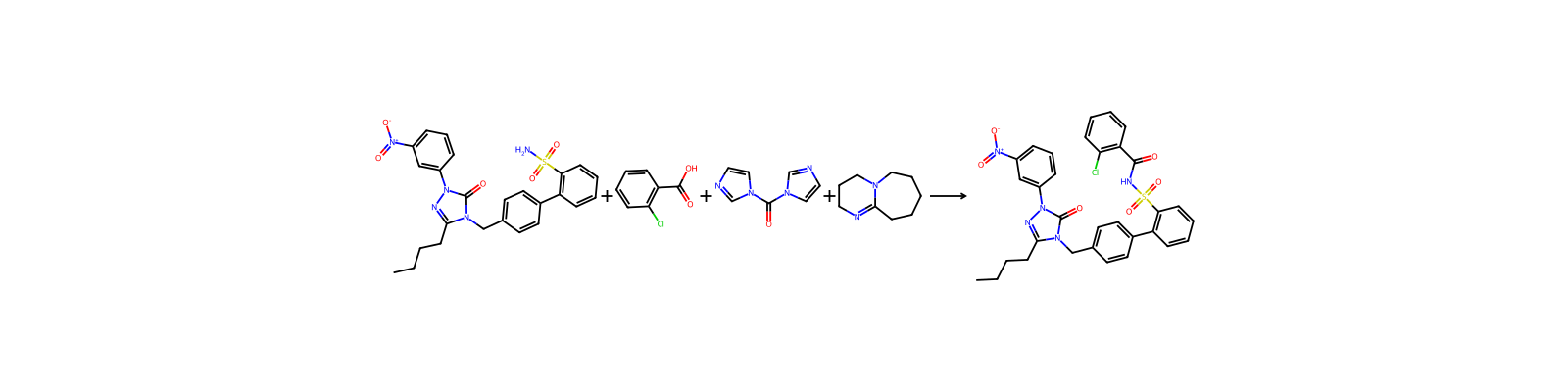
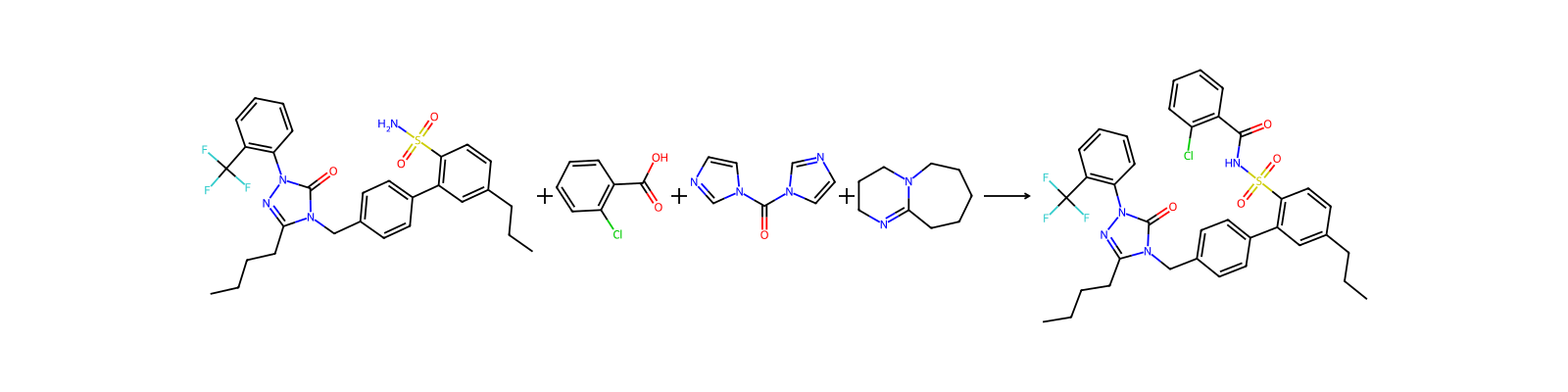
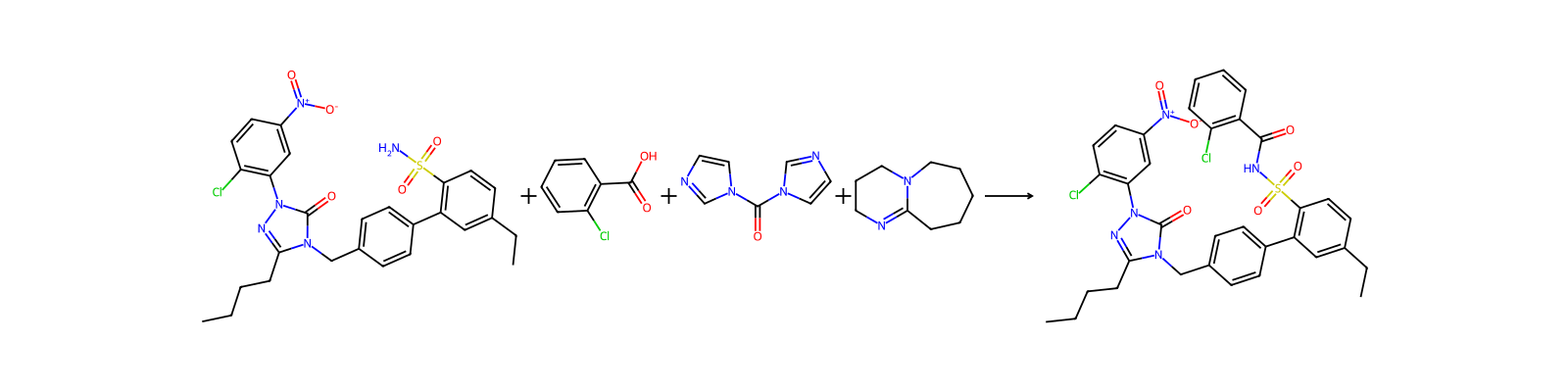
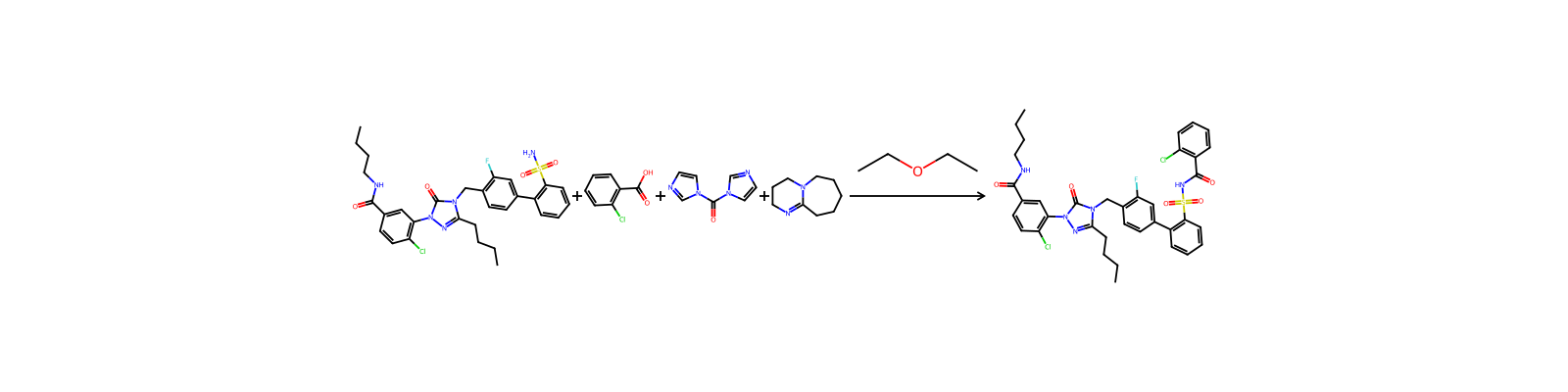
224
Reaktionsaufzeichnung erstellen
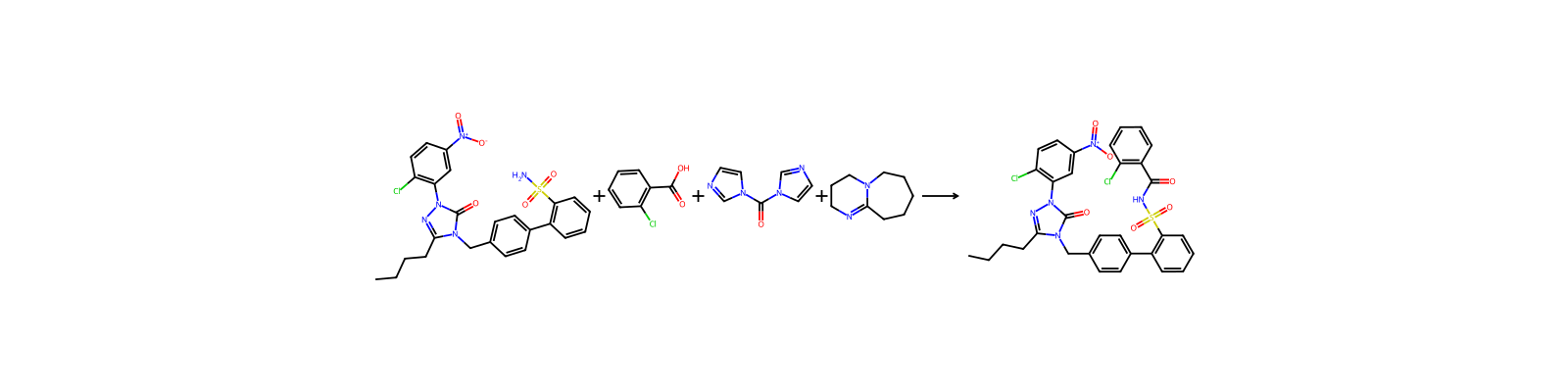
Reaktionsgleichung von HRID 36248
HRID 36248als Eduktuspto-grants-1995_05
Reaktionsgleichung von HRID 36252
HRID 36252als Eduktuspto-grants-1995_05
Reaktionsgleichung von HRID 36258
HRID 36258als Eduktuspto-grants-1995_05
Reaktionsgleichung von HRID 36262
HRID 36262als Eduktuspto-grants-1995_05
Reaktionsgleichung von HRID 36268
HRID 36268als Eduktuspto-grants-1995_05
Reaktionsgleichung von HRID 36274
HRID 36274als Eduktuspto-grants-1995_05
Reaktionsgleichung von HRID 36281
HRID 36281als Eduktuspto-grants-1995_05
Reaktionsgleichung von HRID 36287
HRID 36287als Eduktuspto-grants-1995_05
Seite 1 von 28

Notizen zur Verbindung

Wird geladen…

Auf dieser SeiteGrundinformationenÜberblickNamen und BezeichnerEigenschaftenSicherheit und RegulatorischesChemie und IndustrieZugehörige ReaktionenNotizen zur Verbindung
Weitere Aktionen
Neue NotizNeue ReaktionAnfrage stellen
Melting Point · 2 Einträge

288 °F (NTP, 1992)

142 °C

Vapor Pressure · 2 Einträge

0.00066 [mmHg]

6.6X10⁻⁴ mm Hg at 25 °C (extrapolated)

Physical Description · 2 Einträge

Crystals or fine fluffy white powder. (NTP, 1992)

Solid; [Merck Index] White powder; [MSDSonline]

Dissociation ConstantsPKA 2.89

Physikochemische Eigenschaften

Schmelzpunkt
138 · 138-140 °C (lit.)
Siedepunkt
285 °C · 285 °C
Dichte
1.544 · 1.544
Dampfdruck
0.001 hPa · 0.001 hPa (25 °C)
Brechungsindex
1.5812 · 1.5812 (estimate)
Flammpunkt
173 °C · 173 °C
storage temp.
30 °C · Store below +30°C.
Löslichkeit
900 part · cold water: soluble900 part
pka
2.92 · 2.92(at 25℃)
Aggregatzustand
Powder
Farbe
White to off-white
PH
3.4 · 3.4 (0.2g/l, H2O, 20℃)
Wasserlöslichkeit
soluble in hot water
Merck
14 · 14,2124
BRN
907340 · 907340
Henry's Law Constant
1.5 · 1.5×102 mol/(m3Pa) at 25℃, Duchowicz et al. (2020)
Stabilität
Stable, combustible. Incompatible with strong bases, strong oxidizing agents.
InChI
1S/C7H5ClO2/c8-6-4-2-1-3-5(6)7(9)10/h1-4H,(H,9,10)
InChIKey
IKCLCGXPQILATA-UHFFFAOYSA-N
SMILES
OC(=O)c1ccccc1Cl
CAS Datenbank
118 · 118-91-2(CAS DataBase Reference)
NIST chemische Informationen
2 · Benzoic acid, 2-chloro-(118-91-2)
EPA chemische Informationen
o-Chlorobenzoic acid (118-91-2)
Atmospheric Standards · 1 Eintrag

This action promulgates standards of performance for equipment leaks of Volatile Organic Compounds (VOC) in the Synthetic Organic Chemical Manufacturing Industry (SOCMI). The intended effect of these standards is to require all newly constructed, modified, and reconstructed SOCMI process units to use the best demonstrated system of continuous emission reduction for equipment leaks of VOC, considering costs, non air quality health and environmental impact and energy requirements. Chlorobenzoic acid is produced, as an intermediate or final product, by process units covered under this subpart. /Chlorobenzoic acid/

Air and Water ReactionsInsoluble in water.
Hazard Classes and CategoriesAcute Tox. 4 (17.1%)

Sicherheit und Schutzausrüstung

Fire FightingFires involving this material can be controlled with a dry chemical, carbon dioxide or Halon extinguisher. (NTP, 1992)
First Aid · 1 Eintrag

EYES: First check the victim for contact lenses and remove if present. Flush victim's eyes with water or normal saline solution for 20 to 30 minutes while simultaneously calling a hospital or poison control center. Do not put any ointments, oils, or medication in the victim's eyes without specific instructions from a physician. IMMEDIATELY transport the victim after flushing eyes to a hospital even if no symptoms (such as redness or irritation) develop.

Nonfire Spill Response · 1 Eintrag

SMALL SPILLS AND LEAKAGE: Should a spill occur while you are handling this chemical, FIRST REMOVE ALL SOURCES OF IGNITION, then you should dampen the solid spill material with 60-70% ethanol and transfer the dampened material to a suitable container. Use absorbent paper dampened with 60-70% ethanol to pick up any remaining material. Seal the absorbent paper, and any of your clothes, which may be contaminated, in a vapor-tight plastic bag for eventual disposal. Solvent wash all contaminated surfaces with 60-70% ethanol followed by washing with a soap and water solution. Do not reenter the contaminated area until the Safety Officer (or other responsible person) has verified that the area has been properly cleaned.

Personal Protective Equipment (PPE) · 2 Einträge

RECOMMENDED RESPIRATOR: Where the neat test chemical is weighed and diluted, wear a NIOSH-approved half face respirator equipped with an organic vapor/acid gas cartridge (specific for organic vapors, HCl, acid gas and SO2) with a dust/mist filter. (NTP, 1992)

Wear rubber gloves, a mask, coveralls, a body shield and self-contained breathing apparatus. /Benzoic acid/

Toxikologische Informationen

Environmental Fate · 3 Einträge

TERRESTRIAL FATE: If released to soil, o-chlorobenzoic acid is expected to biodegrade under both aerobic and anaerobic conditions although there may be a lengthy lag period before this process ensues(1-4). Its estimated Henry's Law constant, 3.88X10⁻⁸ atm-cu m/mol(5,SRC), and its extrapolated vapor pressure, 6.6X10⁻⁴ mm Hg at 25 °C(6) indicate that it is not expected to volatilize from either moist or dry soil, respectively, to the atmosphere(SRC). Estimated soil adsorption coefficients of 65 and 310(7-9,SRC) indicate that o-chlorobenzoic acid will display moderate to high mobility in soil(10). The pKa of o-chlorobenzoic acid, 2.89 at 25 °C(11), indicates that it will be found predominately dissociated in moist soil under the typical pH's found in the environment(SRC).

AQUATIC FATE: If released to water, o-chlorobenzoic acid is expected to biodegrade under both aerobic and anaerobic conditions although there may be a lengthy lag period before this process ensues(1,2,3). Its estimated Henry's Law constant, 6.5X10⁻⁸ atm cu m/mol(4,SRC), indicates that it is not expected to significantly volatilize from water to the atmosphere(SRC). The half-life for volatilization from a model river 1 m deep, flowing at 1 m/sec with a wind speed of 3 m/sec is 1180 days(5,SRC). Estimated soil adsorption coefficients of 65 and 310(5,6,7,SRC) indicate that o-chlorobenozic acid will not significantly adsorb to sediment and suspended organic matter(SRC). The pKa of o-chlorobenzoic acid, 2.89 at 25 °C(8), indicates that it will be found predominately dissociated in water under the typical pH's found in the environment(SRC). o-Chlorobenzoic acid may undergo direct photolytic degradation in water(9,SRC).

ATMOSPHERIC FATE: If released to the atmosphere, o-chlorobenzoic acid may undergo a gas-phase reaction with photochemically produced hydroxyl radicals. An estimated rate constant of 5.625X10⁻¹³ cu cm/molec-sec(1,SRC) translates to a half-life of 28.5 days for this process(SRC). The water solubility of o-chlorobenzoic acid, 2087 mg/L at 25 °C(2), indicates that it may undergo atmospheric removal by wet deposition processes(SRC).

Effluent Concentrationso-Chlorobenzoic acid was detected in chlorinated municipal sewage effluent at a concentration of 0.3 ppb(1).
Soil Adsorption/Mobility · 1 Eintrag

Estimated soil adsorption coefficients of 65 and 310(1,SRC) obtained from o-chlorobenzoic acid's water solubility, 2087 mg/L at 25 °C(2), and octanol/water partition coefficient, 2.05(3), respectively, can be obtained using an appropriate regression equation. These values indicate that it will display moderate to high mobility in soil(4).

Natural Pollution Sourceso-Chlorobenzoic acid is an anthropogenic compound and it is not known to occur in nature. (SRC)
Artificial Pollution Sources · 1 Eintrag

o-Chlorobenzoic acid is used as a preservative for glues and paints and as an intermediate in dye, fungicide, saccharin and agricultural chemicals manufacture(1-2). It may be released to the environment as a fugitive emission during its production, formulation or use(SRC). It may also enter the environment as a result of the chlorination of municipal wastewater(3).

Environmental Biodegradation · 2 Einträge

In a survey of standarized tests, o-chlorobenzoic acid was found to biodegrade in the coupled units test, the Zahn-Wellens test, the MITI test, the Sturm test, the OECD screening test and the trickling filter test but not in the closed bottle test or the AFNOR test(1-4). o-Chlorobenzoic acid was listed as a compound amenable to biodegradation under aerobic conditions(5). o-Chlorobenzoic acid at a concn of 100 mg/L underwent oxidation, as measured by oxygen uptake, when inoculated with microorganisms isolated from soil, compost, or mud obtained from a catalytic cracking plant waste lagoon(6). It underwent 100% removal after 96 hrs when incubated with a mixed microbial seed under aerobic conditions(7). o-Chlorobenzoic acid at a concn of 16 mg/L had a lag perod of 25 days when treated with wastewater sludge supernatant and 14-25 days when inoculated with soil; in the presence of glucose, complete disappearance of 8.4 mg/L o-chlorobenzoic acid was observed within 6 days with the wastewater inoculum(8).

o-Chlorobenzoic acid was found to biodegrade when incubated with an anaerobic river sediment after a lag period of 6 months; the lag period decreased to 2 mos when sediment from a river receiving industrial effluent was used(1). It underwent 16% theoretical gas production after a 14 day lag period when inoculated with a primary digester sludge under anaerobic conditions, time not stated(2). o-Chlorobenzoic acid displayed a 6 day lag period in a continuous flow-through bioreactor using a sewage sludge seed(3). Incubation of o-chlorobenzoic acid with a Niagara silt loam sample required >64 days for disappearance of substrate(4). o-Chlorobenzoic acid was listed as being degradation resistant using the Japanese MITI test(5,6).

Environmental Bioconcentration · 1 Eintrag

Estimated bioconcentration factors of 8 and 21(SRC) obtained from o-chlorobenzoic acid's water solubility, 2087 mg/L at 25 °C(2), and octanol/water partition coefficient, 2.05(3), respectively, can be obtained using a appropriate regression equation. These values indicate that it will not significantly bionconcentrate in fish and aquatic organisms(SRC).

Volatilization from Water/Soil · 1 Eintrag

The extrapolated vapor pressure of o-chlorobenzoic acid, 6.6X10⁻⁴ mm Hg at 25 °C(1) indicates that it is not expected to significantly volatilize from dry soil(SRC). Its estimated Henry's Law constant, 3.88X10⁻⁸ atm cu m/mol(2,SRC), indicates that it will not significantly volatilize from either water or moist soil(SRC). Based on this value, the estimated half-life for volalitilization from a model river 1 m deep, flowing at 1 m/sec and a wind speed of 3 m/sec is 1180 days(3,SRC).

Environmental Abiotic Degradation · 2 Einträge

IRRADIATION OF O-CHLOROBENZOIC ACID EITHER BY SUNLIGHT OR BY UV LIGHT DID NOT YIELD NEUTRAL OR ALKALINE PRODUCTS.

Laboratory irradiation of o-chlorobenzoic acid in deoxygenated water using a medium pressure mercury lamp produced o-hyroxybenzoic acid and benzoic acid(1). An estimated rate constant for the gas-phase reaction of o-chlorobenzoic acid with photochemically produced hydroxyl radicals of 5.625X10⁻¹³ cu cm/molec/sec(2,SRC)translates to a half-life of 28.5 days(SRC) using an average atmospheric hydroxyl radical concn of 5X10+5 molec/cu cm(2).

Probable Routes of Human Exposure · 1 Eintrag

Occupational exposure to o-chlorobenzoic acid may occur by dermal contact during its production, formulation or use(SRC). Exposure to the general population may occur by ingestion of contaminated drinking water(SRC), as it has been detected in drinking water supplies(1).

Environmental Water ConcentrationsDRINKING WATER: o-Chlorobenzoic acid has been qualitatively detected in U.S. drinking water supplies(1).
Environmental Fate/Exposure Summary · 1 Eintrag

o-Chlorobenzoic acid is an anthropogenic compound which may be released to the environment as a fugitive emission during its production, formulation or use as a perservative and chemical intermediate and may be formed and released during chlorination of wastewater. If released to soil, o-chlorobenzoic acid is expected to biodegrade under both aerobic and anaerobic conditions, although there may be a lengthy lag periods. It is not expected to significantly volatilize from either moist or dry soil to the atmosphere. o-Chlorobenzoic acid is expected to display moderate to high mobility in soil, and it will be found predominately in the dissociated form in moist soil under environmental conditions. If released to water, o-chlorobenzoic acid is expected to biodegrade under both aerobic and anaerobic conditions, although there may be a lengthy lag period. o-Chlorobenzoic acid may undergo direct photolytic degradation in water. It is not expected to significantly volatilize from water to the atmosphere, nor is it expected to significantly adsorb to sediment and suspended organic matter. o-Chlorobenzoic acid will be found predominately in the dissociated form in water under the typical pH's found in the environment. If released to the atmosphere, o-chlorobenzoic acid may undergo a slow gas-phase reaction with photochemically produced hydroxyl radicals with an estimated half-life of 28.5 days. o-Chlorobenzoic acid may also undergo atmospheric removal by wet deposition processes. Occupational exposure to o-chlorobenzoic acid may occur by dermal contact during its production, formulation or use. The general population may be exposed to o-chlorobenzoic acid by the ingestion of contaminated drinking water. (SRC)

Regulatorische Informationen

Atmospheric Standards · 1 Eintrag

This action promulgates standards of performance for equipment leaks of Volatile Organic Compounds (VOC) in the Synthetic Organic Chemical Manufacturing Industry (SOCMI). The intended effect of these standards is to require all newly constructed, modified, and reconstructed SOCMI process units to use the best demonstrated system of continuous emission reduction for equipment leaks of VOC, considering costs, non air quality health and environmental impact and energy requirements. Chlorobenzoic acid is produced, as an intermediate or final product, by process units covered under this subpart. /Chlorobenzoic acid/

Sicherheitsdaten

wgk
2
tsca
TSCA listed
hs_code
29163900
RTECS-Nr.
DG4976000
risk_code
36-36/37/38
Toxizität
LD50 orally in Rabbit: 2465 mg/kg
hazard_code
Xi
hazard_note
Irritant
safety_code
26-37/39
Speicherklasse
11 - Combustible Solids
Giftige Stoffe Daten
118-91-2(Hazardous Substances Data)
Hazard Classifications
Eye Irrit. 2Skin Irrit. 2
Selbstentzündungstemperatur
530 °C

Verwenden2-Chlorobenzoic acid was used to study the degradation of 2-bromobenzoic acid by Pseudomonas aeruginosa.

Darstellung · 1 Eintrag

synthetischeIt is prepared by the oxidation of 2-chlorotoluene. The laboratory scale reaction employs potassium permanganate. Alternatively it arises by the hydrolysis of α,α,α-trichloro-2-toluene.The chloride is readily replaced by ammonia to 2-aminobenzoic acid. At elevated temperature it decarboxylates.

Vor- und nachgelagerte Produkte

Vorgelagerte Rohstoffe

Barium hydroxide octahydrateNatriumhypochlorit2,2'-Dimethyl-2,2'-azodipropiono-nitrilNitrosylhydroxidChlorBariumhydroxidNatriumnitritCopper(II) sulfate pentahydrateKupfer(I)-chloridHydrogenchloridKupfersulfatNatriumhydroxidHydrochloric acidAnthranilic acidNatriumnitratChlortoluol (o)2-Chlorbenzoylchlorid

Nachgelagerte Produkte

2-Chlor-5-nitrobenzoesure3-(o-Chlorphenyl)-3-hydroxy-3-phenylpropiononitrilPYRIFTALID2-Chlorphenylcyclopentylketon2-ChlorbenzophenonKetaminhydrochloridClotrimazole imp. A (pharmeuropa): (2-chlorophenyl)diphenylmethanol9-Acridon3-Chlordiphenylamin(o-(-2,6-Dichloranilino)phenyl)-essigsäure, Natrium-SalzEthyl-2-chlorbenzoatClofenamic acid2-ChlorbenzonitrilKETAMINE RELATED COMPOUND A (50 MG) (1 -[(2-CHLOROPHENYL)(METHYLIMINO)METHYL]CYLCOPENTA-NOL)2-((3-(Trifluormethyl)phenyl)-amino)benzoesäureClotrimazolMeclofenamicsurechlorbenzuron2-Chlorbenzoylchlorid1-Chlor-2-(chlordiphenylmethyl)benzol
Ergänzende Hinweise · 1 Eintrag

DefinitionChEBI: 2-chlorobenzoic acid is a monochlorobenzoic acid having the chloro group at the 2-position. It has a role as a plant hormone and a plant metabolite. It is a monochlorobenzoic acid and a 2-halobenzoic acid. It is a conjugate acid of a 2-chlorobenzoate.