StartseiteMCPWorkbenchSkills
StartseiteWorkbenchBenachrichtigungenMein Bereich
llms.txt · MCP-AnleitungDatenschutz · Nutzungsbedingungen · Supportv1.8.0
  1. Startseite
  2. /Verbindung

1,2,3,4-Tetrahydronaphthalin

Tetralin

HCID 8404
Neue NotizNeue ReaktionAnfrage stellen
Druckvorschau

Daten werden ergänzt – lade die Seite später neu, um den aktuellen Stand zu sehen

GrundinformationenÜberblickNamen und BezeichnerEigenschaftenSicherheit und RegulatorischesChemie und IndustrieZugehörige ReaktionenNotizen zur Verbindung
TeilstruktursucheÄhnliche Strukturen suchen

Grundinformationen

CAS
119-64-2
Standard-SMILES
c1ccc2c(c1)CCCC2
InChIKey
CXWXQJXEFPUFDZ-UHFFFAOYSA-N
Summenformel
C10H12
Durchschnittliche Molmasse
132,2 g/mol
Monoisotopische Masse
132,09390038

Überblick

Tetrahydronaphthalene appears as a light colored liquid. May be irritating to skin, eyes and mucous membranes.

Namen und Bezeichner

Bevorzugter Name
Tetralin
IUPAC
1,2,3,4-tetrahydronaphthalene
Lokaler Name
1,2,3,4-Tetrahydronaphthalin
Englischer Name
1,2,3,4-Tetrahydronaphthalene
Summenformel
C10H12
Molmasse
132.2

Namen und Synonyme

1,2,3,4-TetrahydronaphthaleneTETRALIN119-64-2TetrahydronaphthaleneBenzocyclohexaneTetranapTetralineNaphthalene, 1,2,3,4-tetrahydro-TetralinaNaphthalene 1,2,3,4-tetrahydrideDTXSID1026118delta(sup 5,7,9)-naphthantriene
Weitere Namen anzeigen
THN1,2,3,4-tetrahydro-naphthalen1,2,3,4-tetrahydronaphthalin
FT6XMI58YQNSC-77451DTXCID306118CHEBI:35008RefChem:188750204-340-2tetraleneNSC 77451

Datenbank-Bezeichner

CAS
119-64-2、68412-24-8
PubChem CID
8404
DTXSID
DTXSID1026118
ChEMBL
CHEMBL1575635
ChEBI
CHEBI:35008
UNII
FT6XMI58YQ
EC Number
204-340-2
Nikkaji
J2.002H

Eigenschaften

Berechnete StruktureigenschaftenWird ergänzt

XLogP
3,5
Polarare Oberfläche (TPSA)
0 Ų
H-Brücken-Donoren
0
H-Brücken-Akzeptoren
0
Frei drehbare Bindungen
0
Schwere Atome
10
Formalladung
0
Komplexität
92,6

Experimentelle und physikochemische Eigenschaften

Chemical Classes · 2 Einträge

Other Classes -> Naphthalenes

Volatile Organic Compound (VOC)

pHACIDITY NEUTRAL
SpringerMaterials Properties13C nuclear magnetic resonance spectrum
LogP · 2 Einträge

3.78

3.49

Odor · 3 Einträge

ODOR RESEMBLING MIXTURE OF BENZENE & MENTHOL

MOLDY, TURPENTINE ODOR

Pungent odor

Density · 5 Einträge

0.974 at 68 °F (liquid (USCG, 1999) - Less dense than water; will float

0.9702 G/ML @ 20 °C/4 °C

MOISTURE CONTENT NONE; RESIDUE ON EVAPORATION NONE; BULK DENSITY 8 LB/GAL

Relative density (water = 1): 0.9702

0.981 @25 °C

Viscosity2.012 cP @ 25 °C
Color/FormCOLORLESS LIQUID

Sicherheit und Regulatorisches

Sicherheitsangaben dienen nur zur Orientierung und ersetzen weder das Sicherheitsdatenblatt (SDB) des Lieferanten noch geltende Vorschriften oder eine fachliche Bewertung.

GHS-Klassifizierung

GHS Classification · 6 Einträge

Warning

H315: Causes skin irritation [Warning Skin corrosion/irritation]

P264, P264+P265, P273, P280, P302+P352, P305+P351+P338, P321, P332+P317, P337+P317, P362+P364, P391, and P501 (click each P-code to see the statement)

This chemical does not meet GHS hazard criteria for 1.5% (11 of 729) of reports.

Danger

H304 (20.3%): May be fatal if swallowed and enters airways [Danger Aspiration hazard]

Gefahrenhinweise

Regulatory Information · 4 Einträge

Chemical: Naphthalene, 1,2,3,4-tetrahydro-

Naphthalene, 1,2,3,4-tetrahydro- is listed on the EPA's Chemical Data Reporting (CDR) system. Manufacturers and importers of Naphthalene, 1,2,3,4-tetrahydro- are required to report information about their production and use of this chemical to the EPA under the Toxic Substances Control Act (TSCA). (40 eCFR Part 711)

Status: Active Update: 11-04-2022 https://echa.europa.eu/registration-dossier/-/registered-dossier/21076

1,2,3,4-Tetrahydronaphthalene: Does not have an individual approval but may be used under an appropriate group standard

DOT LabelCombustible Liquid
Fire Hazards · 2 Einträge

Excerpt from ERG Guide 128 [Flammable Liquids (Water-Immiscible)]:

Combustible. Gives off irritating or toxic fumes (or gases) in a fire. Above 77 °C explosive vapour/air mixtures may be formed.

Fire PotentialMODERATE, WHEN EXPOSED TO HEAT OR FLAME; CAN REACT WITH OXIDIZING MATERIALS. SPONTANEOUS HEATING: NO.
Health HazardsLiquid may cause nervous disturbance, green coloration of urine, and skin and eye irritation (USCG, 1999)

Chemie und Industrie

Pharmakologische Informationen

Metabolism/Metabolites · 4 Einträge

(1-(14)C)-TETRALIN IS METABOLIZED IN RABBITS BY HYDROXYLATION OF ALICYCLIC RING TO YIELD CONJUGATES OF AC-ALPHA-TETRALOL (60% OF DOSE), AC-BETA-TETRALOL (20%) & TETRALIN-1,2-DIOL (2.5%), & HYDROXYLATION OF AROMATIC RING ... YIELDING AR-BETA-TETRALOL (5,6,7,8-TETRAHYDRO-2-NAPHTHOL, 0.1%).

YIELDS 2-HYDROXYTETRALYLMERCAPTURIC ACID, 1,2,3,4-TETRAHYDRO-1-NAPHTHOL, 1,2,3,4-TETRAHYDRO-2-NAPHTHOL IN RABBIT. YIELDS 1,2,3,4-TETRAHYDRO-1,2-DIHYDROXYNAPHTHALENE, 5,6,7,8-TETRAHYDRO-2-NAPHTHOL IN RABBIT. /FROM TABLE/

In rabbits, the main urinary metabolite was the glucuronide of alpha-tetralol (52.4%). Other conjugated metabolites were beta-tetralol (25.3%), 4-hydroxy-alpha-tetralone (6.1%), and cis-tetralin-1,2-diol (0.4%). Using rat liver homogenates, it was shown that conversion of tetralin to tetralol requires reduced nicotinamide adenine dinucleotide phosphate and that tetralin hydroperoxide is a probable intermediate. Further study confirmed this possibility and indicated that tetralin hydroxylation proceeds via a radical mechanism similar to that of lipid peroxidation.

Tetralin, a component of fuels, solvents, and varnishes, is metabolized in male Fischer 344 rats to 1-tetralol, 2-tetralol, 2-hydroxyl-1-tetralone, 4-hydroxyl-1-tetralone, 1,2-tetralindiol, and 1,4-tetralindiol.

Absorption, Distribution and Excretion · 3 Einträge

ABSORBED VAPOR IS EXCRETED BY KIDNEYS AS ALPHA- AND BETA-TETRAHYDRONAPHTHOLS ANDTHEIR GLUCURONIDES ... .

RADIOACTIVE TETRALIN, WHEN ADMIN TO RABBIT, WAS EXCRETED IN URINE AS GLUCURONIDEAT 87-99% AND IN FECES AT 0.6-1.8% OF ORIGINAL DOSE. ... WAS ABSORBED BY MUSSEL BUT NOT METABOLIZED; ... UP TO 80% WAS RELEASED IN UNCHANGED FORM WHEN THE ORGANISM WAS TRANSFERRED TO FRESH SEAWATER.

When radioactive tetralin was fed to rabbits, 87-90% of the activity was excreted in the urine in 2 days and 0.5-3.7% on the third day. The feces contained only 0.6-1.8%. No radioactivity was found in the breath, and negligible amounts were retained in the tissues. About 90-99% of the dose was accounted for.

Verwendung und Herstellung

Uses · 6 Einträge

Zugehörige Reaktionen

152
Reaktionsaufzeichnung erstellen
Reaktionsgleichung von HRID 1358
HRID 1358als Eduktuspto-grants-1998_03
Reaktionsgleichung von HRID 4995
HRID 4995als Eduktuspto-grants-1993_09
Reaktionsgleichung von HRID 6522
HRID 6522als Eduktuspto-grants-1993_09
Reaktionsgleichung von HRID 65146
HRID 65146als Lösungsmitteluspto-grants-1986_09
Reaktionsgleichung von HRID 128143
HRID 128143als Lösungsmitteluspto-grants-1981_03
Reaktionsgleichung von HRID 217315
HRID 217315als Produktuspto-grants-2012_06
Reaktionsgleichung von HRID 258445
HRID 258445als Eduktuspto-grants-1993_11
Reaktionsgleichung von HRID 266169
HRID 266169als Eduktuspto-grants-1997_07
Seite 1 von 19

Notizen zur Verbindung

Wird geladen…

Auf dieser SeiteGrundinformationenÜberblickNamen und BezeichnerEigenschaftenSicherheit und RegulatorischesChemie und IndustrieZugehörige ReaktionenNotizen zur Verbindung
Weitere Aktionen
Neue NotizNeue ReaktionAnfrage stellen
Solubility · 4 Einträge

MISCIBLE WITH ETHANOL, BUTANOL, ACETONE, BENZENE, PETROLEUM ETHER, CHLOROFORM, &PETROLEUM ETHER, DECALIN; SOL IN METHANOL: 50.6% WT/WT; INSOL IN WATER.

SOL IN ANILINE

SOL IN ETHER

Solubility in water: very poor

Flash Point · 6 Einträge

176 °F (USCG, 1999)

82 °C

171 °F (77 °C) (OPEN CUP); 180 °F (82 °C) (CLOSED CUP)

160 °F (71 °C) (CLOSED CUP)

176 °C (Closed cup); 190 °F (Open cup)

77 °C o.c.

Boiling Point · 4 Einträge

406 °F at 760 mmHg (USCG, 1999)

207.6 °C @ 760 MM HG

207.6 °C

207.2 °C @760 [mm Hg]

DecompositionUNDER ... PYROLYSIS AT 700 °C, TETRALIN ... YIELDS TARS THAT CONTAIN APPRECIABLE QUANTITIES OF 3,4-BENZOPYRENE.

Physikochemische Eigenschaften

Schmelzpunkt
-35 °C · -35 °C (lit.)
Siedepunkt
207 °C · 207 °C (lit.)
Dichte
0.973 g/mL · 0.973 g/mL at 25 °C (lit.)
Dampfdichte
4.55 · 4.55 (vs air)
Dampfdruck
0.18 mm · 0.18 mm Hg ( 20 °C)
Brechungsindex
20 · n20/D 1.541(lit.)
Flammpunkt
171 °F · 171 °F
storage temp.
30 °C · Store below +30°C.
Löslichkeit
0.045 g/l · 0.045g/l
Aggregatzustand
Fluid
Farbe
Colorless
Geruch (Odor)
pungent menthol odor
Odor Threshold
0.0093 ppm · 0.0093ppm
Explosionsgrenze
0.8 %, · 0.8%, 100°F
Wasserlöslichkeit
INSOLUBLE
Spezifische Wärmekapazität
1.65 J/ · Cp(liquid): 1.65 J/(g·K), at 25℃
Merck
14 · 14,9221
BRN
1446407 · 1446407
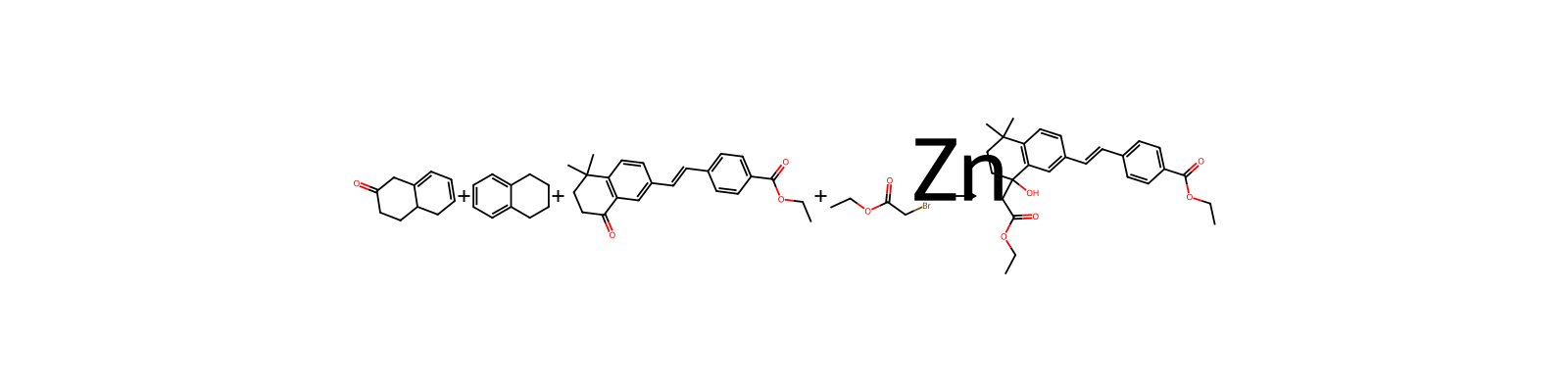
Henry's Law Constant
6.4 · 6.4×10-3 mol/(m3Pa) at 25℃, Plyasunov and Shock (2000)
Dielectric constant
2.77 · 2.77
Stabilität
Stable. Combustible. Incompatible with strong oxidizing agents.
InChI
1S/C10H12/c1-2-6-10-8-4-3-7-9(10)5-1/h1-2,5-6H,3-4,7-8H2
InChIKey
CXWXQJXEFPUFDZ-UHFFFAOYSA-N
SMILES
C1CCc2ccccc2C1
LogP
3.78 at · 3.78 at 23℃
CAS Datenbank
119 · 119-64-2(CAS DataBase Reference)
NIST chemische Informationen
Tetralin(119-64-2)
EPA chemische Informationen
1 · 1,2,3,4-Tetrahydronaphthalene (119-64-2)
Hazards Summary · 1 Eintrag

Listed in table of Methemoglobinemia-inducing agents: industrial, environmental, and pharmaceutical; [Sullivan, p. 729]; Tetralin is a skin and mucous membrane irritant. When used in poorly ventilated areas, tetralin may cause central nervous system depression. Ingestion of tetralin has caused green urine and laboratory evidence of liver and kidney injury. [HSDB] A skin, eye, and respiratory tract irritant; Inhalation of high concentrations may cause CNS effects; May cause kidney injury; [ICSC]

Reactive GroupHydrocarbons, Aromatic
EC ClassificationSymbol: Xi, N; R: 19-36/38-51/53; S: (2)-26-28-61
Special Reports · 2 Einträge

BEAUMONT D, WAIGH RD; THE BETA-ADRENOMIMETIC ACTIVITY OF TETRAHYDROISOQUINOLINESAND TETRAHYDRONAPHTHALENES. PROG MED CHEM 18: 45-86 (1981). A REVIEW WITH 155 REFERENCES ON THE BETA-ADRENOMIMETIC ACTIVITY OF 1,2,3,4-TETRAHYDROISOQUINOLINE AND 1,2,3,4-TETRAHYDRONAPHTHALENE DERIVATIVES.

Nelson NA et al; Solvent Nephrotoxicity in Humans and Experimental Animals. Am J Nephrol 10 (1): 10-20 (1990). Evidence from human case reports, epidemiologic studies and animal experiments have suggested that exposure to organic solvents is associated with a wide spectrum of renal disorders, including tubular necrosis, interstitial disease, glomerulonephritis and neoplasia. This review summarizes what is known about solvent induced renal damage in humans and experimental animals, with emphasis on hypothesized mechanisms by which this broad range of disorders may occur.

Reactivity AlertsPeroxidizable Compound
Reactivity Profile · 1 Eintrag

TETRAHYDRONAPHTHALENE may react vigorously with strong oxidizing agents. May react exothermically with reducing agents to release hydrogen gas. Oxidizes readily in air to form unstable peroxides that may explode spontaneously [Bretherick 1979 p.151-154].

Chemical DangersThe substance can form explosive peroxides. Decomposes on heating. This produces irritating fumes. Reacts vigorously with oxidants.

Sicherheit und Schutzausrüstung

Fire Fighting · 2 Einträge

Excerpt from ERG Guide 128 [Flammable Liquids (Water-Immiscible)]:

Use water spray, powder, foam, carbon dioxide. In case of fire: keep drums, etc., cool by spraying with water.

First Aid Measures · 4 Einträge

Fresh air, rest. Refer for medical attention.

Rinse skin with plenty of water or shower. Remove contaminated clothes.

First rinse with plenty of water for several minutes (remove contact lenses if easily possible), then refer for medical attention.

Do NOT induce vomiting. Give one or two glasses of water to drink. Refer for medical attention .

First AidINGESTION: induce vomiting; call a doctor; medical treatment should be aimed at conservation of liver and kidney function.
Safe StorageSeparated from strong oxidants. Keep in a well-ventilated room. Well closed.
Exposure Control and Personal Protection2.0 [ppm]
Fire Fighting ProceduresWATER MAY BE INEFFECTIVE ON FIRE. COOL EXPOSED CONTAINERS WITH WATER.
Storage Conditions · 1 Eintrag

IN GENERAL MATERIALS ... TOXIC AS STORED OR WHICH CAN DECOMP INTO TOXIC COMPONENTS ... SHOULD BE STORED IN COOL ... VENTILATED PLACE, OUT OF ... SUN, AWAY FROM ... FIRE HAZARD ... BE PERIODICALLY INSPECTED & MONITORED. INCOMPATIBLE MATERIALS SHOULD BE ISOLATED.

Nonfire Spill ResponseExcerpt from ERG Guide 128 [Flammable Liquids (Water-Immiscible)]:
Spillage Disposal · 1 Eintrag

Personal protection: chemical protection suit. Do NOT let this chemical enter the environment. Ventilation. Collect leaking and spilled liquid in covered containers as far as possible. Absorb remaining liquid in sand or inert absorbent. Then store and dispose of according to local regulations.

Preventive Measures · 1 Eintrag

SRP: The scientific literature for the use of contact lenses in industry is conflicting. The benefit or detrimental effects of wearing contact lenses depend not only upon the substance, but also on factors including the form of the substance, characteristics and duration of the exposure, the uses of other eye protection equipment, and the hygiene of the lenses. However, there may be individual substances whose irritating or corrosive properties are such that the wearing of contact lenses would be harmful to the eye. In those specific cases, contact lenses should not be worn. In any event, the usual eye protection equipment should be worn even when contact lenses are in place.

Isolation and EvacuationExcerpt from ERG Guide 128 [Flammable Liquids (Water-Immiscible)]:
Eye PreventionWear safety spectacles.

Toxikologische Informationen

Environmental Fate · 3 Einträge

TERRESTRIAL FATE: If released to soil, adsorption is expected to take place. However, it has been detected in groundwater beneath a municipal landfill(4) and the annual loadings of tetralin in runoff from land in the Canadian Ontario and Great Lakes water basins are estimated to be 1,053 and 2,270 kg/yr, respectively(5). Based on biodegradation half-lives of 4-13 days in aquatic systems(1-3), biodegradation in soil will be important(SRC).

AQUATIC FATE: Based on the estimated Henry's Law constant of 1.7X10⁻³ atm-cu m/mol at 25 °C(2), volatilization half-lives from a model river (1 m deep flowing 1 m/sec and wind velocity of 3 m/sec) and lake (1 m deep) can be estimated to be 4 hours and 5 days, respectively(1,SRC). An estimated Koc value of 1,800(3) suggests a high adsorption potential; furthermore, tetralin was detected in suspended solids from St. Louis Bay(4). Screening and grab sample tests indicate a biodegradation half-life of 4-13 days in seawater, groundwater, and river water(5-7). Bioconcentration in fish may be important in organisms that cannot metabolize tetralin(8).

ATMOSPHERIC FATE: Based on the experimental vapor pressure of 0.368 mm Hg at 25 °C(1), tetralin is expected to exist almost entirely in the vapor phase in the ambient atmosphere(2). Vapor phase tetralin will degrade rapidly in the ambient atmosphere by reaction with photochemically produced hydroxyl radicals with a half-life of about 11 hours(3,SRC). Vapor phase tetralin will also degrade in the ambient atmosphere at night-time by reaction with nitrate radicals with a half-life of about 3.6 days(4-5,SRC).

Adverse EffectsNeurotoxin - Acute solvent syndrome
Signs and Symptoms · 4 Einträge

Cough. Dizziness. Headache. Nausea. Vomiting. Weakness.

Redness. Pain.

Pain. Redness. Blurred vision.

Abdominal pain. See Inhalation.

Ongoing Test Status · 1 Eintrag

The following link will take the user to the National Toxicology Program (NTP) Test Agent Search Results page, which tabulates all of the "Standard Toxicology & Carcinogenesis Studies", "Developmental Studies", and "Genetic Toxicity Studies" performed with this chemical. Clicking on the "Testing Status" link will take the user to the status (i.e., in review, in progress, in preparation, on test, completed, etc.) and results of all the studies that the NTP has done on this chemical. [http://ntp-apps.niehs.nih.gov/ntp_tox/index.cfm?fuseaction=ntpsearch.searchresults&searchterm=119-64-2]

Effluent Concentrations · 2 Einträge

Tetralin was identified at a concn range of 13.3-154.3 ng/L in paper-mill effluents being discharged into the Rainy River(1). Tetralin was qualitatively identified in advanced waste treatment water from Lake Tahoe, CA in October of 1974(2). Tetralin was detected at a concn range of 2-58 ug/mL in 5 incinerator effluent extracts(3). Tetralin was detected 1 km from a Volvo assembly plant in Goteborg, Sweden at a concn of 4.6 ug/cu-m on January 14, 1981; regional Goteburg air contains less than 0.01 ug/cu-m tetralin(4). Also, 30 ug/cu-m tetralin was detected in air nearby a Saab assembly plant in Sweden on January 19, 1981(4). These data suggest tetralin is released from automobile assembly plants in emissions from solvents used during painting processes(4). Tetralin emission rates from well-tuned radiant and maltuned convective kerosene space heaters ranged from 100-240 ng/kJ(5).

Based upon monitoring data of runoff from land, approximately 1,053 and 2,271 kg tetralin/yr are input to the Canadian Lake Ontario and Canadian Great Lakes water basins, respectively(1). Tetralin was detected at a concn of 11 ng/g in wastewater from the petroleum refining industry after dissolved air flotation(2).

ICSC Environmental DataThe substance is toxic to aquatic organisms. Bioaccumulation of this chemical may occur in fish. It is strongly advised not to let the chemical enter into the environment.
Soil Adsorption/MobilityA Koc for tetralin of about 1,800 can be estimated using a structure activity relationship(1). Based on a suggested classification scheme(2), this Koc value suggests that tetralin has low mobility in soil.
Atmospheric ConcentrationsINDOOR AIR: Tetralin was detected at concns of 10 and 20 ug/cu-m in 2 of 6 indoor air samples taken mostly from homes in northern Italy(1).
Human Toxicity Excerpts · 5 Einträge

... IN HIGH CONCENTRATIONS, /SRP: CNS DEPRESSANT/ ... .

... VAPORS ARE KNOWN TO PRODUCE HEADACHE, NAUSEA, VOMITING, AND IRRITATION OF CONJUNCTIVA AND OF RESPIRATORY TRACT MUCOSA. HIGH CONCENTRATIONS PRODUCE /CNS DEPRESSION/.

Dermal exposure to tetralin has caused eczematous dermatitis, but only rarely, and exposure to tetralin fumes in poorly ventilated places has produced /CNS depressant/ effects including marked restless, eye irritation, headache, malaise, asthenia, nausea, and vomiting.

A hallmark for tetralin exposure in man is the production of green colored urine. ... Green urine /was reported/ from a man who had ingested 5.7 g of a pigment called di-tetralin. ... Two cases of "tetralin urine" /were reported/ in painters who used tetralin-containing varnishes in a poorly ventilated area; these workers also showed intense irritation of the mucous membranes, profuse lacrimation , headache, and stupor.

For more Human Toxicity Excerpts (Complete) data for TETRALIN (12 total), please visit the HSDB record page.

Fish/Seafood Concentrations · 1 Eintrag

Tetralin was detected in small mouth bass (Micropterus dolomieui) at a concn of 75.3 ng/g and yellow perch (Perca flavescens) at concns of 73.2 and 34.5 ng/g from the Rainy River which forms an international boundary between the U.S. and Canada(1).

Artificial Pollution Sources · 1 Eintrag

Tetralin is released to the environment in emissions from automobile and diesel engines(1), incinerators(2), kerosene space heaters(3), and from automobile assembly plants during painting processes(4). Tetralin is released in effluents from paper-mills(5), petroleum refineries(6), and in advanced waste treatment effluents(7). Tetralin may also be released to surface waters via runoff from land(8).

Environmental Biodegradation · 2 Einträge

DEGRADATION IN SEA WATER BY OIL OXIDIZING MICROORGANISMS: 31% BREAKDOWN AFTER 21 DAYS AT 22 °C IN STOPPERED BOTTLES CONTAINING A 1000 PPM MIXTURES OF ALKANES, CYCLOALKANES, AND AROMATICS.

One screening test using sewage seed suggests that tetralin (initial concn of 3-10 ppm) biodegrades slowly in synthetic seawater; 3, 3, 2, and 3 percent theoretical BOD in 5, 10, 15, and 20 days, respectively(1). However, 0.0124 ppm tetralin was not detected after 10 days of incubation in artificial seawater at 25 °C indicating that tetralin is moderately oxidized(2). An initial concn of 0.0112 ppm tetralin was observed to degrade 100% in 8 days in a groundwater grab sample at 10 °C and pH 8(3). Tetralin (20.1 ppm initial concn) exhibited 18, 40, 58, 65, 70, and 75 percent theoretical CO2 production after 5, 10, 15, 20, 25, and 35 days, respectively, in water from the Ohio River at 22-25 °C and pH 7.2; the half-life in this study was 13 days and, after redosing, a half-life of 9 days was observed under the same conditions(4).

Sicherheitsdaten

wgk
2
tsca
TSCA listed
ridadr
UN 3082 9/PG 3
hs_code
2902 90 00
RTECS-Nr.
QK3850000
risk_code
19-36/38-51/53-65-40
Toxizität
LD50 orally in rats: 2.86 g/kg (Smyth)
hazard_code
Xi,N,Xn
safety_code
26-28-61-28A-62-36/37
hazard_class
9
packing_group
III
Speicherklasse
10 - Combustible liquids
Giftige Stoffe Daten
119-64-2(Hazardous Substances Data)
Hazard Classifications
Aquatic Chronic 2Asp. Tox. 1Carc. 2Eye Irrit. 2Skin Irrit. 2
Selbstentzündungstemperatur
723 °F

Used in the solvent, paint, varnish, and rubber industries; tetralin is used in shoe polish and floor wax; [HSDB]

Painting (Solvents) [Category: Paint]

SOLVENT FOR CAMPHOR, SULFUR & IODINE; IN PAINT THINNERS; AS PAINT REMOVER WHEN MIXED WITH DECALIN OR WHITE SPIRIT; AS INSECTICIDE FOR CLOTHES MOTH; AS SUBSTITUTE FOR TURPENTINE & PETROL IN GERMANY.

SOLVENT FOR NAPHTHALENE, FATS, RESINS, OILS, WAXES, USED INSTEAD OF TURPENTINE IN LACQUERS, SHOE POLISHES, FLOOR WAXES; DEGREASING AGENT.

IN PLANT PATHOLOGY, TETRALIN HAS BEEN SUCCESSFUL IN TOTAL DESTRUCTION OF CROWN GALL AND OLIVE KNOT NEOPLASMS.

A COMBINATION OF 31% TETRAHYDRONAPHTHALENE AND 0.03% CUPRIC OLEATE (CUPREX) IS PROMOTED AS A PEDICULICIDE AND MITICIDE, BUT ITS TRUE EFFICACY REMAINS TO BE DETERMINED.

ImpuritiesDECAHYDRONAPHTHALENE AND NAPHTHALENE ARE THE PRINCIPAL IMPURITIES.
U.S. Imports(1983) 3.17X10+7 g
U.S. Production · 3 Einträge

2023: <50,000 lb

(1975) GREATER THAN 9.08X10+5 G

(1972) PROBABLY GREATER THAN 4.54X10+5 G

Methods of Manufacturing · 4 Einträge

BY CATALYTIC HYDROGENATION OF PURIFIED NAPHTHALENE.

... FORMED DURING ACIDIC, CATALYTIC HYDROCRACKING OF PHENANTHRENE.

ISOLATED FROM MIDDLE FRACTION OF COAL OIL.

Hydrogenation of naphthalene in the presence of a catalyst at 150 °C.

Formulations/Preparations · 4 Einträge

"ESSENCE OF TETRALIN" IS COMMERCIAL MIXTURE OF TETRALIN & HEXALIN, PALE YELLOW LIQUID WHICH IS BETTER SOLVENT OF RESINS THAN TETRALIN ALONE ... .

GRADES OR PURITY: 90+%

THE COMMERCIAL PRODUCT TYPICALLY HAS A TETRAHYDRONAPTHALENE CONTENT OF >97 wt%.

Grade: Technical

General Manufacturing Information · 6 Einträge

Naphthalene, 1,2,3,4-tetrahydro-: ACTIVE

PEROXIDE FORMATION /FROM CONTACT WITH AIR/ IS PREVENTED BY THE ADDITION OF AN ANTIOXIDANT, SUCH AS HYDROQUINONE.

Compatible with natural and synthetic vehicles.

The germicidal action of quaternary ammonium cmpd was increased by a factor of 3 with the addition of tetralin.

Tetralin ring used in a group of new fungicidal phenols, which have lower phyto and mammalian toxicity as compared to known phenolic fungicides.

Used as a chemical intermediary in the formation of acylisopropyltetramethylindans which have a musk aroma and enhance the aroma of perfume cmpd and colognes.

Anwendungen

Verwenden1,2,3,4-Tetrahydronaphthalene, is used as an intermediate for organic synthesis, solvent. It is used as a solvent.It is also used for the laboratory synthesis of dry HBr gas.

Vor- und nachgelagerte Produkte

Vorgelagerte Rohstoffe

Molybdsure1-Benzylnaphthalene

Nachgelagerte Produkte

1-NaphtholNaphthalin4-(Indol-3-yl)buttersäureTetrahydro-4H-pyran-4-onBernsteinsureanhydrid4-Hydroxy-3-(1,2,3,4-tetrahydro-3-(4-(trifluormethylbenzyloxy)phe-nyl)-1-naphtyl)cumarin1,2,3,4-Tetrahydro-1-naphthalinon11-Bromundecansure4-Methylpyridin-2,6-diaminalpha-Tetralol1-bromotetralin5,6,7,8-Tetrahydro-2-naphthylamin5,6,7,8-Tetrahydro-2-naphthoesure

Ergänzende Hinweise

DefinitionChEBI: An ortho-fused bicyclic hydrocarbon that is 1,2,3,4-tetrahydro derivative of naphthalene.