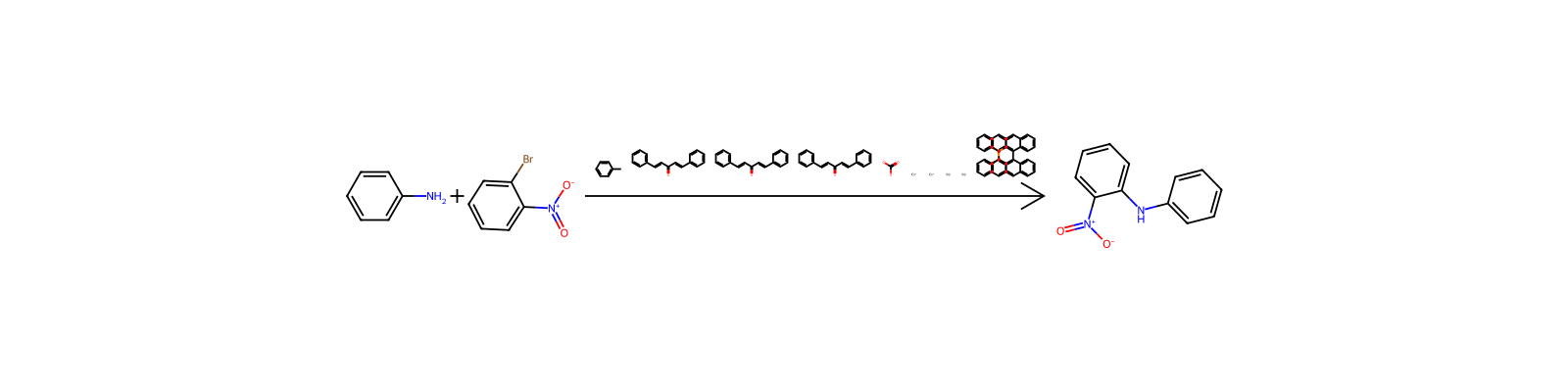
2-Nitro-N-phenylanilin
2-Nitrodiphenylamine
Daten werden ergänzt – lade die Seite später neu, um den aktuellen Stand zu sehen

Grundinformationen
- CAS
119-75-5- Standard-SMILES
O=[N+]([O-])c1ccccc1Nc1ccccc1- InChIKey
RUKISNQKOIKZGT-UHFFFAOYSA-N- Summenformel
- C12H10N2O2
- Durchschnittliche Molmasse
- 214,22 g/mol
- Monoisotopische Masse
- 214,07422756
Überblick
2-nitrodiphenylamine appears as red-brown crystalline powder or reddish-brown solid. (NTP, 1992)
Namen und Bezeichner
- Bevorzugter Name
- 2-Nitrodiphenylamine
- IUPAC
- 2-nitro-N-phenylaniline
- Lokaler Name
- 2-Nitro-N-phenylanilin
- Englischer Name
- 2-Nitrodiphenylamine
- Summenformel
- C12H10N2O2
- Molmasse
- 214.22
Namen und Synonyme
2-Nitrodiphenylamine119-75-52-Nitro-N-phenylanilineBenzenamine, 2-nitro-N-phenyl-o-(Phenylamino)nitrobenzeneCCRIS 6075DTXSID4025749EINECS 204-348-6N-Phenyl-2-nitrobenzenamineAI3-08882DTXCID7057492-nitro-n-phenylbenzeneamine
Weitere Namen anzeigen
NitrodiphenylamineO-NITRO DIPHENYLAMINENSC 4754NSC 629274NSC 105613c.i. 10335Sudan Yellow 1339TIMTEC-BB SBB000544
PHENYL 2-NITROPHENYLAMINEoNitrodiphenylaminePHENYL(2-NITROPHENYL)AMINENPhenylonitroanilineoNitroNphenylaniline2NitroNphenylanilineDiphenylamine, 2nitroRefChem:88722
Datenbank-Bezeichner
- CAS
119-75-5- PubChem CID
- 8407
- DTXSID
DTXSID4025749- ChEMBL
CHEMBL1450018
Eigenschaften
Berechnete StruktureigenschaftenWird ergänzt
- XLogP
- 3,7
- Polarare Oberfläche (TPSA)
- 57,9 Ų
- H-Brücken-Donoren
- 1
- H-Brücken-Akzeptoren
- 3
- Frei drehbare Bindungen
- 2
- Schwere Atome
- 16
- Formalladung
- 0
- Komplexität
- 234
Experimentelle und physikochemische Eigenschaften
Chemical ClassesNitrogen Compounds -> Nitroanilines
SpringerMaterials PropertiesBoiling point
Density1.36 @25 °C
Solubility
less than 1 mg/mL at 72 °F (NTP, 1992)
1.1 [ug/mL] (The mean of the results at pH 7.4)
Melting Point
167.9 °F (NTP, 1992)
75.5 °C
Physical Description
2-nitrodiphenylamine appears as red-brown crystalline powder or reddish-brown solid. (NTP, 1992)
CBI; Liquid
Orange solid; [Reference #1] Reddish-brown solid; [CAMEO] Red or orange crystalline solid; [Alfa Aesar MSDS]
Physikochemische Eigenschaften
- Schmelzpunkt
- 74 · 74-76 °C(lit.)
- Siedepunkt
- 346 °C · 346 °C
Sicherheit und Regulatorisches
Sicherheitsangaben dienen nur zur Orientierung und ersetzen weder das Sicherheitsdatenblatt (SDB) des Lieferanten noch geltende Vorschriften oder eine fachliche Bewertung.
GHS-Klassifizierung
GHS Classification
Warning
H315 (100%): Causes skin irritation [Warning Skin corrosion/irritation]
P261, P264, P264+P265, P271, P280, P302+P352, P304+P340, P305+P351+P338, P319, P321, P332+P317, P337+P317, P362+P364, P403+P233, P405, and P501 (click each P-code to see the statement)
Aggregated GHS information provided per 60 reports by companies from 9 notifications to the ECHA C&L Inventory. Each notification may be associated with multiple companies.
Gefahrenhinweise
Regulatory Information
Chemical: Benzenamine, 2-nitro-N-phenyl-
Benzenamine, 2-nitro-N-phenyl- is listed on the EPA's Chemical Data Reporting (CDR) system. Manufacturers and importers of Benzenamine, 2-nitro-N-phenyl- are required to report information about their production and use of this chemical to the EPA under the Toxic Substances Control Act (TSCA). (40 eCFR Part 711)
Benzenamine, 2-nitro-N-phenyl-: Does not have an individual approval but may be used as a component in a product covered by a group standard. It is not approved for use as a chemical in its own right.
DOT LabelPoison
Fire HazardsFlash point data for this chemical are not available; however, it is probably combustible. (NTP, 1992)
Health HazardsSYMPTOMS: Symptoms of exposure to this chemical include irritation of the skin, eyes, mucous membranes and upper respiratory tract. Structurally similar chemicals may cause methemoglobinemia.
Hazards SummaryA skin, eye, mucous membrane, and upper respiratory tract irritant; May cause methemoglobinemia, based on structurally similar compounds; [NTP] A skin and strong eye irritant; [Alfa Aesar MSDS] See Otto fuel.
Chemie und Industrie
Verwendung und Herstellung
Uses
Used to control the combustion of propylene glycol dinitrate in Otto fuel II (US navy propellant for torpedoes and other weapons systems); Also used as a solvent dye; [ATSDR Public Health Statements] Used as stabilizer for nitroglycerin and as a chemical intermediate; [NTP]
U.S. Production2023: <75,000 lb
Industry UsesOther
General Manufacturing Information
All Other Chemical Product and Preparation Manufacturing
Benzenamine, 2-nitro-N-phenyl-: ACTIVE
Anwendungen
Verwenden(2-Nitrophenyl)phenylamine (cas# 119-75-5) is a compound useful in organic synthesis.
Verwenden2-Nitrodiphenylamine is used to control the combustion of propylene glycol dinitrate in Otto fuel II (US navy propellant for torpedoes and other weapons systems); Also used as a solvent dye; Used as stabilizer for nitroglycerin and as a chemical intermediate
Vor- und nachgelagerte Produkte
Vorgelagerte Rohstoffe
Zugehörige Reaktionen
11


Notizen zur Verbindung
Wird geladen…