
Iodotrimethylsilan
Trimethylsilyl iodide
Daten werden ergänzt – lade die Seite später neu, um den aktuellen Stand zu sehen

Grundinformationen
- CAS
16029-98-4- Standard-SMILES
C[Si](C)(C)I- InChIKey
CSRZQMIRAZTJOY-UHFFFAOYSA-N- Summenformel
- C3H9ISi
- Durchschnittliche Molmasse
- 200,09 g/mol
- Monoisotopische Masse
- 199,95182482
Überblick
structure in first source
Namen und Bezeichner
- Bevorzugter Name
- Trimethylsilyl iodide
- IUPAC
- iodo(trimethyl)silane
- Lokaler Name
- Iodotrimethylsilan
- Englischer Name
- Iodotrimethylsilane
- Summenformel
- C3H9ISi
- Molmasse
- 200.09
Namen und Synonyme
Iodotrimethylsilane16029-98-4TrimethyliodosilaneTrimethylsilyl iodideiodo(trimethyl)silaneSilane, iodotrimethyl-7A65KRZ6NVMe3SiIDTXSID4065997TMSI cpdRefChem:148569DTXCID5035161
Weitere Namen anzeigen
TMS iodideCT3610IodotrimethyLTrimethylsilyl ioIodotrmethylsilanetrimethyiodosilaneCo-Formula CFS-710
240-171-0TMSIMFCD00001028Iodotrimethylsilane (>90%)TMISIodotrimethylsilane; TMSI;Trimethylsilicon iodide; Trimethylsilyl iodidetrimethylsilyliodideC3H9ISi
Datenbank-Bezeichner
- CAS
16029-98-4- PubChem CID
- 85247
- DTXSID
DTXSID4065997- UNII
- 7A65KRZ6NV
- EC Number
- 240-171-0
- Nikkaji
- J150.775C
Eigenschaften
Berechnete StruktureigenschaftenWird ergänzt
- Polarare Oberfläche (TPSA)
- 0 Ų
- H-Brücken-Donoren
- 0
- H-Brücken-Akzeptoren
- 0
- Frei drehbare Bindungen
- 0
- Schwere Atome
- 5
- Formalladung
- 0
- Komplexität
- 28,4
Experimentelle und physikochemische Eigenschaften
Chemical ClassesMetals -> Metalloid Compounds (Silicon)
SpringerMaterials Properties29Si nuclear magnetic resonance spectrum
Physical DescriptionClear light brown liquid; [Sigma-Aldrich MSDS]
Physikochemische Eigenschaften
- Schmelzpunkt
- 0 °C · <0°C
- Siedepunkt
- 106 °C · 106 °C(lit.)
- Dichte
- 1.406 g/mL · 1.406 g/mL at 25 °C(lit.)
- Brechungsindex
- 20 · n20/D 1.471(lit.)
- Flammpunkt
- 25 °F · −25 °F
- storage temp.
- -20 °C · -20°C
- Löslichkeit
- reacts
- Aggregatzustand
- Liquid
- Wichte
- 1.47 · 1.47
- Farbe
- Clear colorless to reddish
Sicherheit und Regulatorisches
Sicherheitsangaben dienen nur zur Orientierung und ersetzen weder das Sicherheitsdatenblatt (SDB) des Lieferanten noch geltende Vorschriften oder eine fachliche Bewertung.
GHS-Klassifizierung
GHS Classification
Danger
H225 (98.4%): Highly Flammable liquid and vapor [Danger Flammable liquids]
P210, P233, P240, P241, P242, P243, P260, P264, P264+P265, P280, P301+P330+P331, P302+P361+P354, P303+P361+P353, P304+P340, P305+P354+P338, P316, P317, P321, P363, P370+P378, P403+P235, P405, and P501 (click each P-code to see the statement)
Aggregated GHS information provided per 62 reports by companies from 9 notifications to the ECHA C&L Inventory. Each notification may be associated with multiple companies.
Gefahrenhinweise
Regulatory Information
Chemical: Silane, iodotrimethyl-
Status: Active Update: 23-11-2022 https://echa.europa.eu/registration-dossier/-/registered-dossier/24465
Iodotrimethylsilane: Does not have an individual approval but may be used under an appropriate group standard
Hazards SummaryReacts violently with water; Causes burns; Inhalation may cause corrosive injuries to upper respiratory tract and lungs; [Sigma-Aldrich MSDS] See Silicon tetraiodide.
Hazard Classes and CategoriesFlam. Liq. 2 (98.4%)
Toxikologische Informationen
Adverse EffectsDermatotoxin - Skin burns.
Sicherheitsdaten
- F
- 8-21
- wgk
- 3
- tsca
- TSCA listed
Chemie und Industrie
Verwendung und Herstellung
UsesUsed as an intermediate; [ExPub: ECHA REACH Registrations]
General Manufacturing InformationSilane, iodotrimethyl-: ACTIVE
Anwendungen
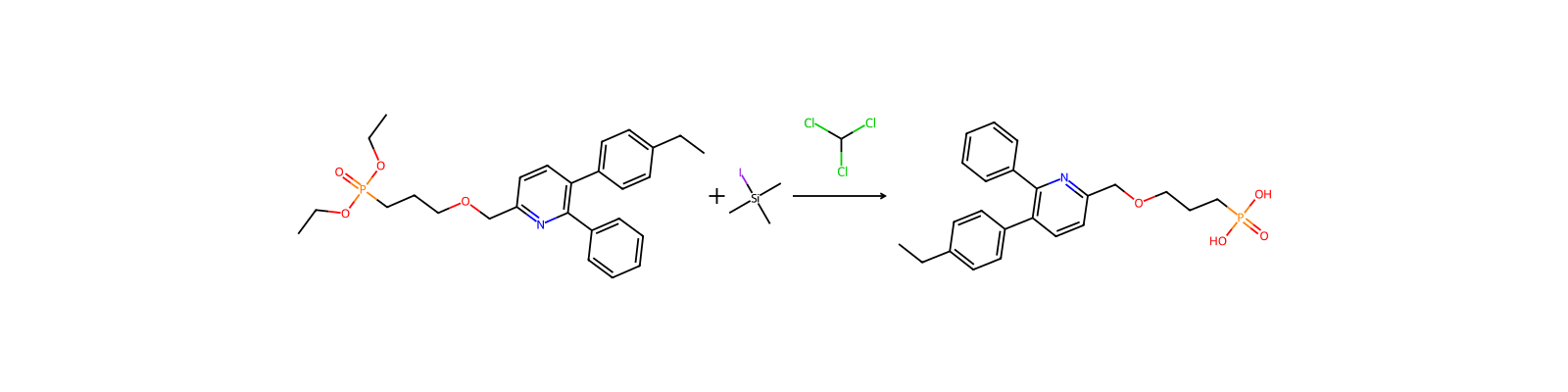
VerwendenIodotrimethylsilane is used for the introduction of trimethylsilyl group in organic synthesis. It is also useful for gas chromatography analysis by converting alcohol into a silyl ether derivative, thereby making it more volatile than the original molecule.Iodotrimethylsilane is a highly efficient reagent for the cleavage of ethers, esters, carbamates, ketals, and lactones. It is also used for the introduction of TMS groups, such as TMS enol ethers, and is a key reagent for the selective removal of N-Cbz groups in the presence of a trimethyltin moiety.This reagent has recently been reported to convert allyl and benzyl phosphotriesters to the corresponding iodides.
Darstellung
synthetischeIodotrimethylsilane is prepared by mixing equimolar amounts of chlorotrimethylsilane and sodium iodide in acetonitrile, reduces various benzylic alcohols to the corresponding phenylalkanes. Other have been reported for the preparation of Trimethylsilyl Iodide(TMS-I): chlorotrimethylsilane undergoes halogen exchange with either lithium iodide in CHCl3 or sodium iodide in MeCN, which allows in situ reagent formation. Alternatively, hexamethyldisilane reacts with iodine at 25–61°C to afford TMS-I with no byproducts.
Vor- und nachgelagerte Produkte
Vorgelagerte Rohstoffe
Zugehörige Reaktionen
1.134



Notizen zur Verbindung
Wird geladen…