

Grundinformationen
- Standard-SMILES
CCOC(=O)c1cnn(-c2ccccc2)c1N- InChIKey
AYJIUOZKKTUKKD-UHFFFAOYSA-N- Summenformel
- C12H13N3O2
- Durchschnittliche Molmasse
- 231,25 g/mol
- Monoisotopische Masse
- 231,10077667
Namen und Bezeichner
- Bevorzugter Name
- Ethyl 5-amino-1-phenyl-1H-pyrazole-4-carboxylate
- IUPAC
- ethyl 5-amino-1-phenylpyrazole-4-carboxylate
- Lokaler Name
- Ethyl-5-amino-1-phenyl-1H-pyrazol-4-carboxylat
- Englischer Name
- 5-Amino-4-carbethoxy-1-phenylpyrazole
- Summenformel
- C12H13N3O2
- Molmasse
- 231.25
Namen und Synonyme
16078-71-0Ethyl 5-amino-1-phenyl-1H-pyrazole-4-carboxylate1H-Pyrazole-4-carboxylic acid, 5-amino-1-phenyl-, ethyl esterEINECS 240-224-8DTXSID5073406NSC 75788NSC 221275RefChem:595651DTXCID9035173240-224-85-Amino-4-Carbethoxy-1-Phenylpyrazoleethyl 5-amino-1-phenylpyrazole-4-carboxylate
Weitere Namen anzeigen
AKOS 231-01AKOS B000506AKOS NCG-0076BUTTPARK 19\09-73AKOS BBS-000029405-AMno-4-carbethoxy-1-phenylpyrazole5-amino-4-carboethoxy-1-phenylyrazole
3-Amino-4-carbethoxy-2-phenylpyrazoleMFCD00020731Ethyl 5-amino-1-phenyl-4-pyrazolecarboxylate5-Amino-1-phenyl-1H-pyrazole-4-carboxylic acid ethyl esterNSC-75788NSC-2212755-Amino-4-ethoxycarbonyl-1-phenylpyrazoleEthyl 3-amino-2-phenylpyrazole-4-carboxylate
Datenbank-Bezeichner
- CAS
16078-71-0- PubChem CID
- 85270
- DTXSID
DTXSID5073406- ChEMBL
CHEMBL1418139- UNII
- TA5PP5LH2V
- EC Number
- 240-224-8
- Nikkaji
- J286.806G
Eigenschaften
Berechnete Struktureigenschaften
- XLogP
- 2,3
- Polarare Oberfläche (TPSA)
- 70,1 Ų
- H-Brücken-Donoren
- 1
- H-Brücken-Akzeptoren
- 4
- Frei drehbare Bindungen
- 4
- Schwere Atome
- 17
- Formalladung
- 0
- Komplexität
- 266
Physikochemische Eigenschaften
- Schmelzpunkt
- 98 · 98-100 °C (lit.)
- Siedepunkt
- 373.33 °C · 373.33°C (rough estimate)
- Dichte
- 1.1818 · 1.1818 (rough estimate)
- Brechungsindex
- 1.529 · 1.5290 (estimate)
- storage temp.
- 2 · under inert gas (nitrogen or Argon) at 2–8 °C
- Löslichkeit
- 25 mg/mL, · methanol: soluble25mg/mL, clear, colorless
- Aggregatzustand
- powder to crystal
- pka
- 0.55 · 0.55±0.10(Predicted)
- Farbe
- White to Light yellow to Light orange
- BRN
- 211079 · 211079
- InChI
- InChI=1S/C12H13N3O2/c1-2-17-12(16)10-8-14-15(11(10)13)9-6-4-3-5-7-9/h3-8H,2,13H2,1H3
- InChIKey
- AYJIUOZKKTUKKD-UHFFFAOYSA-N
- SMILES
- N1(C2=CC=CC=C2)C(N)=C(C(OCC)=O)C=N1
- CAS Datenbank
- 16078 · 16078-71-0(CAS DataBase Reference)
- NIST chemische Informationen
- 3 · Ethyl 3-amino-2-phenylpyrazole-4-carboxylate(16078-71-0)
- EPA chemische Informationen
- 1 H-Pyrazole-4-carboxylic · 1H-Pyrazole-4-carboxylic acid, 5-amino-1-phenyl-, ethyl ester (16078-71-0)
Sicherheit und Regulatorisches
GHS-Klassifizierung
GHS Classification
Warning
H315 (100%): Causes skin irritation [Warning Skin corrosion/irritation];H319 (100%): Causes serious eye irritation [Warning Serious eye damage/eye irritation];H335 (97.9%): May cause respiratory irritation [Warning Specific target organ toxicity, single exposure; Respiratory tract irritation]
P261, P264, P264+P265, P271, P280, P302+P352, P304+P340, P305+P351+P338, P319, P321, P332+P317, P337+P317, P362+P364, P403+P233, P405, and P501 (click each P-code to see the statement)
Aggregated GHS information provided per 47 reports by companies from 7 notifications to the ECHA C&L Inventory. Each notification may be associated with multiple companies.;Information may vary between notifications depending on impurities, additives, and other factors. The percentage value in parenthesis indicates the notified classification ratio from companies that provide hazard codes. Only hazard codes with percentage values above 10% are shown. For more detailed information, please visit ECHA C&L website.
Gefahrenhinweise
Hazard Classes and CategoriesSkin Irrit. 2 (100%);Eye Irrit. 2 (100%);STOT SE 3 (97.9%)
Sicherheitsdaten
- wgk
- 3
- hs_code
- 29331990
- RTECS-Nr.
- UQ6392025
- risk_code
- 36/37/38-22
- hazard_code
- Xi,Xn
- safety_code
- 26-37/39-36/37/39
- Speicherklasse
- 11 - Combustible Solids
- Hazard Classifications
- Eye Irrit. 2Skin Irrit. 2STOT SE 3
Chemie und Industrie
Anwendungen
VerwendenEthyl 5-amino-1-phenyl-4-pyrazolecarboxylate may be used as internal standard for the GC-MS determination of etomidate [ethyl-1-(1-phenylethyl)-1H-imidazole-5-carboxylate] in mouse brain tissue.
Vor- und nachgelagerte Produkte
Vorgelagerte Rohstoffe
Nachgelagerte Produkte
Anbieter50 Anbieter
上海阿拉丁生化科技股份有限公司400-6206333 13167063860 · [email protected]
毕佳索(上海毕得医药科技股份有限公司)400-6005915 · [email protected]
Sichuan Biosynce Pharmatech Co., Ltd.[email protected]
陕西缔都新材料有限公司029-63373950 17392216152 · [email protected]
Dayang Chem (Hangzhou) Co.,Ltd.+86-0571-88938639 17705817739 · [email protected]
上海埃玛诺生物科技有限公司17302153218
上海迈瑞尔生化科技有限公司4006356688 18621169109 · [email protected]
北京索莱宝科技有限公司010-50973130 17801761073 · [email protected]
阿法埃莎(中国)化学有限公司400-6106006 · [email protected]
太原市瑞和丰科贸有限公司+86 351 7031519 · [email protected]
安耐吉化学&3A(安徽泽升科技股份有限公司)400-0056266 · [email protected]
武汉凯威斯科技有限公司86-027-67849912 · [email protected]
上海瀚鸿科技股份有限公司021-54306202 13764082696 · [email protected]
烟台盛凯伦生物制品有限公司13356901049 · [email protected]
Pure Chemistry Scientific Inc.001-857-928-2050 or 1-888-588-9418 · [email protected]
上海泰坦科技股份有限公司400-6009262 15618770481 · [email protected]
南京爱珂医药科技有限公司025-58395930 · [email protected]
杭州东帆化学有限公司86-0571-85151182
菏泽博纳医药科技有限公司15865805009 · [email protected]
山东西亚化学有限公司13355009207 13355009207 · [email protected]
上海铖瑞生物科技有限公司17316456674 15316859367
上海珂华生物科技有限公司021-60455363 18019463053 · [email protected]
TCI AMERICA800-4238616 · [email protected]
TOKYO CHEMICAL INDUSTRY CO., LTD.03-36680489 · [email protected]
TCI Europe320-37350700 · [email protected]
上海毕得医药科技股份有限公司400-164-7117 18317119277 · [email protected]
上海鑫圭生物科技有限公司15121041756 · [email protected]
上海寰川实业有限公司021-61478794 · [email protected]
上海技毅生物科技有限公司13621943973 · [email protected]
青岛海智微元生物科技有限公司18317699790 18317699790 · [email protected]
Sigma-Aldrich西格玛奥德里奇(上海)贸易有限公司021-61415566 800-8193336 · [email protected]
广东翁江化学试剂有限公司0751-2886766 13927870850 · [email protected]
上海超岚化工科技中心(原宁波市超明生物科技有限公司)13301662590 · [email protected]
北京汇科盈生物科技有限公司15210661751 · [email protected]
sgtlifesciences pvt ltd+91-8790379245 · [email protected]
上海药禾平生物医药科技有限公司57540919 13120888836 · [email protected]
武汉凯威斯科技有限公司027-67849912 · [email protected]
南京凯莫森医药科技有限公司18114022054; 18114022054
南京药诚医药科技有限公司025-57043319 15261831516
上海源叶生物科技有限公司13636370518 · [email protected]
深圳市创鑫生物科技有限公司13417589054 · [email protected]
常州合晶化工有限公司85528066 13775048983 · [email protected]
烟台盛凯伦化学科技有限公司13356901049 · [email protected]
泰安市嘉叶生物科技有限公司15318151873;13127280945 · [email protected]
山东小野化学股份有限公司0539-6362799 20)
上海相辉医药科技有限公司[email protected]
上海珂臻医药科技有限公司021-021-021-31663258 13795219287 · [email protected]
上海尊理加生命科技有限公司021-34045219 13062664914 · [email protected]
杭州洁汉化工有限公司+86-571-86217390; +8618058761490 · [email protected]
Capot Chemical Co.,Ltd.+86-(0)57185586718 +86-13336195806 · [email protected]
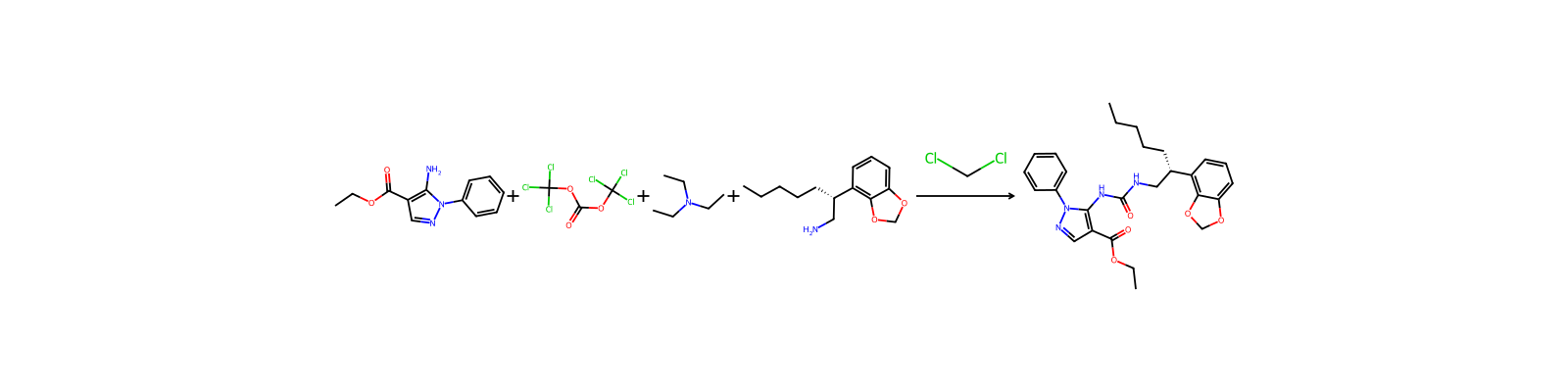
Zugehörige Reaktionen
10


Verknüpfte Notizen
Wird geladen…