StartseiteMCPWorkbenchSkills
StartseiteWorkbenchBenachrichtigungenMein Bereich
llms.txt · MCP-AnleitungDatenschutz · Nutzungsbedingungen · Supportv1.8.0
  1. Startseite
  2. /Verbindung

Cobaltbis(2-ethylhexanoat)

Cobalt octoate

HCID 8696
Neue NotizNeue ReaktionAnfrage stellen
Druckvorschau

Daten werden ergänzt – lade die Seite später neu, um den aktuellen Stand zu sehen

GrundinformationenÜberblickNamen und BezeichnerEigenschaftenSicherheit und RegulatorischesChemie und IndustrieZugehörige ReaktionenNotizen zur Verbindung
TeilstruktursucheÄhnliche Strukturen suchen

Grundinformationen

CAS
136-52-7
Standard-SMILES
CCCCC(CC)C(=O)[O-].CCCCC(CC)C(=O)[O-].[Co+2]
InChIKey
QAEKNCDIHIGLFI-UHFFFAOYSA-L
Summenformel
C16H30CoO4
Durchschnittliche Molmasse
345,34 g/mol
Monoisotopische Masse
345,14760444

Überblick

Cobalt bis(2-ethylhexanoate) is a chemical compound of cobalt. Cobalt is a metallic element with the atomic number 27. It is found naturally in rocks, soil, water, plants, and animals. In small amounts cobalt is an essential element for life, as it is part of vitamin B12. However, excess exposure is known to exhibit toxic effects. (L29, L30)

Namen und Bezeichner

Bevorzugter Name
Cobalt octoate
IUPAC
cobalt(2+);bis(2-ethylhexanoate)
Lokaler Name
Cobaltbis(2-ethylhexanoat)
Englischer Name
Cobalt bis(2-ethylhexanoate)
Summenformel
C16H30CoO4
Molmasse
345.34

Namen und Synonyme

136-52-7Cobalt(II) 2-ethylhexanoateCOBALT BIS(2-ETHYLHEXANOATE)Cobalt octoateCobalt 2-ethylhexoateCobalt 2-ethylhexanoateCobaltous octoateHexanoic acid, 2-ethyl-, cobalt(2+) saltVersneller NL 49C 101 (catalyst)8SEH-Co2-Ethylhexanoic acid cobalt(2+) salt
Weitere Namen anzeigen
Cobalt bisCobalt OctaoteCobalt octoate 6%Cobaltousoctanoatecobalt(II) octoateCobalt octoate 12%COBALT(II) OCTYLATE
NL 49PNL 51PNL 51SCO 120655R88E34C 101DTXSID0027064205-250-6

Datenbank-Bezeichner

CAS
136-52-7
PubChem CID
8696
DTXSID
DTXSID0027064

Eigenschaften

Berechnete StruktureigenschaftenWird ergänzt

Polarare Oberfläche (TPSA)
80,3 Ų
H-Brücken-Donoren
0
H-Brücken-Akzeptoren
4
Frei drehbare Bindungen
8
Schwere Atome
21
Formalladung
0
Komplexität
93,9

Experimentelle und physikochemische Eigenschaften

Chemical ClassesMetals -> Organic Acids, Metal Salts
Polymers · 2 Einträge

Plastics -> Other functions -> Filler

Plastics -> PET

Density1.25 at 21.6 °C /OECD Guideline 109 (Density of Liquids and Solids)/
Color/Form · 3 Einträge

Blue liquid

Blue-violet mass

Purple to dark blue waxy solid at 20 °C

Solubility · 2 Einträge

In water, 25.05 g/L at 20 °C, pH 6.97 (after 72 hours shaking); 6.3 g/L at 37 °C, pH 6.31-6.54 (after 72 hours shaking)

Solubility in water, 40.3 g/L at 20 °C, pH 6.8 /OECD Guideline 105 (Water Solubility)/

Boiling PointDecomposes at approximately 90 deg before boiling if heated in an aluminum crucible under nitrogen
Melting PointMelts in the range between 53-58 °C if heated in an aluminum crucible under nitrogen; melts under decomposition in the range between 64-84 °C if heated in an glass capillary under air

Sicherheit und Regulatorisches

Sicherheitsangaben dienen nur zur Orientierung und ersetzen weder das Sicherheitsdatenblatt (SDB) des Lieferanten noch geltende Vorschriften oder eine fachliche Bewertung.

GHS-Klassifizierung

GHS Classification · 6 Einträge

This chemical does not meet GHS hazard criteria for 0.3% (4 of 1174) of reports.

Danger

H226 (15.2%): Flammable liquid and vapor [Warning Flammable liquids]

P203, P210, P233, P240, P241, P242, P243, P261, P264, P264+P265, P270, P272, P273, P280, P301+P317, P302+P352, P303+P361+P353, P305+P351+P338, P318, P321, P330, P332+P317, P333+P317, P337+P317, P362+P364, P370+P378, P391, P403+P235, P405, and P501 (click each P-code to see the statement)

Aggregated GHS information provided per 1174 reports by companies from 54 notifications to the ECHA C&L Inventory. Each notification may be associated with multiple companies.

Danger

Gefahrenhinweise

Regulatory Information · 4 Einträge

Chemical: Hexanoic acid, 2-ethyl-, cobalt(2+) salt

Hexanoic acid, 2-ethyl-, cobalt(2+) salt (2:1) is listed on the EPA's Chemical Data Reporting (CDR) system. Manufacturers and importers of Hexanoic acid, 2-ethyl-, cobalt(2+) salt (2:1) are required to report information about their production and use of this chemical to the EPA under the Toxic Substances Control Act (TSCA). (40 eCFR Part 711)

Status: Active Update: 24-06-2022 https://echa.europa.eu/registration-dossier/-/registered-dossier/14779

Hexanoic acid, 2-ethyl-, cobalt(2+) salt: Does not have an individual approval but may be used under an appropriate group standard

Other Safety InformationIMAP assessments - Cobalt salts of 2-ethylhexanoic acid and related compounds: Human health tier II assessment
Hazards Summary · 1 Eintrag

A case of occupational allergic contact dermatitis was reported; [Reference #1] Available as a 65% by weight solution in mineral spirits; [HSDB] High concentrations of vapor cause eye and respiratory tract irritation, and may cause drowsiness; [MSDSonline] See Naphtha (coal tar). See Cobalt.

Chemie und Industrie

Pharmakologische Informationen

Metabolism/Metabolites · 1 Eintrag

Cobalt is absorbed though the lungs, gastrointestinal tract, and skin. Since it is a component of the vitamin B12 (cyanocobalamin), it is distributed to most tissues of the body. It is transported in the blood, often bound to albumin, with the highest levels being found in the liver and kidney. Cobalt is excreted mainly in the urine and faeces. (L29)

Verwendung und Herstellung

Uses · 3 Einträge

Used as paint drier, whitener, and catalyst; [HSDB]

Painting (Pigments, Binders, and Biocides) [Category: Paint]

Paint drier, whitener, catalyst

U.S. Production · 3 Einträge

2023: 1,000,000 - <2,500,000 lb

(1987) 5.04X10+6 lb

Non-confidential 2012 Chemical Data Reporting (CDR) information on the production and use of chemicals manufactured or imported into the United States. Chemical: Hexanoic acid, 2-ethyl-, cobalt(2+) salt (2:1). National Production Volume: 4,294,523 lb/yr.

Consumer UsesNot Known or Reasonably Ascertainable
Industry UsesSurface modifier
Methods of Manufacturing · 1 Eintrag

... can be produced by metathesis reaction of cobalt salt solutions and the sodium salt of the organic acid, by oxidation of cobalt metal in the presence of the acid, and by neutralization of the acid using cobalt carbonate or cobalt hydroxide.

Formulations/Preparations65% wt solution in mineral spirits
Household ProductsInformation on 111 consumer products that contain Cobalt 2-ethylhexanoate in the following categories is provided:

Zugehörige Reaktionen

11
Reaktionsaufzeichnung erstellen
Reaktionsgleichung von HRID 255987
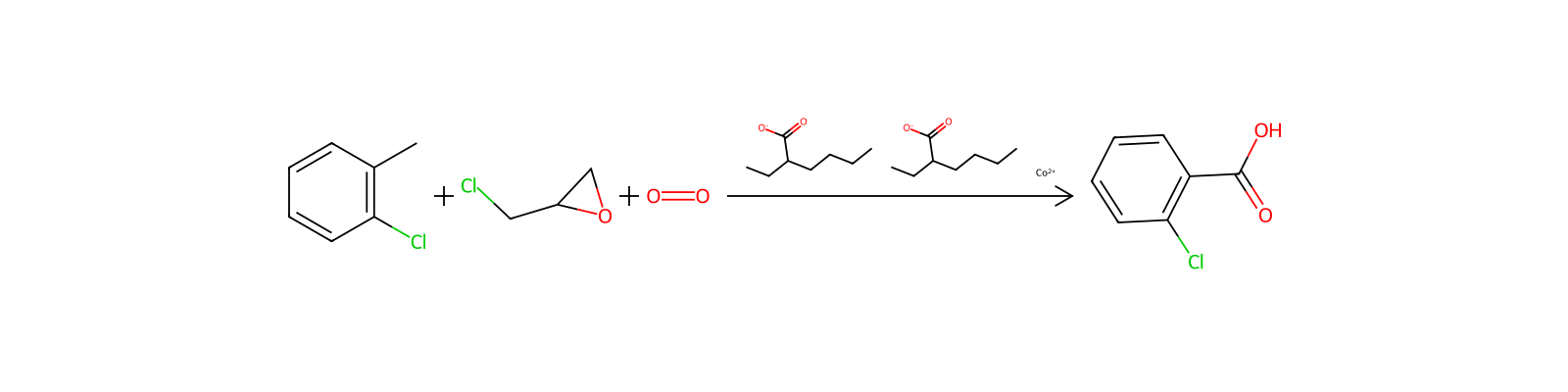
HRID 255987als Katalysatoruspto-grants-1987_10
Reaktionsgleichung von HRID 258594
HRID 258594als Katalysatoruspto-grants-1977_07
Reaktionsgleichung von HRID 258595
HRID 258595als Katalysatoruspto-grants-1977_07
Reaktionsgleichung von HRID 1076084
HRID 1076084als Katalysatoruspto-grants-1976_05
Reaktionsgleichung von HRID 1578833
HRID 1578833als Katalysatoruspto-grants-1976_02
Reaktionsgleichung von HRID 1588081
HRID 1588081als Produktuspto-grants-1993_06
Reaktionsgleichung von HRID 1683460
HRID 1683460als Katalysatoruspto-grants-1997_06
Reaktionsgleichung von HRID 1757015
HRID 1757015als Produktuspto-grants-1995_08
Seite 1 von 2

Notizen zur Verbindung

Wird geladen…

Auf dieser SeiteGrundinformationenÜberblickNamen und BezeichnerEigenschaftenSicherheit und RegulatorischesChemie und IndustrieZugehörige ReaktionenNotizen zur Verbindung
Weitere Aktionen
Neue NotizNeue ReaktionAnfrage stellen
UNII
0655R88E34
EC Number
205-250-6
Nikkaji
J184.403B
Surface Tension
64.43 mN/m at 20 °C, concentration of 1 g/L
Food Contact SubstancesFCS -> FDA Inventory of Food Contact Substances Listed in 21 CFR
Physical Description · 2 Einträge

CBI; Liquid

Blue liquid; [HSDB] Clear purple-blue liquid; Insoluble in water; Available as 65% solution by weight in mineral spirits; [MSDSonline]

Other Experimental Properties · 1 Eintrag

Transformation/dissolution: the dissolution is 127.7 ug/L at 1 mg/L loading for the 28-day endpoint. The dissolution is 1405.1 ug/L at 10 mg/L loading for the 7-day endpoint. The dissolution is 14300.2 ug/L at 100 mg/L loading for the 7-day endpoint.

Physikochemische Eigenschaften

Dichte
1.002 g/mL · 1.002 g/mL at 25 °C
Dampfdruck
5 Pa · 5Pa at 25℃
Flammpunkt
104 °F · 104 °F
Aggregatzustand
liquid
Farbe
purple
Wasserlöslichkeit
40.3 g/L · 40.3g/L at 20℃
InChI
InChI=1S/2C8H16O2.Co/c2*1-3-5-6-7(4-2)8(9)10;/h2*7H,3-6H2,1-2H3,(H,9,10);/q;;+2/p-2
InChIKey
QAEKNCDIHIGLFI-UHFFFAOYSA-L
SMILES
[Co+2].C([O-])(=O)C(CC)CCCC.C([O-])(=O)C(CC)CCCC
CAS Datenbank
136 · 136-52-7(CAS DataBase Reference)
EPA chemische Informationen
2 · Hexanoic acid, 2-ethyl-, cobalt(2+) salt (136-52-7)
Special Reports · 1 Eintrag

DHHS/National Toxicology Program; Report on Carcinogens, Fourteenth Edition: Cobalt-Related Exposures (November 2016). The Report on Carcinogens is an informational scientific and public health document that identifies and discusses substances (including agents, mixtures, or exposure circumstances) that may pose a carcinogenic hazard to human health. Cobalt and cobalt compounds that release cobalt ions in vivo, including cobalt 2-ethylhexanoate, are reasonably anticipated to be human carcinogens.[Available from, as of January 10, 2017: http://ntp.niehs.nih.gov/pubhealth/roc/index-1.html]

Atmospheric Standards · 1 Eintrag

Listed as a hazardous air pollutant (HAP) generally known or suspected to cause serious health problems. The Clean Air Act, as amended in 1990, directs EPA to set standards requiring major sources to sharply reduce routine emissions of toxic pollutants. EPA is required to establish and phase in specific performance based standards for all air emission sources that emit one or more of the listed pollutants. Cobalt bis(2-ethylhexanoate) is included on this list.

Hazard Classes and Categories · 5 Einträge

Flam. Liq. 3 (15.2%)

Carcinogenicity - category 1B

Respiratory sensitization - Category 1A

Serious eye damage/eye irritation - Category 2A

Carcinogenicity - Category 1B

Sicherheit und Schutzausrüstung

Exposure Control and Personal ProtectionBiological Exposure Indices (BEI) [ACGIH] - Cobalt in urine = 15 ug/L; sample at end of shift at end of workweek;
Cleanup Methods · 1 Eintrag

Liquid material spills can be copiously flushed with water and channeled to a treatment system or holding tank for reclamation or proper disposal. Spills of dry material can be removed by vacuuming or wet mopping. Some spills can be removed by hosing, first with a mist of water to dampen the spilled material and then with a more forceful stream that flushes it into a holding tank or other facility for handling contaminated water. Work surfaces or contaminated clothing should never be cleaned by dry sweeping or blowing with pressurized hoses. Recovery systems used to reclaim waste metals should comply with federal, state, and local regulations. All waste materials generated in the handling of cobalt-containing substances should be disposed of in compliance with federal, state, and local regulations. /Cobalt and cobalt salts/

Disposal Methods · 1 Eintrag

SRP: Recycle any unused portion of the material for its approved use or return it to the manufacturer or supplier. Ultimate disposal of the chemical must consider: the material's impact on air quality; potential migration in air, soil or water; effects on animal, aquatic and plant life; and conformance with environmental and public health regulations. If it is possible or reasonable use an alternative chemical product with less inherent propensity for occupational harm/injury/toxicity or environmental contamination.

Preventive Measures · 3 Einträge

Employers should institute programs that emphasize good personal hygiene to prevent skin and respiratory irritation caused by cobalt containing dusts. After working with cobalt products, workers should thoroughly wash their hands and face before drinking, eating, or smoking. If skin contact with cobalt solutions occurs, the worker should wash the affected skin promptly. The employer should provide showers if workers have substantial contact with cobalt. These workers should be encouraged to wash or shower after each workshift. Employers should prohibit smoking or carrying of tobacco products, and should prohibit eating, food handling, or food storage within the work area. /Cobalt and cobalt salts/

General plant maintenance must be conducted regularly to prevent cobalt containing dusts from accumulating in work areas. Cleaning should be performed with vacuum pickup or wet mopping to minimize the amount of dust dispersed into the air. A decontamination room should be available for cleaning equipment that is to receive major overhaul or maintenance. Spills of cobalt-containing material should be promptly cleaned up to minimize inhalation or dermal contact. /Cobalt and cobalt salts/

Special precautions are necessary when workers must enter tanks or vessels, such as reaction vessels containing cobalt catalysts or vessels used to prepare cobalt salts. Before any worker enters a vessel, all sources for transferring cobalt and other materials into or out of the vessel must be blanked to prevent their entry. The vessel interior must then be washed with water and purged with air. After purging the vessel's atmosphere with suitable instruments to ensure that no hazards from fire, explosion, oxygen deficiency, or dust inhalation exist. No one should enter a tank or vessel without first being equipped with an appropriate respirator and a secured lifeline or harness. Mechanical ventilation should be provided continuously when workers are inside the tank. At least one other worker similarly equipped with respiratory protection, lifeline, and harness should watch at all times from outside the vessel. Workers inside the tank must be able to communicate with those persons outside. Other workers must be available to assist in an emergency. Flame- or spark-generating operations, such as welding or cutting, should be performed only when an authorized representative of the employer has signed a permit based on a finding that all necessary safety precautions have been taken. /Cobalt and cobalt salts/

Minimum Risk LevelChronic Inhalation: 0.0001 mg/m3 (L134) Intermediate Oral: 0.01 mg/kg/day (L134)
Threshold Limit Values (TLV) · 6 Einträge

0.02 [mg/m3], as Co

8 hr Time Weighted Avg (TWA): 0.02 mg/cu m. /Cobalt and inorganic compounds, as Co/

Peak Exposure Recommendation: Transient increases in workers' exposure levels may exceed 3 times the value of the TLV-TWA level for no more than 15 minutes at a time, on no more than 4 occasions spaced 1 hour apart during a workday, and under no circumstances should they exceed 5 times the value of the TLV-TWA level. In addition, the 8-hour TWA is not to be exceeded for an 8-hour work period. /Cobalt and inorganic compounds, as Co/

A3: Confirmed animal carcinogen with unknown relevance to humans. /Cobalt and inorganic compounds, as Co/

Biological Exposure Index (BEI): Determinant: cobalt in urine; Sampling Time: end of shift at end of workweek; BEI: 15 ug/L. Notation: The determinant is nonspecific, since it is also observed after after exposure to other chemicals. /Cobalt and inorganic compounds, including cobalt oxides but not combined with tungsten carbide/

Biological Exposure Index (BEI): Determinant: cobalt in urine; Sampling Time: end of shift at end of workweek; BEI: None. Notation: The determinant is nonspecific, since it is also observed after exposure to other chemicals. Biological monitoring should be considered for this compound based on the review; however, a specific BEI could not be determined due to insufficient data. /Cobalt with tungsten carbide/

Toxikologische Informationen

TreatmentTreatment of cobalt poisoning is symptomatic. (L29)
Health EffectsExposure to high amount of cobalt can cause heart, lung, kidney, and liver damage. Skin contact is known to result in contact dermatitis. Cobalt may also have mutagenic and carcinogenic effects. (L29, L30)
Adverse EffectsSkin Sensitizer - An agent that can induce an allergic reaction in the skin.
Exposure RoutesInhalation (L29) ; oral (L29) ; dermal (L29)
Toxicity Summary · 2 Einträge

IDENTIFICATION AND USE: Cobalt bis(2-ethylhexanoate) is a blue liquid. It is used as paint drier, whitener, catalyst. HUMAN EXPOSURE AND TOXICITY: Case reports of occupational allergic contact dermatitis caused by cobalt-2-ethylhexoate have been published. ANIMAL STUDIES: The instillation of cobalt 2-ethylhexanoate into the eye of rabbits resulted in slight opacity of the cornea in the two female animals 24 hours after treatment and persisted until 72 hours after treatment. Cobalt 2-ethyl hexanoate was assayed for the ability to induce mutation at the hypoxanthine-guanine phosphoribosyl transferase (hprt) locus (6-thioguanine [6TG] resistance) in mouse lymphoma cells. The results of this study were negative.

Cobalt is believed to exhibit its toxicity through a oxidant-based and free radical-based processes. It produces oxygen radicals and may be oxidized to ionic cobalt, causing increased lipid peroxidation, DNA damage, and inducing certain enzymes that lead to cell apoptosis. Cobalt has also been shown to block inorganic calcium channels, possibly impairing neurotransmission. Cobalt can also chelate lipoic acids, impairing oxidation of pyruvate or fatty acids. In addition, cobalt may inhibit DNA repair by interacting with zinc finger DNA repair proteins, and has also been shown to inhibit heme synthesis and glucose metabolism. Cobalt may activate specific helper T-lymphocyte cells and interact directly with immunologic proteins, such as antibodies (IgA and IgE) or Fc receptors, resulting in immunosensitization. (L29)

Signs and SymptomsCobalt inhalation can cause asthma-like breathing problems. Skin contact is known to result in contact dermatitis, which is characterized by irritation and rashes. Ingesting large amounts of cobalt may cause nausea and vomiting. (L2090)
Human Toxicity Excerpts · 5 Einträge

/CASE REPORTS/ A 46-year-old woman, who worked as a laminator of spa baths, presented with hand dermatitis, which was suspected to be related to her occupation. Patch testing revealed strong reactions to both cobalt chloride and a polyester resin that the patient had been using at her workplace. She also reacted to latex and had been wearing cotton gloves underneath rubber gloves at work. It was later discovered that cobalt octoate (synonym: cobalt-2-ethylhexanoate), a compound not listed on the manufacturer's material safety data sheet, was included as an accelerator in the polyester resin. She was then tested to cobalt octoate, which was also strongly positive. Her successful treatment included protection of her hands at work with cotton lined PVC gloves. This case highlights the role of cobalt salts as sensitizers and their presence as accelerators used in polyester resins, and the importance of recognizing concomitant latex allergy that may complicate occupational dermatitis. ...

/CASE REPORTS/ A case report of occupational allergic contact dermatitis caused by cobalt-2-ethylhexoate was presented. A 52 year old man who worked as an offset printer for 35 years presented with hand eczema of a long duration. Patch testing performed 12 years ago elicited a positive reaction to bacitracin and negative reactions to the standard series, rubber chemical series, and plastics and glues series. Recently, his hand eczema worsened, and therefore, further patch testing was performed. Cobalt-chloride elicited an allergic reaction in the standard series. Two ink driers from work containing 5% and 2% cobalt-2-ethylhexoate, respectively, elicited allergic reactions in a dilution series. The author stressed the importance of patch testing dermatitis patients in contact with inks or paints and to regard with care the potential relevance of cobalt allergic reactions in these patients.

/ALTERNATIVE and IN VITRO TESTS/ CELL CULTURE:EST-1000 kits (Lot No.: EST 100329-001) were purchased ... . The EST-1000 tissue consisted of normal, human-derived epidermal keratinocytes which have been cultured to form a multilayered, highly differentiated model of the human epidermis. ... After exposure to the test item cobalt bis(2-ethylhexanoate) the relative absorbance values were unaltered at 106.9% after 3 minutes. After the 1 hour exposure relative absorbance values were reduced to 80.7%. Both values did not exceed the threshold for corrosivity of 50% for the 3 minutes exposure and 15% for the 1 hour exposure. Therefore, the test item was not considered to be corrosive.

/ALTERNATIVE and IN VITRO TESTS/ CELL CULTURE:EpiSkin kit (Lot No.: 10-EKIN-040) /were/ purchased ... . The EpiSkin tissue consists of normal, human-derived epidermal keratinocytes which have been cultured to form a multilayered, highly differentiated model of the human epidermis. After treatment with the test item cobalt 2-ethylhexanoate the relative absorbance values decreased to 88.0%. This value is above the threshold for irritancy of </= 50%. Therefore, the test item is not considered to possess an irritant potential.

For more Human Toxicity Excerpts (Complete) data for Cobalt bis(2-ethylhexanoate) (6 total), please visit the HSDB record page.

Artificial Pollution Sources · 1 Eintrag

Cobalt bis(2-ethylhexanoate)'s production and use as a paint and varnish drier, adhesion additive, whitener and catalyst(1,2) may result in its release to the environment through various waste streams(SRC). Release to the environment of cobalt bis(2-ethylhexanoate) is likely to occur from: indoor use in long-life materials with low release rate (e.g. flooring, furniture, toys, construction materials, curtains, foot-wear, leather products, paper and cardboard products, electronic equipment), outdoor use in long-life materials with low release rate (e.g. metal, wooden and plastic construction and building materials), outdoor use and indoor use(3).

Environmental Biodegradation · 1 Eintrag

Using OECD Guideline 301 B (Ready Biodegradability: CO2 Evolution Test) and an activated sludge inoculum, cobalt bis(2-ethylhexanoate), at an initial concentration of 10 mg/L, reached 60% of its theoretical CO2 evolution within 10 days of incubation which classified the compound as readily biodegradabale(1).

Carcinogen Classification2B, possibly carcinogenic to humans. (L135)
Non-Human Toxicity Excerpts · 3 Einträge

/LABORATORY ANIMALS: Acute Exposure/ The instillation of cobalt 2-ethylhexanoate into the eye /of rabbits/ resulted in slight opacity of the cornea in the two female animals 24 hours after treatment and persisted until 72 hours after treatment. Marked reddening of the conjunctivae was observed in the two female animals 1 hour after treatment and slight reddening was observed in the male animal 24 hours after treatment. Conjunctival reddening persisted as slight to marked until 72 hours (male), 7 days (one female) or 10 days (second female) after treatment. Slight to moderate chemosis of the conjunctivae was observed in the two female animals 1 hour after treatment and persisted until 72 hours after treatment. Moderate reddening of the sclerae was observed in the two female animals 1 hour after treatment and persisted as slight to marked reddening until 7 days after treatment. Slight to moderate ocular discharge was observed in the two female animals 1 hour after treatment and persisted until 72 hours after treatment. All eye reactions were reversible and were no longer evident 7 days (male), 10 days (one female) or 14 days (second female) after treatment. No abnormal findings were observed for the iris light reflex. No corrosion was observed. No staining of the treated eyes by the test item was observed. Test item remnants were observed in the treated eyes of all animals 1 hour after treatment and persisted in one animal (male) until 24 hours after treatment. Thus, the test item did not induce significant or irreversible damage to the rabbit eye.

/GENOTOXICITY/ Cobalt 2-ethyl hexanoate was assayed for the ability to induce mutation at the hypoxanthine-guanine phosphoribosyl transferase (hprt) locus (6-thioguanine [6TG] resistance) in mouse lymphoma cells using a fluctuation protocol. The study consisted of a cytotoxicity Range-Finder Experiment followed by two independent experiments, each conducted in the absence and presence of metabolic activation (S9). A 3-hour treatment incubation period was used for all experiments. In the cytotoxicity Range-Finder Experiment, six concentrations were tested in the absence and presence of S9, ranging from 6.25 to 2000 ug/mL (limited by solubility in culture medium). The highest concentration to provide >10% RTG was 125 ug/mL, which gave 10% and 18% RS in the absence and presence of S9, respectively. Accordingly, for Experiment I ten concentrations, ranging from 15 to 200 ug/mL, were tested in the absence and presence of S9. Seven days after treatment, the highest concentration selected to determine viability and 6TG resistance was 95 ug/mL in the absence and presence of S9, which gave 11% and 13% RS, respectively. In Experiment II ten concentrations, ranging from 10 to 150 ug/mL ug/mL, were tested in the absence and presence of S9. Seven days after treatment, the highest concentrations selected to determine viability and 6TG resistance were 100 ug/mL in the absence of S9 and 120 ug/mL in the presence of S9, which gave 14% and 13% RS, respectively. Negative (vehicle) and positive control treatments were included in each Mutation Experiment in the absence and presence of S9. Mutant frequencies in negative control cultures fell within acceptable ranges and clear increases in mutation were induced by the positive control chemicals. In Experiments I and II, no statistically significant increases in mutant frequency were observed following treatment with Cobalt 2-ethyl hexanoate at any concentration analyzed in the absence and presence of S9 and there were no significant linear trends.

Evidence for Carcinogenicity · 4 Einträge

Cobalt and cobalt compounds that release cobalt ions in vivo, /including cobalt 2-ethylhexanoate/, are reasonably anticipated to be human carcinogens based on sufficient evidence of carcinogenicity from studies in experimental animals and supporting data from studies on mechanisms of carcinogenesis. /Cobalt and Cobalt Compounds That Release Cobalt Ions In Vivo/

There is inadequate evidence for the carcinogenicity of cobalt and cobalt compounds in humans. There is sufficient evidence for the carcinogenicity of cobalt metal powder in experimental animals. There is limited evidence for the carcinogenicity of metal alloys containing cobalt, chromium and molybdenum in experimental animals. ... Overall Evaluation: Cobalt and cobalt compounds are possibly carcinogenic to humans (Group 2B). /Cobalt and cobalt compounds/

A3: Confirmed animal carcinogen with unknown relevance to humans. /Cobalt and inorganic compounds, as Co/

Cobalt and cobalt compounds that release cobalt ions in vivo are reasonably anticipated to be human carcinogens based on sufficient evidence of carcinogenicity from studies in experimental animals and supporting data from studies on mechanisms of carcinogenesis. /Cobalt and cobalt compounds/

Regulatorische Informationen

Atmospheric Standards · 1 Eintrag

Listed as a hazardous air pollutant (HAP) generally known or suspected to cause serious health problems. The Clean Air Act, as amended in 1990, directs EPA to set standards requiring major sources to sharply reduce routine emissions of toxic pollutants. EPA is required to establish and phase in specific performance based standards for all air emission sources that emit one or more of the listed pollutants. Cobalt bis(2-ethylhexanoate) is included on this list.

Sicherheitsdaten

wgk
3
tsca
TSCA listed
ridadr
UN 1268 3/PG 3
risk_code
10-36/37/38-40-43-66-65-62-50/53
hazard_code
Xn,N
safety_code
26-36/37-62-61
Speicherklasse
3 - Flammable liquids
Giftige Stoffe Daten
136-52-7(Hazardous Substances Data)
Hazard Classifications
Aquatic Acute 1Aquatic Chronic 3Asp. Tox. 1Eye Irrit. 2Flam. Liq. 3Repr. 1BResp. Sens. 1Skin Sens. 1STOT SE 3
Use Classification · 2 Einträge

Plastics -> Other functions -> Filler

Plastics -> Polymer Type -> PET

General Manufacturing Information · 2 Einträge

Plastics Product Manufacturing

Hexanoic acid, 2-ethyl-, cobalt(2+) salt (2:1): ACTIVE

Anwendungen

VerwendenPaint driers, Polyester initiators, Petrochemical catalysts

Vor- und nachgelagerte Produkte

Vorgelagerte Rohstoffe

Cobalt sulfate heptahydrateNatrium-2-ethylhexanoatSOLVENT OILSolvent oil No.2002-EthylhexansureIsooctansäureCobalt chloride hexahydrateCobaltchlorid

/ALTERNATIVE and IN VITRO TESTS/ ... According to /a study using isolated bovine eyes/, the test item cobalt 2-ethylhexanoate is not corrosive to the eye. Corresponding to the INVITTOX (UK) protocol no. 98 classification cobalt 2-ethylhexanoate is non eye irritant.