
Zimtsure
2-Propenoic acid, 3-phenyl-
Daten werden ergänzt – lade die Seite später neu, um den aktuellen Stand zu sehen

Grundinformationen
- CAS
621-82-9- Standard-SMILES
O=C(O)C=Cc1ccccc1- InChIKey
WBYWAXJHAXSJNI-UHFFFAOYSA-N- Summenformel
- C9H8O2
- Durchschnittliche Molmasse
- 148,16 g/mol
- Monoisotopische Masse
- 148,0524295
Überblick
(E/Z)-cinnamic acid has been reported in Camellia sinensis, Hoya crassipes, and other organisms with data available.
Namen und Bezeichner
- Bevorzugter Name
- 2-Propenoic acid, 3-phenyl-
- IUPAC
- 3-phenylprop-2-enoic acid
- Lokaler Name
- Zimtsure
- Englischer Name
- Cinnamic acid
- Summenformel
- C9H8O2
- Molmasse
- 148.16
Namen und Synonyme
2-Propenoic acid, 3-phenyl-3-Phenyl-2-propenoic acidRefChem:89283BenzalaceticacidNSC 9189.beta.-Phenylacrylic acid3-Phenylacrylic acid; beta-Phenylacrylic acidCINNAMATE SODIUMcinnamoic acidcinnamoyl alcohol3-Phenyl-2-propenoic Acid; 3-Phenylacrylic Acid; NSC 623441; NSC 9189; Phenylacrylic Acid; ss-Phenylacrylic AcidZimtsaeure [German]
Weitere Namen anzeigen
cinnamicPhenylacrylic acid3-PHENYLPROPENOIC ACID3-PHENYLACRYLIC ACIDCINNAMIC ACID, TRANS-ZimtsaeureFEMA 2288AKOS B004228Cinnamyl AcidCinnamic acid(only trans)
(E/Z)-cinnamic acidStyrene Carboxylic AcidCinnamic acid (natural)Kyselina skoricove [Czech]SCHEMBL1333SCHEMBL410113orb1301623SCHEMBL1267986
Datenbank-Bezeichner
- CAS
621-82-9- PubChem CID
- 8784
- DTXSID
DTXSID40110056
Eigenschaften
Berechnete StruktureigenschaftenWird ergänzt
- XLogP
- 2,1
- Polarare Oberfläche (TPSA)
- 37,3 Ų
- H-Brücken-Donoren
- 1
- H-Brücken-Akzeptoren
- 2
- Frei drehbare Bindungen
- 2
- Schwere Atome
- 11
- Formalladung
- 0
- Komplexität
- 155
Experimentelle und physikochemische Eigenschaften
LogP2.37
Solubility
insoluble in water; soluble in oils
slightly soluble (in ethanol)
Endocrine DisruptorsPotential endocrine disrupting compound
Boiling Point300 °C
Physical DescriptionWhite crystalline scales, honey floral odour
Physikochemische Eigenschaften
- Schmelzpunkt
- 133 °C · 133 °C(lit.)
- Siedepunkt
- 300 °C · 300 °C(lit.)
- Dichte
- 1.2475 · 1.2475
- Brechungsindex
- 1.5049 · 1.5049 (estimate)
- FEMA
- 2288 · 2288 | CINNAMIC ACID
- Flammpunkt
- 230 °F · >230 °F
- storage temp.
- Sealed in dry,Room Temperature
- Löslichkeit
- Chloroform (Slightly), Methanol (Slightly)
- Aggregatzustand
- Solid
- pka
- pK (25°) 4.46
- Farbe
- White to Off-White
- PH
- 3.76 · 3.76(1 mM solution);3.23(10 mM solution);2.72(100 mM solution)
- Geruch (Odor)
- 100 % · at 100.00 %. balsam sweet storax
- Geruchsart
- balsamic
- Wasserlöslichkeit
- 511.2 mg/L · 511.2mg/L(25 ºC)
- JECFA Number
- 657 · 657
- Henry's Law Constant
- 5.8 · 5.8×102 mol/(m3Pa) at 25℃, Duchowicz et al. (2020)
- Stabilität
- Stable. Combustible. Incompatible with strong oxidizing agents.
- Kosmetik-Inhaltsstoffe Funktionen
- SKIN CONDITIONINGPERFUMING
- LogP
- 2.13 · 2.13
- CAS Datenbank
- 621 · 621-82-9(CAS DataBase Reference)
- NIST chemische Informationen
- 2 · 2-Propenoic acid, 3-phenyl-(621-82-9)
- EPA chemische Informationen
- Cinnamic acid (621-82-9)
Sicherheit und Regulatorisches
Sicherheitsangaben dienen nur zur Orientierung und ersetzen weder das Sicherheitsdatenblatt (SDB) des Lieferanten noch geltende Vorschriften oder eine fachliche Bewertung.
Gefahrenhinweise
Regulatory Information
Chemical: 2-Propenoic acid, 3-phenyl-
Cinnamic acid: Does not have an individual approval but may be used under an appropriate group standard
Other Safety InformationIMAP assessments - Cinnamic acid: Human health tier II assessment
Sicherheitsdaten
- wgk
- 1
- tsca
- TSCA listed
- RTECS-Nr.
- GD7850000
- risk_code
- 36/37/38
- Toxizität
- LD50 (g/kg): 3.57 orally in rats; >5.0 dermally in rabbits (Letizia)
- hazard_code
- Xi
- safety_code
- 26-36
Chemie und Industrie
Pharmakologische Informationen
MeSH Pharmacological Classification
Agents that prevent BLOOD CLOTTING.
Fibrinolysin or agents that convert plasminogen to FIBRINOLYSIN.
Verwendung und Herstellung
Use ClassificationFlavoring Agents -> JECFA Flavorings Index
General Manufacturing Information2-Propenoic acid, 3-phenyl-: ACTIVE
Anwendungen
BeschreibungCinnamic acid is a white crystalline organic acid, which is slightly soluble in water. It is obtained from oil of cinnamon, or from balsams such as storax. It is also found in shea butter and is the best indication of its environmental history and post-extraction conditions. It can also be made synthetically. Cinnamic acid is used in flavors, synthetic indigo, and certain pharmaceuticals, though its primary use is in the manufacturing of the methyl, ethyl, and benzyl esters for the perfume industry. Cinnamic acid has a honey- like odor; it and its more volatile ethyl ester (ethyl cinnamate) are flavor components in the essential oil of cinnamon, in which related cinnamaldehyde is the major constituent. Cinnamic acid is also part of the biosynthetic shikimate and phenyl propanoid pathways. Its biosynthesis is performed by action of the enzyme phenylalanine ammonia - lyase (PAL) on phenylalanine. Cinnamic acid is freely soluble in benzene, diethyl ether, acetone, and it is insoluble in hexane. Cinnamic acid is also a kind of self-inhibitor produced by fungal spore to prevent germination.
OccurrenceThe trans- form has been found among the constituents of the essential oils of basil, Chinese cinnamon, Melaleuca bracteata, Alpinia galanga. It is reported found in Peru balsam, Asian and American storax and cocoa leaves. Also reported found in strawberry fruit, beer, cognac, starfruit (Averrhoa carambola L) and loquat. The cis- form is present in the oil of Alpinia malacensis.
Verwendencinnamic acid has sunscreen capabilities. Some manufacturers use it to replace PABA because of its lower allergic and phototoxic reaction incidence. Cinnamic acid is found in cinnamon leaves and cocoa leaves, and is an essential oil of certain mushrooms. It may cause allergic skin rashes.
Darstellung
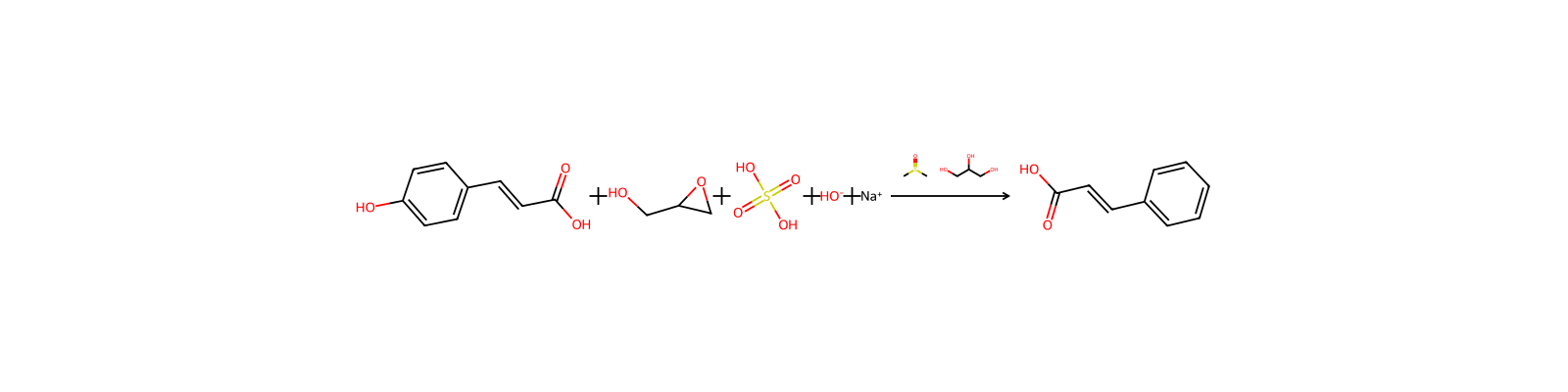
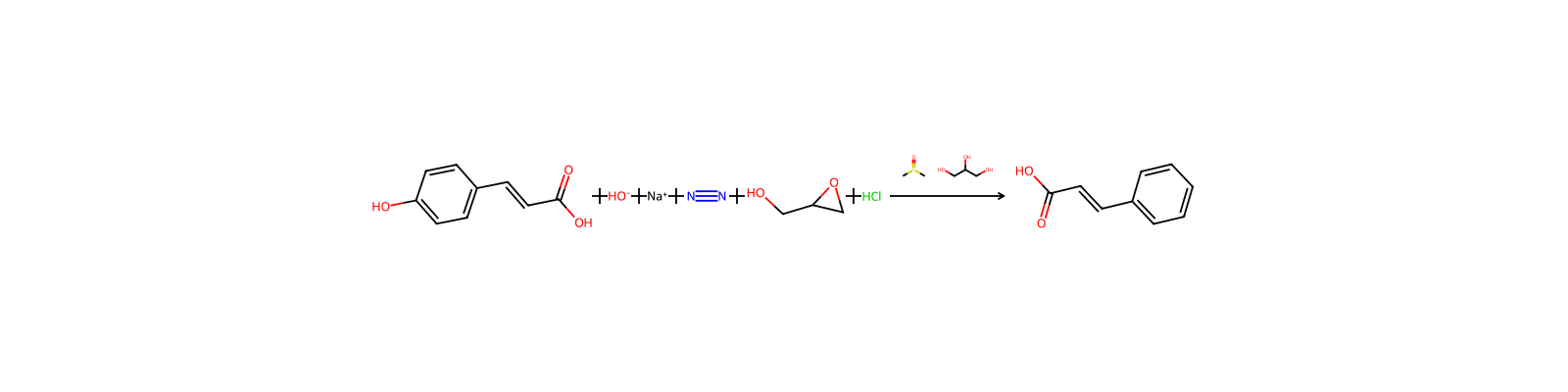
synthetischeTwo isomers, trans- and cis- exist; the trans-isomer is of interest for use in flavoring; in addition to the extraction from natural sources (storax), it can be prepared as follows: (1) from benzaldehyde, anhydrous sodium acetate and acetic anhydride in the presence of pyridine (Perkin reaction); (2) from benzaldehyde and ethyl acetate (Claisen condensation); (3) from benzaldehyde and acetylene chloride; (4) by oxidation of benzylidene acetone with sodium hypochlorite.
Vor- und nachgelagerte Produkte
Vorgelagerte Rohstoffe
Nachgelagerte Produkte
Ergänzende Hinweise
DefinitionChEBI: A monocarboxylic acid that consists of acrylic acid bearing a phenyl substituent at the 3-position. It is found in Cinnamomum cassia.
Zugehörige Reaktionen
233




Notizen zur Verbindung
Wird geladen…