1,3-Bis(hydroxymethyl)harnstoff
Carbamol
HCID 8827
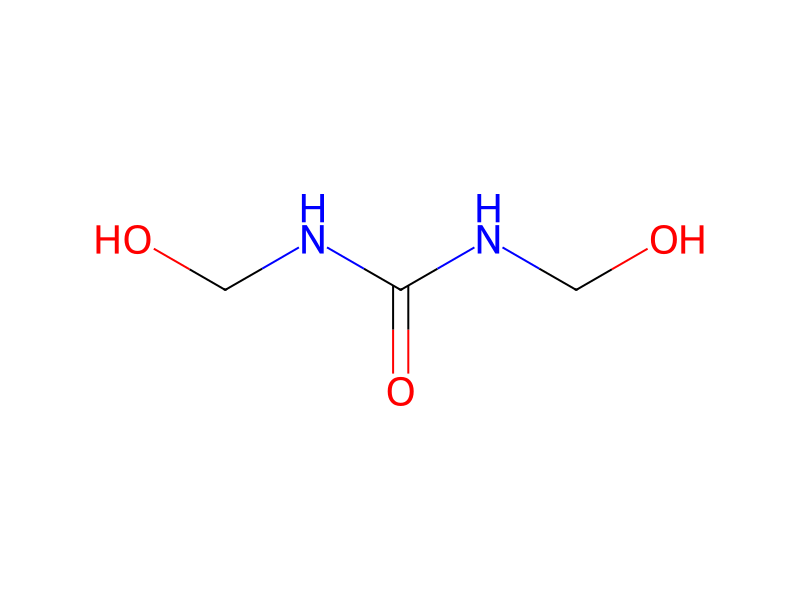
Grundinformationen
- CAS
140-95-4- Standard-SMILES
O=C(NCO)NCO- InChIKey
QUBQYFYWUJJAAK-UHFFFAOYSA-N- Summenformel
- C3H8N2O3
- Durchschnittliche Molmasse
- 120,11 g/mol
- Monoisotopische Masse
- 120,05349212
Überblick
Oxymethurea is a member of ureas.
Namen und Bezeichner
- Bevorzugter Name
- Carbamol
- IUPAC
- 1,3-bis(hydroxymethyl)urea
- Lokaler Name
- 1,3-Bis(hydroxymethyl)harnstoff
- Englischer Name
- Dimethylolurea
- Summenformel
- C3H8N2O3
- Molmasse
- 120.11
Namen und Synonyme
1,3-Bis(hydroxymethyl)ureaN,N'-Bis(hydroxymethyl)ureaCarbamolRefChem:857848Dimethylolurea140-95-4OxymethureaN,N'-DimethylolureaMethuralProtesine DMU1,3-DimethylolureaMetural
Weitere Namen anzeigen
Methurin
Urea, N,N'-bis(hydroxymethyl)-Finish ENKnittex ASLUreol PCSI PasteCauriteUrofixKaurit S
Datenbank-Bezeichner
- CAS
140-95-4- PubChem CID
- 8827
- DTXSID
DTXSID6025141- ChEMBL
CHEMBL3185052- ChEBI
CHEBI:134755- UNII
- N68H97CAWG
- EC Number
- 205-444-0
- Nikkaji
- J10.647J
Eigenschaften
Berechnete Struktureigenschaften
- XLogP
- -1,8
- Polarare Oberfläche (TPSA)
- 81,6 Ų
- H-Brücken-Donoren
- 4
- H-Brücken-Akzeptoren
- 3
- Frei drehbare Bindungen
- 2
- Schwere Atome
- 8
- Formalladung
- 0
- Komplexität
- 66,9
Experimentelle und physikochemische Eigenschaften
Chemical ClassesOther Uses -> Biocides/Disinfectants
SpringerMaterials Properties15N nuclear magnetic resonance spectrum
Vapor Pressure0.00000399 [mmHg]
Physical DescriptionLiquid
Collision Cross Section151.7 Ų [M+Na]+ [CCS Type: DT; Buffer gas: N2; Ionization: ESI+; Dataset: TOXCAST; Source Identifier: DTXSID6025141]
Physikochemische Eigenschaften
- Schmelzpunkt
- 125 °C · 125 °C (dec.)(lit.)
- Siedepunkt
- 224.08 °C · 224.08°C (rough estimate)
- Dichte
- 1.34 · 1.34
- Brechungsindex
- 1.461 · 1.4610 (estimate)
- Flammpunkt
- 100 °C · 100 °C
- storage temp.
- 2 · 2-8°C
Sicherheit und Regulatorisches
Sicherheitsangaben dienen nur zur Orientierung und ersetzen weder das Sicherheitsdatenblatt (SDB) des Lieferanten noch geltende Vorschriften oder eine fachliche Bewertung.
GHS-Klassifizierung
GHS Classification
This chemical does not meet GHS hazard criteria for 48.4% (104 of 215) of reports.
Warning
H319 (51.2%): Causes serious eye irritation [Warning Serious eye damage/eye irritation]
P264+P265, P280, P305+P351+P338, and P337+P317 (click each P-code to see the statement)
Aggregated GHS information provided per 215 reports by companies from 7 notifications to the ECHA C&L Inventory.
Gefahrenhinweise
Regulatory Information
Chemical: Urea, N,N'-bis(hydroxymethyl)-
Urea, N,N'-bis(hydroxymethyl)- is listed on the EPA's Chemical Data Reporting (CDR) system. Manufacturers and importers of Urea, N,N'-bis(hydroxymethyl)- are required to report information about their production and use of this chemical to the EPA under the Toxic Substances Control Act (TSCA). (40 eCFR Part 711)
REACH registered substance: 1,3-bis(hydroxymethyl)urea (EC: 205-444-0)
Carbamol: Does not have an individual approval but may be used under an appropriate group standard
Hazards Summary
A formaldehyde releaser, dimethylol urea can cause allergic contact dermatitis in workers handling durable press chemical finishes used on fabrics for wrinkle resistance; Cases were reported in the 1950s before the textile industry started using finishes releasing less formaldehyde; [Kanerva, p. 397-408]
Hazard Classes and CategoriesEye Irrit. 2 (51.2%)
Toxikologische Informationen
Adverse EffectsSkin Sensitizer - An agent that can induce an allergic reaction in the skin.
Chemie und Industrie
Verwendung und Herstellung
Uses
Used in the production of urea-formaldehyde resins and as a textile finish; [Kanerva, p. 405]
Using Disinfectants or Biocides [Category: Clean]
U.S. Production2023: 75,000 - <500,000 lb
Industry UsesIntermediate
General Manufacturing Information
Wood Product Manufacturing
Urea, N,N'-bis(hydroxymethyl)-: ACTIVE
Anwendungen
VerwendenIn the textile industry in cotton crease- and shrink-proofing, finishing, drying, sizing; in tanning; pesticides; in photographic developers.
Vor- und nachgelagerte Produkte
Vorgelagerte Rohstoffe
Nachgelagerte Produkte
Zugehörige Reaktionen
0
Noch keine zugehörigen Reaktionen