StartseiteMCPWorkbenchSkills
StartseiteWorkbenchBenachrichtigungenMein Bereich
llms.txt · MCP-AnleitungDatenschutz · Nutzungsbedingungen · Supportv1.8.0
  1. Startseite
  2. /Verbindung

Butyrylchlorid

Butyryl chloride

HCID 8855
Neue NotizNeue ReaktionAnfrage stellen
Druckvorschau
GrundinformationenÜberblickNamen und BezeichnerEigenschaftenSicherheit und RegulatorischesChemie und IndustrieZugehörige ReaktionenNotizen zur Verbindung
TeilstruktursucheÄhnliche Strukturen suchen

Grundinformationen

CAS
141-75-3
Standard-SMILES
CCCC(=O)Cl
InChIKey
DVECBJCOGJRVPX-UHFFFAOYSA-N
Summenformel
C4H7ClO
Durchschnittliche Molmasse
106,55 g/mol
Monoisotopische Masse
106,0185425

Überblick

Butyryl chloride appears as a clear colorless liquid with a sharp odor. Slightly denser than water. Flash point near 20 °F. Severely irritates skin, eyes, and mucous membranes. Used to make other chemicals.

Namen und Bezeichner

Bevorzugter Name
Butyryl chloride
IUPAC
butanoyl chloride
Lokaler Name
Butyrylchlorid
Englischer Name
Butyryl chloride
Summenformel
C4H7ClO
Molmasse
106.55

Namen und Synonyme

Butyryl chlorideButanoyl chlorideN-BUTYRYL CHLORIDECCRIS 5989n-Butyric acid chlorideDTXSID5024710HSDB 6016UNII-2XVM8E16IREINECS 205-498-5UN2353N-BUTANOYL CHLORIDEDTXCID104710
Weitere Namen anzeigen
butyrylBUTYRIC ACID CHLORIDEN-BUTYLVINYLETHERBUTYROYL CHLORIDEN-ButyrylButyrylchloridbutyricchlorideBUTIRYL CHLORIDE
N-BUTYRYL CHLORIDE [MI]EC 205-498-5N-BUTYRYL CHLORIDE [HSDB]UN 2353BUTYROL CHLORIDERefChem:122378205-498-5DVECBJCOGJRVPX-UHFFFAOYSA-N

Datenbank-Bezeichner

CAS
141-75-3
PubChem CID
8855
DTXSID
DTXSID5024710
ChEMBL
CHEMBL1300263
UNII
2XVM8E16IR
EC Number
205-498-5
Nikkaji
J2.538K

Eigenschaften

Berechnete Struktureigenschaften

XLogP
1,6
Polarare Oberfläche (TPSA)
17,1 Ų
H-Brücken-Donoren
0
H-Brücken-Akzeptoren
1
Frei drehbare Bindungen
2
Schwere Atome
6
Formalladung
0
Komplexität
51,5

Experimentelle und physikochemische Eigenschaften

Chemical Classes · 2 Einträge

Toxic Gases & Vapors -> Other Toxic Gases & Vapors

Flammable agents - 3rd degree

SpringerMaterials PropertiesCoriolis coupling
Odor · 2 Einträge

Pungent acid chloride odor

Sharp odor

Density · 2 Einträge

1.0277 at 68 °F (USCG, 1999) - Denser than water; will sink

1.0263 at 20.6 °C/4 °C

Color/FormColorless liquid
Solubility · 3 Einträge

Reaction (NTP, 1992)

Dissolves slowly with decomposition in water

Dissolves slowly with decomposition in alcohol; miscible with ether

CorrosivityCorrosive to metals
Flash Point · 2 Einträge

71 °F (NTP, 1992)

18 °C (64 °F) - closed cup

Boiling Point

Sicherheit und Regulatorisches

Sicherheitsangaben dienen nur zur Orientierung und ersetzen weder das Sicherheitsdatenblatt (SDB) des Lieferanten noch geltende Vorschriften oder eine fachliche Bewertung.

GHS-Klassifizierung

GHS Classification · 6 Einträge

Danger

H225: Highly Flammable liquid and vapor [Danger Flammable liquids]

P210, P233, P240, P241, P242, P243, P260, P264, P280, P301+P330+P331, P302+P361+P354, P303+P361+P353, P304+P340, P305+P354+P338, P316, P321, P363, P370+P378, P403+P235, P405, and P501 (click each P-code to see the statement)

Danger

H225 (100%): Highly Flammable liquid and vapor [Danger Flammable liquids]

P210, P233, P234, P240, P241, P242, P243, P260, P261, P264, P264+P265, P270, P271, P280, P301+P317, P301+P330+P331, P302+P361+P354, P303+P361+P353, P304+P340, P305+P354+P338, P316, P317, P321, P330, P363, P370+P378, P390, P403+P233, P403+P235, P405, P406, and P501 (click each P-code to see the statement)

Gefahrenhinweise

Hazards IdentificationWater-reactive material (WR)
Regulatory Information · 4 Einträge

Chemical: Butanoyl chloride

REACH registered substance: Butyryl chloride (EC: 205-498-5)

Butyryl chloride: Does not have an individual approval but may be used under an appropriate group standard

The New Jersey Worker and Community Right to Know Act requires public and private employers to provide information about hazardous substances at their workplaces. (N.J.S.A. 34:5A-1 et. seq.)

Other Safety InformationIMAP assessments - Butanoyl chloride: Human health tier I assessment
DOT LabelFlammable Liquid Corrosive
Fire Hazards · 2 Einträge

Special Hazards of Combustion Products: Emits toxic fumes of chlorine gas (USCG, 1999)

· HIGHLY FLAMMABLE: Will be easily ignited by heat, sparks or flames.

Chemie und Industrie

Verwendung und Herstellung

Uses · 3 Einträge

Used for organic synthesis; [HSDB]

Toxic Gas from Spilling Chemical in Water [Category: Other]

Organic synthesis.

U.S. Exports(1986) No Data
U.S. Imports(1986) No Data
U.S. Production(1986) No Data
Methods of ManufacturingPreparation from butyric acid.
General Manufacturing InformationButanoyl chloride: ACTIVE
Anwendungen · 1 Eintrag

VerwendenButyryl chloride is used as an intermediate for the synthesis of active pharmaceutical ingredients benzoyl peroxide, t-butyl perbenzoate, and benzophenone. It is also used as an acylation reagent. Further, it is used in the preparation of peroxides such as benzoyl peroxide, benzophenone and t-butyl perbenzoate. In addition to this, it is involved in the preparation of chromones and antiproliferative agents. Butyryl chloride has been used to esterify wood meal dissolved in the ionic liquid, 1-butyl-3-methylimidazolium chloride.

Darstellung · 1 Eintrag

synthetischeButyryl chloride is obtained by the reaction of butyric acid with thionyl chloride. Heat the thionyl chloride to reflux, add butyric acid dropwise over approximately 4 hours, reflux for another hour, then distill. Collect the fraction at 95–115°C, redistill once, and collect the fraction at 101–105°C to obtain the final product, with a yield of over 70%. Phosphorus trichloride can also be added to the reaction, yielding a 75% yield.

Vor- und nachgelagerte Produkte

Zugehörige Reaktionen

913
Reaktionsaufzeichnung erstellen
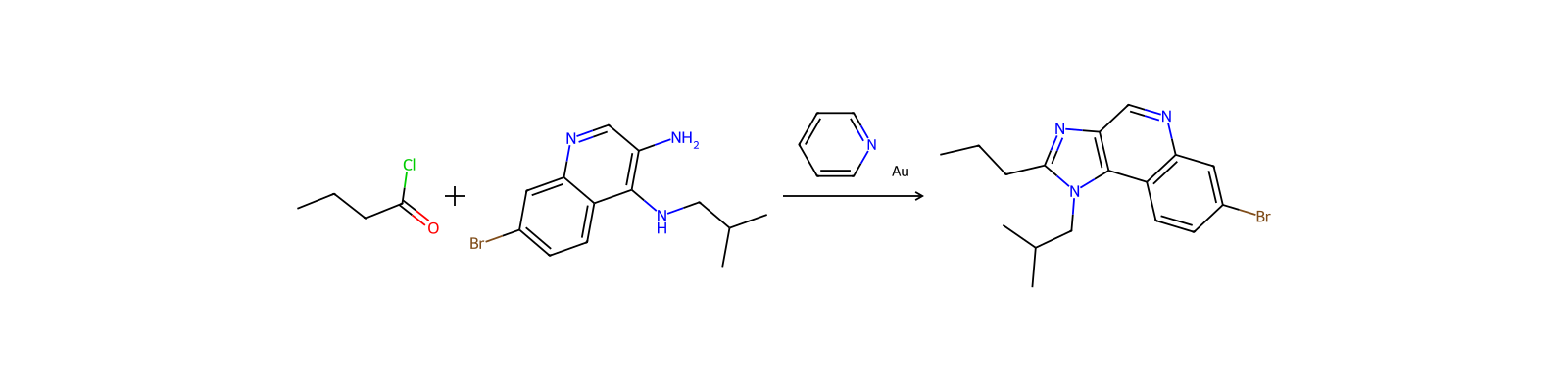
Reaktionsgleichung von HRID 1163
HRID 1163als Eduktuspto-grants-1998_03
Reaktionsgleichung von HRID 1165
HRID 1165als Eduktuspto-grants-1998_03
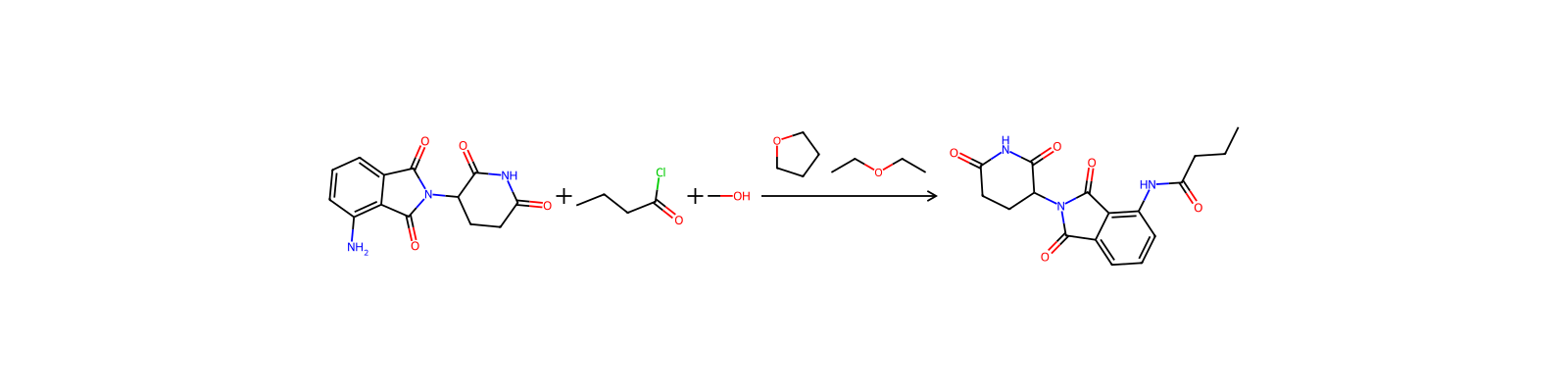
Reaktionsgleichung von HRID 5565
HRID 5565als Eduktuspto-grants-1993_09
Reaktionsgleichung von HRID 6090
HRID 6090als Eduktuspto-grants-1993_09
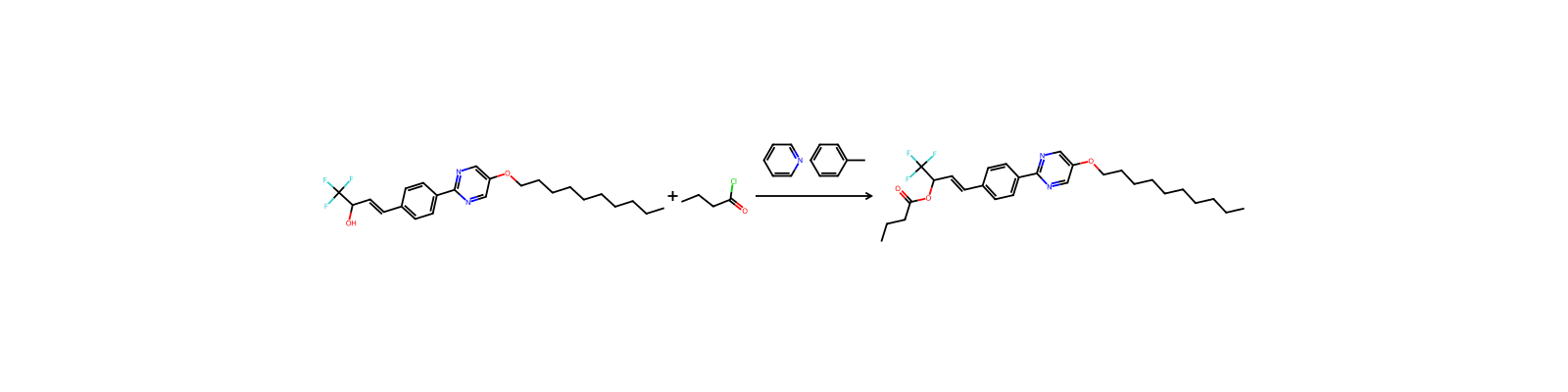
Reaktionsgleichung von HRID 9389
HRID 9389als Eduktuspto-grants-2006_08
Reaktionsgleichung von HRID 9465
HRID 9465als Eduktuspto-grants-2006_08
Reaktionsgleichung von HRID 10003
HRID 10003als Eduktuspto-grants-2006_08
Reaktionsgleichung von HRID 10015
HRID 10015als Eduktuspto-grants-2006_08
Seite 1 von 115

Notizen zur Verbindung

Wird geladen…

Auf dieser SeiteGrundinformationenÜberblickNamen und BezeichnerEigenschaftenSicherheit und RegulatorischesChemie und IndustrieZugehörige ReaktionenNotizen zur Verbindung
Weitere Aktionen
Neue NotizNeue ReaktionAnfrage stellen
· 2 Einträge

216 °F at 760 mmHg (NTP, 1992)

101-102 °C

DecompositionDissolves slowly with decomposition in water, alcohol.
Melting Point · 2 Einträge

-128 °F (NTP, 1992)

-89 °C

Vapor Density3.67 (vapor specific gravity)

Physikochemische Eigenschaften

Schmelzpunkt
89 °C · −89 °C(lit.)
Siedepunkt
102 °C · 102 °C(lit.)
Dichte
1.026 g/mL · 1.026 g/mL at 25 °C(lit.)
Dampfdichte
3.7 · 3.7 (vs air)
Dampfdruck
39 hPa · 39 hPa (20 °C)
Brechungsindex
20 · n20/D 1.412(lit.)
Flammpunkt
71 °F · 71 °F
storage temp.
30 °C · Store below +30°C.
Löslichkeit
Miscible with ether.
Aggregatzustand
Liquid
Farbe
Clear slightly yellow
Geruch (Odor)
pungent odor
Explosionsgrenze
2.5 · 2.5-7.3%(V)
Wasserlöslichkeit
decomposes
Merck
14 · 14,1598
BRN
605395 · 605395
InChI
1S/C4H7ClO/c1-2-3-4(5)6/h2-3H2,1H3
InChIKey
DVECBJCOGJRVPX-UHFFFAOYSA-N
SMILES
CCCC(Cl)=O
LogP
0.51 at · 0.51 at 25℃
CAS Datenbank
141 · 141-75-3(CAS DataBase Reference)
NIST chemische Informationen
Butanoyl chloride(141-75-3)
EPA chemische Informationen
Butanoyl chloride (141-75-3)
Fire PotentialFlammable ... .
Health Hazards · 2 Einträge

Extremely destructive to the mucous membranes, upper respiratory tract, eyes, and skin. Inhalation may cause death as a result of spasm, inflammation and edema of the larynx and bronchi, chemical pneumonitis, and pulmonary edema. Symptoms of exposure include burning sensation, coughing, wheezing, laryngitis, shortness of breath, headache, nausea, and vomiting. (USCG, 1999)

· TOXIC and/or CORROSIVE; inhalation, ingestion or contact (skin, eyes) with vapors, dusts or substance may cause severe injury, burns or death.

Hazards Summary · 1 Eintrag

Evolves HCl when spilled in water; [ERG 2016] A strong irritant; [HSDB] A severe skin, eye, and mucous membrane irritant; Inhalation may cause chemical pneumonitis and pulmonary edema; [CAMEO] A corrosive substance that can cause injury to the skin, eyes, and respiratory tract; Inhalation may cause edema and chemical pneumonitis; [MSDSonline]

DOT ID and Guide2353 155
Reactive GroupAcyl Halides, Sulfonyl Halides, and Chloroformates
Reactivity AlertsHighly Flammable
Reactivity Profile · 1 Eintrag

BUTYRYL CHLORIDE slowly dissolves in water with decomposition and formation of a weakly acidic solution. May react vigorously or explosively if mixed with diisopropyl ether or other ethers in the presence of trace amounts of metal salts [J. Haz. Mat., 1981, 4, 291].

Sicherheit und Schutzausrüstung

Fire FightingExcerpt from ERG Guide 155 [Substances - Toxic and/or Corrosive (Flammable / Water-Sensitive)]:
Accidental Release Measures · 2 Einträge

· CALL 911. Then call emergency response telephone number on shipping paper. If shipping paper not available or no answer, refer to appropriate telephone number listed on the inside back cover.

· ELIMINATE all ignition sources (no smoking, flares, sparks or flames) from immediate area.

First Aid · 2 Einträge

EYES: First check the victim for contact lenses and remove if present. Flush victim's eyes with water or normal saline solution for 20 to 30 minutes while simultaneously calling a hospital or poison control center. Do not put any ointments, oils, or medication in the victim's eyes without specific instructions from a physician. IMMEDIATELY transport the victim after flushing eyes to a hospital even if no symptoms (such as redness or irritation) develop.

General First Aid:

Firefighting Hazards · 2 Einträge

Reacts with alcohol and water.

... Corrosive.

Exposure Control and Personal Protection · 2 Einträge

· Wear positive pressure self-contained breathing apparatus (SCBA).

TIH (Toxic Inhalation Hazard) - Term used to describe gases and volatile liquids that are toxic when inhaled. Some are TIH materials themselves, e.g., chlorine, and some release TIH gases when spilled in water, e.g., chlorosilanes. [ERG 2016].

Fire Fighting Procedures · 3 Einträge

Suitable extinguishing media: Use water spray, alcohol-resistant foam, dry chemical or carbon dioxide.

Advice for firefighters: Wear self-contained breathing apparatus for firefighting if necessary.

Use water spray to cool unopened containers.

Storage ConditionsKeep container tightly closed in a dry and well-ventilated place. Containers which are opened must be carefully resealed and kept upright to prevent leakage. Storage class (TRGS 510): Flammable liquids.
Cleanup Methods · 1 Eintrag

ACCIDENTAL RELEASE MEASURES: Personal precautions, protective equipment and emergency procedures: Wear respiratory protection. Avoid breathing vapors, mist or gas. Ensure adequate ventilation. Remove all sources of ignition. Evacuate personnel to safe areas. Beware of vapors accumulating to form explosive concentrations. Vapors can accumulate in low areas. Environmental precautions: Prevent further leakage or spillage if safe to do so. Do not let product enter drains. Methods and materials for containment and cleaning up: Contain spillage, and then collect with an electrically protected vacuum cleaner or by wet-brushing and place in container for disposal according to local regulations.

Nonfire Spill ResponseExcerpt from ERG Guide 155 [Substances - Toxic and/or Corrosive (Flammable / Water-Sensitive)]:
Disposal Methods · 2 Einträge

SRP: Recycle any unused portion of the material for its approved use or return it to the manufacturer or supplier. Ultimate disposal of the chemical must consider: the material's impact on air quality; potential migration in air, soil or water; effects on animal, aquatic and plant life; and conformance with environmental and public health regulations. If it is possible or reasonable use an alternative chemical product with less inherent propensity for occupational harm/injury/toxicity or environmental contamination.

Product: Burn in a chemical incinerator equipped with an afterburner and scrubber but exert extra care in igniting as this material is highly flammable. Offer surplus and non-recyclable solutions to a licensed disposal company. Contact a licensed professional waste disposal service to dispose of this material. Contaminated packaging: Dispose of as unused product.

Preventive Measures · 4 Einträge

ACCIDENTAL RELEASE MEASURES: Personal precautions, protective equipment and emergency procedures: Wear respiratory protection. Avoid breathing vapors, mist or gas. Ensure adequate ventilation. Remove all sources of ignition. Evacuate personnel to safe areas. Beware of vapors accumulating to form explosive concentrations. Vapors can accumulate in low areas. Environmental precautions: Prevent further leakage or spillage if safe to do so. Do not let product enter drains.

Precautions for safe handling: Avoid contact with skin and eyes. Avoid inhalation of vapor or mist. Use explosion-proof equipment. Keep away from sources of ignition. No smoking. Take measures to prevent the build up of electrostatic charge.

Appropriate engineering controls: Avoid contact with skin, eyes and clothing. Wash hands before breaks and immediately after handling the product.

Gloves must be inspected prior to use. Use proper glove removal technique (without touching glove's outer surface) to avoid skin contact with this product. Dispose of contaminated gloves after use in accordance with applicable laws and good laboratory practices. Wash and dry hands.

Isolation and Evacuation · 4 Einträge

Excerpt from ERG Guide 155 [Substances - Toxic and/or Corrosive (Flammable / Water-Sensitive)]:

Immediate precautionary measure

When spilled in water

When spilled in water

Toxikologische Informationen

Environmental Fate · 3 Einträge

TERRESTRIAL FATE: n-Butyryl chloride decomposes in water to yield hydrochloric acid and butyric acid(1), therefore, leaching in soil and volatilization from moist soil for the parent compound are not expected to be important fate processes(SRC). n-Butyryl chloride is expected to volatilize from dry soil surfaces(SRC) based upon a vapor pressure of 41.7 mm Hg at 25 °C(1).

AQUATIC FATE: n-Butyryl chloride decomposes exothermically in water to yield hydrochloric acid(1). This decomposition reaction will be the dominant fate process in water(SRC).

ATMOSPHERIC FATE: According to a model of gas/particle partitioning of semivolatile organic compounds in the atmosphere(1), n-butyryl chloride, which has a vapor pressure of 41.7 mm Hg at 25 °C(2), is expected to exist solely as a vapor in the ambient atmosphere. Vapor-phase n-butyryl chloride is degraded in the atmosphere by reaction with photochemically-produced hydroxyl radicals(SRC); the half-life for this reaction in air is estimated to be 4.1 days(SRC), calculated from its rate constant of 3.9X10⁻¹² cu cm/molecule-sec at 25 °C(SRC) that was derived using a structure estimation method(3). n-Butyryl chloride fumes in air and decomposes in water to yield hydrochloric acid and butyric acid(2); therefore, n-butyryl chloride vapor in air can react with moisture in air.

Adverse EffectsDermatotoxin - Skin burns.
Toxicity SummaryIDENTIFICATION AND USE: n-Butyryl chloride is a colorless liquid. It is used in organic synthesis. HUMAN STUDIES: The chemical is toxic by ingestion and inhalation, and also a strong irritant. ANIMAL STUDIES: There are no data available.
Ongoing Test Status · 1 Eintrag

EPA has released the Interactive Chemical Safety for Sustainability (iCSS) Dashboard. The iCSS Dashboard provides an interactive tool to explore rapid, automated (or in vitro high-throughput) chemical screening data generated by the Toxicity Forecaster (ToxCast) project and the federal Toxicity Testing in the 21st century (Tox21) collaboration. /The title compound was tested by ToxCast and/or Tox21 assays/[USEPA; ICSS Dashboard Application; Available from, as of May 1, 2017: http://actor.epa.gov/dashboard/]

Soil Adsorption/Mobilityn-Butyryl chloride decomposes in water to yield hydrochloric acid and butyric acid(1), therefore, leaching in soil is not expected to be an important fate process(SRC).
Human Toxicity Excerpts/OTHER TOXICITY INFORMATION/ Toxic by ingestion and inhalation. Strong irritant to tissue.
Artificial Pollution Sources · 1 Eintrag

n-Butyryl chloride's production and use in organic synthesis(1) may result in its release to the environment through various waste streams(SRC). Butyryl chloride is used as an intermediate for the synthesis of active pharmaceutical ingredients benzoyl peroxide, t-butyl perbenzoate, and benzophenone(2). It is used as an acylation reagent and it is involved in the preparation of chromones and antiproliferative agents(2).

Environmental Bioconcentrationn-Butyryl chloride decomposes in water to yield hydrochloric acid(1), therefore, bioconcentration in aquatic organisms is not expected to be an important fate process(SRC).
Volatilization from Water/Soil · 1 Eintrag

n-Butyryl chloride decomposes in water to yield hydrochloric acid adn butyric acid(1), therefore, volatilization of n-butyryl chloride from water or moist soil is not expected to be an important fate process(SRC). n-Butyryl chloride is expected to volatilize from dry soil surfaces(SRC) based upon a vapor pressure of 41.7 mm Hg at 25 °C(1).

Environmental Abiotic Degradation · 1 Eintrag

The rate constant for the vapor-phase reaction of n-butyryl chloride with photochemically-produced hydroxyl radicals has been estimated as 3.9X10⁻¹² cu cm/molecule-sec at 25 °C(SRC) using a structure estimation method(1). This corresponds to an atmospheric half-life of about 4.1 days at an atmospheric concentration of 5X10+5 hydroxyl radicals per cu cm(1). n-Butyryl chloride fumes in air(2). It decomposes exothermically in water to yield corrosive hydrochloric acid. Based on a scenario where the chemical is spilled into an excess of water (at least 5 fold excess of water), half of the maximum theoretical yield of hydrogen chloride gas will be created in 0.47 minutes(2).

Probable Routes of Human Exposure · 1 Eintrag

Occupational exposure to n-butyryl chloride may occur through inhalation and dermal contact with this compound at workplaces where n-butyryl chloride is produced or used. Available use data indicate that the general population is not exposed to n-butyryl chloride. (SRC)

Environmental Fate/Exposure Summary · 1 Eintrag

n-Butyryl chloride's production and use in organic synthesis may result in its release to the environment through various waste streams. If released to air, a vapor pressure of 41.7 mm Hg at 25 °C indicates n-butyryl chloride will exist solely as a vapor in the atmosphere. Vapor-phase n-butyryl chloride will be degraded in the atmosphere by reaction with photochemically-produced hydroxyl radicals; the half-life for this reaction in air is estimated to be 4.1 days. n-Butyryl chloride fumes in air and can react with moisture in air. If released to soil, leaching in soil and volatilization from moist soil are not expected to be important fate processes because n-butyryl chloride reacts and decomposes in water. n-Butyryl chloride is expected to volatilize from dry soil surfaces based upon its vapor pressure. If released into water, n-butyryl chloride decomposes exothermically to yield hydrochloric acid and butyric acid. This decomposition reaction will be the dominant fate process in water. Occupational exposure to n-butyryl chloride may occur through inhalation and dermal contact with this compound at workplaces where n-butyryl chloride is produced or used. Available use data indicate that the general population is not exposed to n-butyryl chloride. (SRC)

Sicherheitsdaten

F
13
wgk
1
tsca
TSCA listed
ridadr
UN 2353
hs_code
2915 90 70
risk_code
11-34
hazard_code
F,C
safety_code
16-23-26-36-45
hazard_class
3
packing_group
II
Speicherklasse
3 - Flammable liquids
Giftige Stoffe Daten
141-75-3(Hazardous Substances Data)
Hazard Classifications
Acute Tox. 3 InhalationAcute Tox. 4 OralAquatic Acute 1Aquatic Chronic 2Eye Dam. 1Flam. Liq. 2Skin Corr. 1B
Selbstentzündungstemperatur
280 °C

Vorgelagerte Rohstoffe

AcetonButtersure101Phosphorige Säure-trichloridThionyldichlorid

Nachgelagerte Produkte

(S)-alpha-Cyano-3-phenoxybenzyl-(S)-2-(4-chlorphenyl)-3-methyl-butyrat2-Benzyl-2-(dimethylamino)-4'-morpholinobutyrophenoneEthyl 2-acetyl-3-oxo-hexanoateButtersureanhydrid3-Hydroxy-5-methylisoxazol4-Methyl-2-n-propyl-1H-benzimidazole-6-carboxylic acid(R)-Glycidyl butyrate4-ChlorphenylcyclopropylketonButyrophenon1,1'-Dibutylferrocen1-(2,3-Dichloro-4-hydroxyphenyl)butan-1-one2-chloro-2-trichloroethyl-3,3-dimethyl cyclobutenonecycloxydimFlucycloxuronDeltamethrinGeranylbutyratButylferrocenADSEthyl(4-butyry-2,3-dichloro)phenoxyacetate7-Methyl-2-propyl-1H-benzoimidazole-5-carboxylic acid methyl esterCyan(3-phenoxybenzyl)methyl-2-(4-chlorphenyl)-3-methylbutyrat1,2,3,4-Tetrahydro-1-naphthalinon2-[1-(Ethoxyimino)butyl]-5-(2-ethylthiopropyl)-3-hydroxycyclohex-2-en-1-onDiethyl butyrylmalonateLinalylbutyratEtacrynsure(Propylcarbonylthioethyl)-trimethylammoniumiodidBunazosin hydrochloride