Pyridin-2,6-diyldiamin
2,6-Diaminopyridine
Daten werden ergänzt – lade die Seite später neu, um den aktuellen Stand zu sehen

Grundinformationen
- CAS
141-86-6- Standard-SMILES
Nc1cccc(N)n1- InChIKey
VHNQIURBCCNWDN-UHFFFAOYSA-N- Summenformel
- C5H7N3
- Durchschnittliche Molmasse
- 109,13 g/mol
- Monoisotopische Masse
- 109,06399722
Überblick
structure in first source
Namen und Bezeichner
- Bevorzugter Name
- 2,6-Diaminopyridine
- IUPAC
- pyridine-2,6-diamine
- Lokaler Name
- Pyridin-2,6-diyldiamin
- Englischer Name
- 2,6-Diaminopyridine
- Summenformel
- C5H7N3
- Molmasse
- 109.13
Namen und Synonyme
2,6-Diaminopyridine141-86-6pyridine-2,6-diamine2,6-pyridinediaminepyridine, 2,6-diamino-DAP (amine)DTXSID0040127NSC-1921K89AB8CKG6RODOL 26PYRDTXCID8020127RefChem:83122
Weitere Namen anzeigen
2,6-DAP6-DiaMinopyridine26BDNSC 4033462.6-DiaMinopyr
CHEBI:51598205-507-2Diaminopyridinepyridine-2,6-diyldiamineMFCD00006329NSC 19212,6-Diamino pyridine118352-40-2
Datenbank-Bezeichner
- CAS
141-86-6- PubChem CID
- 8861
- DTXSID
DTXSID0040127- ChEMBL
CHEMBL339234- UNII
- K89AB8CKG6
- EC Number
- 205-507-2
- Nikkaji
- J38.340F
Eigenschaften
Berechnete StruktureigenschaftenWird ergänzt
- XLogP
- 0,2
- Polarare Oberfläche (TPSA)
- 64,9 Ų
- H-Brücken-Donoren
- 2
- H-Brücken-Akzeptoren
- 3
- Frei drehbare Bindungen
- 0
- Schwere Atome
- 8
- Formalladung
- 0
- Komplexität
- 66,1
Experimentelle und physikochemische Eigenschaften
Chemical ClassesNitrogen Compounds -> Pyridines
CosmeticsHair dyeing
Boiling Point285 °C @760 [mm Hg]
Physical DescriptionSlightly brown solid; [EC: SCCS - Opinion] Light brown, yellow, or off-white powder or flakes; [Alfa Aesar MSDS]
Ionization Efficiency
Positive
3.05
1.9
Agilent XCT
Electrospray ionization
trifluoroacetic acid (10.4nM)
Collision Cross Section119.8 Ų [M+H]+ [CCS Type: DT; Buffer gas: N2; Ionization: ESI+; Dataset: TOXCAST; Source Identifier: DTXSID0040127]
Physikochemische Eigenschaften
- Schmelzpunkt
- 117 · 117-122 °C (lit.)
- Siedepunkt
- 285 °C · 285 °C (lit.)
- Dichte
Sicherheit und Regulatorisches
Sicherheitsangaben dienen nur zur Orientierung und ersetzen weder das Sicherheitsdatenblatt (SDB) des Lieferanten noch geltende Vorschriften oder eine fachliche Bewertung.
GHS-Klassifizierung
GHS Classification
Danger
H301 (99%): Toxic if swallowed [Danger Acute toxicity, oral]
P261, P264, P264+P265, P270, P271, P272, P273, P280, P301+P316, P302+P352, P304+P340, P305+P351+P338, P319, P321, P330, P332+P317, P333+P317, P337+P317, P362+P364, P391, P403+P233, P405, and P501 (click each P-code to see the statement)
Aggregated GHS information provided per 103 reports by companies from 19 notifications to the ECHA C&L Inventory. Each notification may be associated with multiple companies.
Gefahrenhinweise
Regulatory Information
Chemical: 2,6-Pyridinediamine
2,6-Diaminopyridine: Does not have an individual approval but may be used under an appropriate group standard
Hazards Summary
One report of occupational contact dermatitis in the pharmaceutical industry; [NTP] A strong sensitizer based on the mouse local lymph node assay (LLNA); Oral LD50 (rat) = 50-300 mg/kg; A 90-day oral study of rats demonstrated the erythrocytes, spleen, kidney, and liver as target organs of toxicity (most changes recovering after 4-week recovery period); Developmental toxicity (decreased fetal and placental weights and incomplete thoracic vertebrae ossification) but no teratogenicity observed in oral study of rats in the presence of maternal toxicity; [EC: SCCS - Opinion] An irritant; Toxic by ingestion; [Alfa Aesar MSDS]
Hazard Classes and CategoriesAcute Tox. 3 (99%)
Sicherheit und Schutzausrüstung
Protective Action Criteria (PAC)
Chemie und Industrie
Verwendung und Herstellung
Uses
Used in oxidative hair dyes; [EC: SCCS - Opinion] Used as an intermediate for pharmaceuticals and polyamides, epoxy curing agent, and coupler in hair dyes; [NTP]
Plastic Composites Manufacturing [Category: Industry]
Use ClassificationCosmetics -> Hair dyeing
General Manufacturing Information2,6-Pyridinediamine: ACTIVE
Anwendungen
Beschreibung2,6-Diaminopyridine is an important organic reagent with a wide range of uses. It can be used for fluorescence detection, 2,6-Diaminopyridine fluorescence method for the determination of certain aromatic primary amines. It can also be used to prepare 2,6-Diaminopyridine imprinted core-shell nanoparticles. A new method for the detection of diaminopyridine derivatives using molecularly imprinted electrochemical sensors has been established, which has been applied to the detection of 2,6-Diaminopyridine in hair dyes with good sensitivity and selectivity.
Verwenden2,6-Diaminopyridine, used as a pharmaceutical intermediate and a hair dye coupler in oxidation/permanent formulations.
Darstellung
synthetischeIn a 600 mL autoclave equipped with a gas entrapment stirrer, a solution of 5 g CuI in 120 g aqueous ammonia (30% NH3 by weight) was added and mixed with 77 g ammonium acetate and 60 g of 2, 6-dichloropyridine. After purging with nitrogen, 24 g of liquid ammonia was added resulting in a pressure of about 150 psi (1.03 MPa). Subsequently, the reaction mixture was heated to 150°C for 8 h under stirring. Throughout the reaction, the pressure decreased from an initial pressure of 680 psi (4.69 MPa) to 450 psi (3.10 MPa). The reaction mixture was allowed to cool to room temperature, and the pressure was brought back to atmospheric pressure. Finally, 2,6-Diaminopyridine was obtained after purification.
Zugehörige Reaktionen
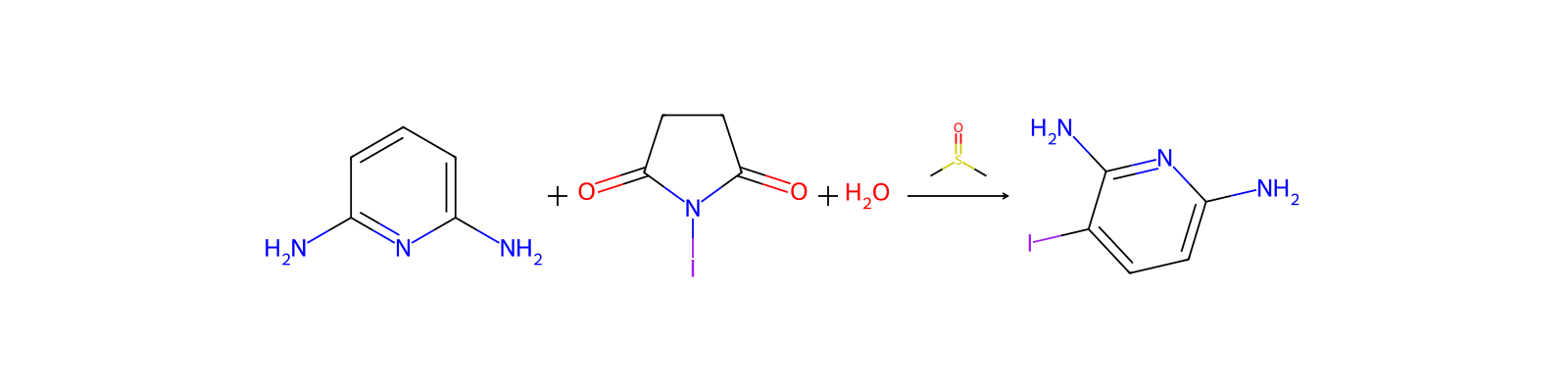
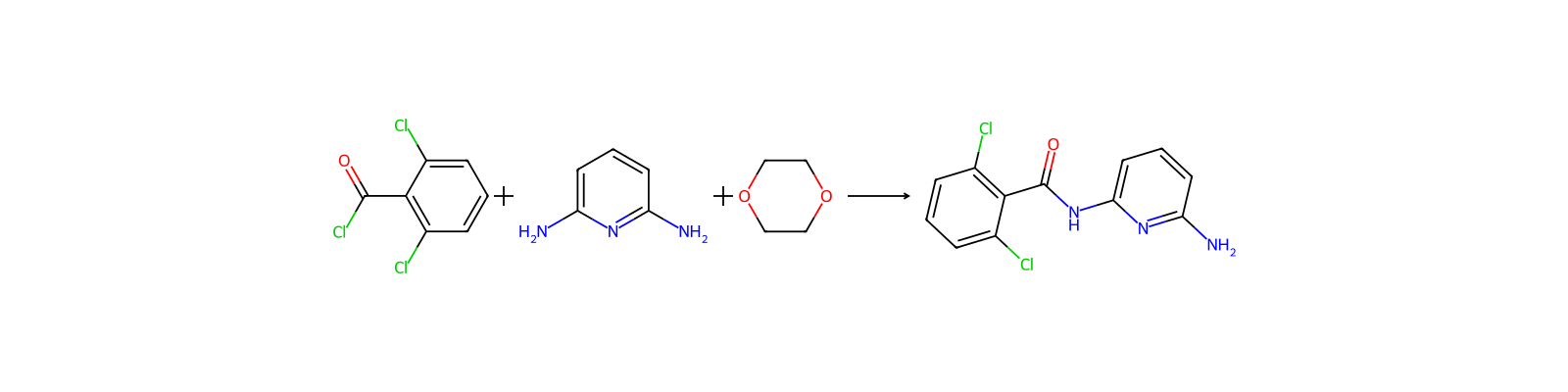
132



Notizen zur Verbindung
Wird geladen…