StartseiteMCPWorkbenchSkills
StartseiteWorkbenchBenachrichtigungenMein Bereich
llms.txt · MCP-AnleitungDatenschutz · Nutzungsbedingungen · Supportv1.8.0
  1. Startseite
  2. /Verbindung

Ethylacetoacetat

Ethyl Acetoacetate

HCID 8868
Neue NotizNeue ReaktionAnfrage stellen
Druckvorschau
GrundinformationenÜberblickNamen und BezeichnerEigenschaftenSicherheit und RegulatorischesChemie und IndustrieZugehörige ReaktionenNotizen zur Verbindung
TeilstruktursucheÄhnliche Strukturen suchen

Grundinformationen

CAS
141-97-9
Standard-SMILES
CCOC(=O)CC(C)=O
InChIKey
XYIBRDXRRQCHLP-UHFFFAOYSA-N
Summenformel
C6H10O3
Durchschnittliche Molmasse
130,14 g/mol
Monoisotopische Masse
130,06299418

Überblick

Ethyl acetoacetate appears as a colorless liquid with a fruity odor. Flash point 185 °F. Boiling point 365 °F. May cause adverse health effects if ingested or inhaled. May irritate to skin, eyes and mucous membranes. Used in organic synthesis and in lacquers and paints.

Namen und Bezeichner

Bevorzugter Name
Ethyl Acetoacetate
IUPAC
ethyl 3-oxobutanoate
Lokaler Name
Ethylacetoacetat
Englischer Name
Ethyl acetoacetate
Summenformel
C6H10O3
Molmasse
130.14

Namen und Synonyme

ethyl acetoacetateethyl 3-oxobutanoate141-97-9ethyl acetylacetatediacetic etherethyl 3-oxobutyrateButanoic acid, 3-oxo-, ethyl esterAcetoacetic esteracetoacetic acid, ethyl esterethyl acetylacetonate3-oxobutanoic acid ethyl esteractive acetyl acetate
Weitere Namen anzeigen
ACEEAAEthyl acetoacetate, 99%, pureEthyl acetoacetate, extra pureETHYL ACETOACETATE, 99%ETHYL ACETOACETATE, 99%ETHYL ACETOACETATE, 99%ETHYL ACETOACETATE, 99%FEMA 24153-OXOBUTYRIC ACID ETHYL ESTER
Active acetylacetateEthyl acetyl acetateACETOACETIC ACID ETHYL ESTERethyl beta-ketobutyrateEthylacetacetat1-Ethoxybutane-1,3-dioneethyl-acetoacetateAcetoctan ethylnaty

Datenbank-Bezeichner

CAS
141-97-9
PubChem CID

Eigenschaften

Berechnete Struktureigenschaften

XLogP
0,2
Polarare Oberfläche (TPSA)
43,4 Ų
H-Brücken-Donoren
0
H-Brücken-Akzeptoren
3
Frei drehbare Bindungen
4
Schwere Atome
9
Formalladung
0
Komplexität
117

Experimentelle und physikochemische Eigenschaften

Chemical ClassesOther Classes -> Esters, Other
SpringerMaterials PropertiesBoiling point
FragrancesFragrance Ingredient (Ethyl acetoacetate) -> IFRA transparency List
LogP · 4 Einträge

log Kow = 0.25

0.25

0.27

0.25

OdorPLEASANT GREEN, FRUITY, RUM ODOR
TasteRIPE FRUIT TASTE
Food AdditivesFLAVORING AGENT OR ADJUVANT -> FDA Substance added to food
Density · 5 Einträge

1.028 at 68 °F (USCG, 1999) - Denser than water; will sink

1.0282 AT 20 °C/4 °C

Relative density (water = 1): 1.021

1.022-1.027

1.0282 @ 20°C

Flavoring AgentsEU Flavoring substances

Sicherheit und Regulatorisches

Sicherheitsangaben dienen nur zur Orientierung und ersetzen weder das Sicherheitsdatenblatt (SDB) des Lieferanten noch geltende Vorschriften oder eine fachliche Bewertung.

GHS-Klassifizierung

GHS Classification · 6 Einträge

This chemical does not meet GHS hazard criteria for 76.8% (1836 of 2392) of all reports.

Warning

H319 (17.4%): Causes serious eye irritation [Warning Serious eye damage/eye irritation]

P264+P265, P280, P305+P351+P338, and P337+P317 (click each P-code to see the statement)

Aggregated GHS information provided per 2392 reports by companies from 13 notifications to the ECHA C&L Inventory.

Warning

Gefahrenhinweise

Regulatory Information · 5 Einträge

Chemical: Butanoic acid, 3-oxo-, ethyl ester

Regulation (EC) No 1831/2003 (amended)

Butanoic acid, 3-oxo-, ethyl ester is listed on the EPA's Chemical Data Reporting (CDR) system. Manufacturers and importers of Butanoic acid, 3-oxo-, ethyl ester are required to report information about their production and use of this chemical to the EPA under the Toxic Substances Control Act (TSCA). (40 eCFR Part 711)

REACH registered substance: Ethyl acetoacetate (EC: 205-516-1)

Ethyl acetoacetate: Does not have an individual approval but may be used under an appropriate group standard

DOT LabelFlammable Liquid
Fire Hazards · 2 Einträge

Excerpt from ERG Guide 128 [Flammable Liquids (Water-Immiscible)]:

Combustible. Above 70 °C explosive vapour/air mixtures may be formed.

Fire PotentialMODERATE WHEN EXPOSED TO HEAT OR FLAME.
Health HazardsLiquid may cause mild irritation of eyes. (USCG, 1999)
Hazards Summary · 1 Eintrag

Chemie und Industrie

Pharmakologische Informationen

Cellular LocationsCytoplasm

Verwendung und Herstellung

Uses · 4 Einträge

Used in lacquers and plastics, to make pharmaceuticals, and as a flavoring agent; [Hawley] Used to make inks, photographic and vat dyes, yellow pigments in paints, amino acids, methionine, analgesics, and aminopyrene; [HSDB] Primarily used as a chemical intermediate; Also used in consumer cleaning supplies and cosmetics and as a solvent in paints; [ExPub: European Commission]

Painting (Solvents) [Category: Paint]

FLAVORING AGENT IN FOOD

CHEMICAL INTERMEDIATE FOR YELLOW PIGMENTS IN PAINTS, LACQUERS, INKS, PHOTOGRAPHIC & VAT DYES, AMINO ACIDS, METHIONINE, ANTIMALARIAL AGENTS (ATABRINE), THIAMINE (VITAMIN B1), ANALGESICS, ANTIPYRENE, & AMINOPYRENE

U.S. Exports · 3 Einträge

(1972) No Data

(1975) No Data

(1986) No Data

U.S. Imports · 3 Einträge

(1972) No Data

(1975) No Data

(1986) No Data

U.S. Production · 4 Einträge

2023: 8,500,000 - <10,000,000 lb

(1972) GREATER THAN 9.08X10+5 GRAMS

(1975) GREATER THAN 4.54X10+5 GRAMS

(1986) No Data

Consumer UsesSolvent
Industry UsesNot Known or Reasonably Ascertainable
Methods of Manufacturing · 3 Einträge

REACTION OF HIGH-PURITY ETHYL ACETATE WITH METALLIC SODIUM FOLLOWED BY NEUTRALIZATION WITH SULFURIC ACID

...FROM ETHYL ACETATE BY ACTION OF SODIUM, SODIUM ETHOXIDE, SODAMIDE OR CALCIUM: INGLIS, ROBERTS, ORG SYN COLL VOL 1, 2ND EDITION (1941) PAGE 235; HANSLEY, SCHOTT, US PATENT 2,843,623 (1958 TO NATIONAL DISTILLERS)...

Zugehörige Reaktionen

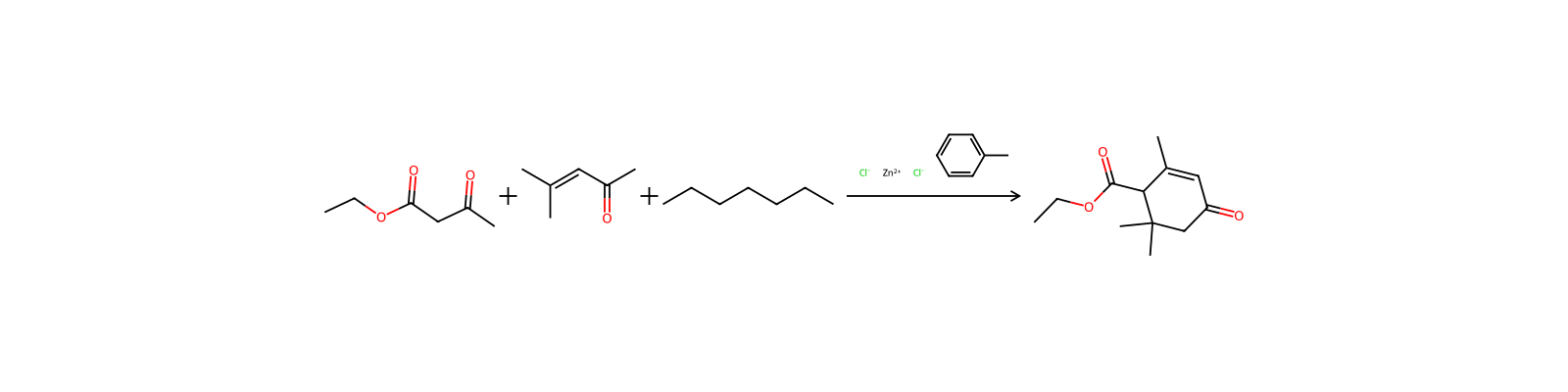
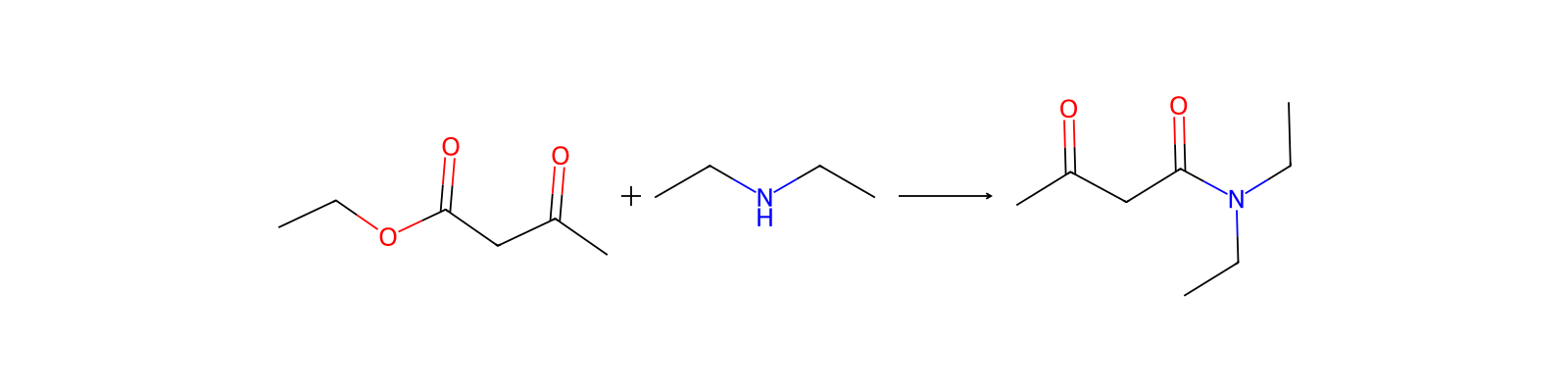
1.570
Reaktionsaufzeichnung erstellen
Reaktionsgleichung von HRID 2841
HRID 2841als Eduktuspto-grants-1998_03
Reaktionsgleichung von HRID 2843
HRID 2843als Eduktuspto-grants-1998_03
Reaktionsgleichung von HRID 2845
HRID 2845als Eduktuspto-grants-1998_03
Reaktionsgleichung von HRID 3396
HRID 3396als Eduktuspto-grants-1998_03
Reaktionsgleichung von HRID 3979
HRID 3979als Eduktuspto-grants-1988_02
Reaktionsgleichung von HRID 10835
HRID 10835als Eduktuspto-grants-2006_08
Reaktionsgleichung von HRID 11168
HRID 11168als Eduktuspto-grants-2006_08
Reaktionsgleichung von HRID 12564
HRID 12564als Eduktuspto-grants-2010_06
Seite 1 von 197

Notizen zur Verbindung

Wird geladen…

Auf dieser SeiteGrundinformationenÜberblickNamen und BezeichnerEigenschaftenSicherheit und RegulatorischesChemie und IndustrieZugehörige ReaktionenNotizen zur Verbindung
Weitere Aktionen
Neue NotizNeue ReaktionAnfrage stellen
8868
DTXSID
DTXSID2027092
ChEMBL
CHEMBL169176
ChEBI
CHEBI:4893
UNII
IZP61H3TB1
EC Number
205-516-1
Nikkaji
J4.493H
Color/Form
COLORLESS LIQUID
Solubility · 6 Einträge

SOL IN ABOUT 35 PARTS WATER

SOL IN BENZENE, & CHLOROFORM; MISCIBLE WITH ETHER, & ACETONE

water solubility = 1.11X10+5 mg/l @ 17 °C

110 mg/mL at 17 °C

Solubility in water, g/100ml at 20 °C: 2.86

miscible in alcohol, ether, ethyl acetate, 1 ml in 12 ml water

Flash Point · 3 Einträge

135 °F (USCG, 1999)

184 °F CC (84.4 °C)

70 °C c.c.

Physikochemische Eigenschaften

Schmelzpunkt
45 °C · −45 °C (−49 °F; 228 K)
Siedepunkt
180.8 °C · 180.8 °C (357.4 °F; 453.9 K)
Dichte
1.03 g/cm3, · 1.030 g/cm3, liquid
Dampfdichte
4.48 · 4.48 (vs air)
Dampfdruck
1 mm · 1 mm Hg ( 28.5 °C)
FEMA
2415 · 2415 | ETHYL ACETOACETATE
Brechungsindex
1.42 · 1.420
Flammpunkt
70 °C · 70 °C (158 °F; 343 K)
storage temp.
30 °C · Store below +30°C.
Löslichkeit
116 g/L · 116 g/L (20°C)
pka
11 · 11(at 25℃)
Aggregatzustand
liquid
Farbe
Colourless
Wichte
1.027 · 1.027~1.035 (20/4℃)
PH
4 · 4.0 (110g/l, H2O, 20℃)
Geruch (Odor)
Agreeable, fruity.
Explosionsgrenze
1 · 1.0-54%(V)
Geruchsart
fruity
Biologische Quelle
synthetic
Wasserlöslichkeit
116 g/L · 116 g/L (20 ºC)
Spezifische Wärmekapazität
1.91 J/ · Cp(liquid): 1.91 J/(g·K), at 25℃
JECFA Number
595 · 595
Merck
14 · 14,3758
BRN
385838 · 385838
Henry's Law Constant
9 · 9.0×100 mol/(m3Pa) at 25℃, Brockbank (2013)
Dielectric constant
15 · 15.0(Ambient)
Stabilität
Stable. Incompatible with acids, bases, oxidizing agents, reducing agents, alkali metals. Combustible.
Kosmetik-Inhaltsstoffe Funktionen
PERFUMING
InChI
1S/C6H10O3/c1-3-9-6(8)4-5(2)7/h3-4H2,1-2H3
InChIKey
XYIBRDXRRQCHLP-UHFFFAOYSA-N
SMILES
CCOC(=O)CC(C)=O
LogP
0.8 at · 0.8 at 20℃
Oberflächenspannung
31.93 mN/m · 31.93mN/m at 298.15K
CAS Datenbank
141 · 141-97-9(CAS DataBase Reference)
NIST chemische Informationen
3 · Butanoic acid, 3-oxo-, ethyl ester(141-97-9)
EPA chemische Informationen
Ethyl acetoacetate (141-97-9)

A skin and eye irritant; [Hawley] A mutagen; Severe irritant in rabbit eye; [RTECS] A skin, eye, and respiratory tract irritant; [ICSC] Following repeated oral exposure of ethyl acetoacetate in rats, no treatment-related adverse effects (including haematology, clinical chemistry, gross necropsy and histopathology) were reported up to 1000 mg/kg bw/d. There is no information on health effects in humans following repeated exposure to ethyl acetoacetate via any route. [ChemPortal: SIDS] Safe when used as a flavoring agent in food; [JECFA] An eye irritant; A moderate skin and mucous membrane irritant; Emergency treatment: irritants; [HSDB] An irritant; May cause serious eye injury; [MSDSonline]

FDA Requirements · 2 Einträge

FDA 121.1164.

FDA 172.515. FLAVOR USEFUL IN STRAWBERRY, FRUIT FLAVORS.

Reactive GroupEsters, Sulfate Esters, Phosphate Esters, Thiophosphate Esters, and Borate Esters
Special ReportsA REVIEW WITH 8 REFERENCES ON ETHYL ACETOACETATE TOXICITY.[OPDYKE DL J; FRAGRANCE RAW MATRIALS. DIPENTENE. ETHYL ACETOACETATE; FOOD COSMET TOXICOL 12(5-6) 713 (1974)]
EPA Safer ChemicalChemical: Ethyl acetoacetate
Reactivity AlertsHighly Flammable
Reactivity Profile · 1 Eintrag

ETHYL ACETOACETATE, a beta-keto ester, is more reactive than many esters. Undergoes an exothermic cleavage reaction in the presence of concentrated base. Reacts with acids to liberate heat along with alcohols and acids. Strong oxidizing acids may cause a vigorous reaction that is sufficiently exothermic to ignite the reaction products. Flammable hydrogen is generated by mixing esters with alkali metals and hydrides. Mixing with 2,2,2-tris(bromomethyl)ethanol and zinc led to an explosion [US Patent 3 578 619, Crotonaldehyde may rapidly polymerize with ethyl acetoacetate (Soriano, D.S. et al. 1988. Journal of Chemical Education 65:637.).1971].

Sicherheit und Schutzausrüstung

Fire Fighting · 2 Einträge

Excerpt from ERG Guide 128 [Flammable Liquids (Water-Immiscible)]:

Use water spray, powder, foam, carbon dioxide.

First Aid Measures · 4 Einträge

Fresh air, rest.

Remove contaminated clothes. Rinse and then wash skin with water and soap.

First rinse with plenty of water for several minutes (remove contact lenses if easily possible), then refer for medical attention.

Rinse mouth. Give one or two glasses of water to drink. Rest.

First AidEYES: flush with water for 15 min. (USCG, 1999)
Safe StorageSeparated from strong oxidants. Ventilation along the floor. Well closed.
Fire Fighting ProceduresUSE ALCOHOL FOAM, CARBON DIOXIDE, DRY CHEMICAL.
Nonfire Spill ResponseExcerpt from ERG Guide 128 [Flammable Liquids (Water-Immiscible)]:
Spillage DisposalCollect leaking and spilled liquid in sealable containers as far as possible. Absorb remaining liquid in sand or inert absorbent. Then store and dispose of according to local regulations. Wash away remainder with plenty of water.
Isolation and EvacuationExcerpt from ERG Guide 128 [Flammable Liquids (Water-Immiscible)]:
Eye PreventionWear safety spectacles.
Fire PreventionNO open flames. Above 70 °C use a closed system and ventilation.
Inhalation RiskA harmful contamination of the air will not or will only very slowly be reached on evaporation of this substance at 20 °C; on spraying or dispersing, however, much faster.
Skin PreventionProtective gloves.

Toxikologische Informationen

Exposure RoutesThe substance can be absorbed into the body by inhalation.
Signs and Symptoms · 3 Einträge

Cough. Sore throat.

Redness.

Redness. Pain.

Natural Pollution SourcesNATURALLY OCCURRING IN STRAWBERRY...
Human Toxicity Excerpts · 2 Einträge

MODERATELY IRRITATING TO SKIN, MUCOUS MEMBRANES.

MODERATELY TOXIC BY INGESTION & INHALATION IRRITANT TO...EYES.

Non-Human Toxicity Excerpts · 3 Einträge

RATS EXPOSED TO CONCENTRATED VAPOR FOR 8 HR SHOWED NO MORTALITIES. /FROM TABLE/

IT IS LESS TOXIC THAN ITS METHYL HOMOLOGUE, WITH AN ORAL LD50 IN RAT OF 3.98 G/KG & A DERMAL LD50 IN RABBIT OF MORE THAN 10 ML/KG. IT IS LESS IRRITANT TO SKIN & EYES THAN METHYL ESTER.

RATED 4 ON RABBIT EYES. SUBSTANCES DESIGNATED IN THIS MANNER HAVE BEEN TESTED EXTERNALLY ON EYES OF RABBITS & HAVE BEEN RATED NUMERICALLY ON SCALE OF 1 TO 10 ACCORDING TO DEGREE OF INJURY OBSERVED AFTER 24 HR, PAYING PARTICULAR ATTENTION TO CONDITION OF CORNEA. MOST SEVERE INJURIES HAVE BEEN RATED 10.

Toxicity DataLC50 (rat) > 1,380 ppm/4h

Regulatorische Informationen

FDA Requirements · 2 Einträge

FDA 121.1164.

FDA 172.515. FLAVOR USEFUL IN STRAWBERRY, FRUIT FLAVORS.

Sicherheitsdaten

wgk
1
tsca
TSCA listed
ridadr
UN 1993
hs_code
29183000
RTECS-Nr.
AK5250000
risk_code
36
Toxizität
LD50 orally in rats: 3.98 g/kg (Smyth)
hazard_code
Xi
safety_code
26-24/25
hazard_class
3.2
packing_group
III
Speicherklasse
10 - Combustible liquids
Giftige Stoffe Daten
141-97-9(Hazardous Substances Data)
Selbstentzündungstemperatur
580 °F

...BY CLAISEN CONDENSATION OF ETHYL ACETATE IN PRESENCE OF SODIUM ETHYLATE; ALSO BY REACTING DIKETENE WITH ETHANOL IN PRESENCE OF SULFURIC ACID OR TRIETHYLAMINE & SODIUM ACETATE, WITH OR WITHOUT SOLVENT.

Formulations/PreparationsGRADES: TECHNICAL; 98%.
Household ProductsInformation on 32 consumer products that contain Ethyl Acetoacetate in the following categories is provided:
Use Classification · 6 Einträge

EPA Safer Chemical Functional Use Classes -> Solvents

Safer Chemical Classes -> Green circle - The chemical has been verified to be of low concern

Fragrance Ingredients

Flavouring Agent -> FLAVOURING_AGENT -> JECFA Functional Classes

Flavoring Agents -> JECFA Flavorings Index

Flavouring Agent -> FLAVOURING_AGENT -> JECFA Functional Classes

General Manufacturing Information · 4 Einträge

Soap, Cleaning Compound, and Toilet Preparation Manufacturing

Butanoic acid, 3-oxo-, ethyl ester: ACTIVE

17 PPM IN NON-ALCOHOLIC BEVERAGES; 24 PPM IN ICE CREAM, ICES, ETC; 110 PPM IN CANDY; 120 PPM IN BAKED GOODS; 93 PPM IN GELATINS & PUDDINGS; & 530 PPM IN CHEWING GUM.

USEFUL AS STRAWBERRY, FRUIT FLAVORS. FEMA NUMBER 2415.

Anwendungen · 3 Einträge

BeschreibungAcetessigsäure-ethylester bildet eine farblose angenehm riechende Flüssigkeit, die bei 180 ℃ siedet. In Wasser ist der Ester kaum löslich, während er mit Alkohol und Ether mischbar ist. Die acide Methylen-Gruppe im Molekül lässt sich alkylieren, acylieren oder halogenieren. Acetessigsäure-ethylester ist ein wichtiges Zwischenprodukte für die Herstellung von Heterocyclen, insbesondere Arzneimitteln, Pestizide und Farbstoffen.

BeschreibungThe organic compound ethyl acetoacetate (EAA) is the ethyl ester of acetoacetic acid. It is mainly used as a chemical intermediate in the production of a wide variety of compounds, such as amino acids, analgesics, antibiotics, antimalarial agents, antipyrine and amino pyrine, and vitamin B1; as well as the manufacture of dyes, inks, lacquers, perfumes, plastics, and yellow paint pigments. Alone, it is used as a flavoring for food.

OccurrenceNaturally occurring in strawberry, coffee, sherry, passion fruit juice (yellow), babaco fruit (Carica pentagona Heilborn) and bread.

Darstellung · 1 Eintrag

synthetischeEthyl acetoacetate is produced industrially by treatment of diketene with ethanol. The preparation of ethyl acetoacetate is a classic laboratory procedure . It is prepared via the Claisen condensation of ethyl acetate. Two moles of ethyl acetate condense to form one mole each of ethyl acetoacetate and ethanol.

Vor- und nachgelagerte Produkte

Vorgelagerte Rohstoffe

4-Methylen-2-oxetanonEthanolNatriumNatriumethanolatEsterification solutionConcentrated sulfuric acidMethan

Nachgelagerte Produkte

3-Chloro-4-methyl-7-hydroxycounmarinEthyl 2-hydroxy-4-methyl-5-pyrimidinecarboxylate3,3'-Dimethyl-1,1'-diphenyl-4,4'-bi-5-pyrazolon4-Chloro-2,6-dimethyl-nicotinic acidEthyl 2,4-dimethylquinoline-3-carboxylateDisperse Yellow H-4GLEthyl 2-acetyl-3-oxo-hexanoate1-(6-Chloro-2-hydroxy-4-phenyl-quinolin-3-yl)-ethanoneEthyl-3-hydroxybutyrat5-Methyl-1-phenyl-1H-pyrazole-4-carboxylic acidPhenoxyacetic acid5,7-Dihydroxy-4-methyl-2-benzopyron4-Hydroxy-2-methylquinolineEthyl 4-chloro-2,6-dimethylpyridine-3-carboxylate7-(Acetyloxy)-4-methyl-2-benzopyronEthyl-3,4-dihydro-6-methyl-2H-pyran-5-carboxylatKalium-N-phenylglycinatTIADINILEthyl 5-methyl-1-phenyl-1H-pyrazole-4-carboxylate6-Bromhexan-2-onPentoxifyllin6-tert-Butyl-4-methylcoumarinHymecromonEthyl 2-(hydroxyimino)-3-oxobutanoateCloricromene2,4-Dimethylquinoline-3-carboxylic acidAcetoacetic AcidEthyl-3-anilinocrotonat(5-Methyl-1-phenyl-1H-pyrazol-4-yl)methanol5,7-Dihydroxy-2-phenyl-4H-benzo[b]pyran-4-on4,7-Dimethylcoumarin3-Ethyl-4-methyl-3-pyrrolin-2-one4-Chloro-6-methyl-2-(methylthio)pyrimidine2-Amino-6-methylpyrimidin-4-ol4-Methylcumarin1,3-Dimethyl-5-hydroxypyrazole6-Methyl-2-(methylthio)pyrimidin-4-ol7,8-Dihydroxy-4-methyl-2-benzopyron3-Methyl-5-phenyl-4-isoxazolecarboxylic acidEthyl-2-[2-(diethylamino)ethyl]acetoacetat
Ergänzende Hinweise · 1 Eintrag

DefinitionChEBI: Ethyl acetoacetate is an ethyl ester resulting from the formal condensation of the carboxy group of acetoacetic acid with ethanol. It has a role as a flavouring agent, an antibacterial agent and a plant metabolite. It is functionally related to an acetoacetic acid.