Carbonsuren, C5-9-
Hexanoic Acid
Daten werden ergänzt – lade die Seite später neu, um den aktuellen Stand zu sehen
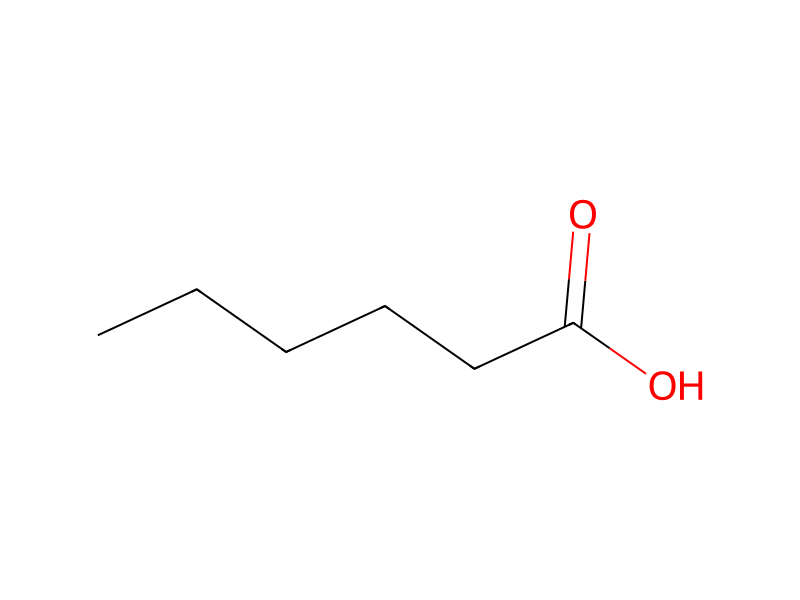
Grundinformationen
- CAS
142-62-1- Standard-SMILES
CCCCCC(=O)O- InChIKey
FUZZWVXGSFPDMH-UHFFFAOYSA-N- Summenformel
- C6H12O2
- Durchschnittliche Molmasse
- 116,16 g/mol
- Monoisotopische Masse
- 116,08372962
Überblick
Caproic acid appears as a white crystalline solid or colorless to light yellow solution with an unpleasant odor. Insoluble to slightly soluble in water and less dense than water. Contact may severely irritate skin, eyes and mucous membranes. May be toxic by ingestion, inhalation and skin absorption. Used to make perfumes.
Namen und Bezeichner
- Bevorzugter Name
- Hexanoic Acid
- IUPAC
- hexanoic acid
- Lokaler Name
- Carbonsuren, C5-9-
- Englischer Name
- Carboxylic acids, C5-9
- Molmasse
- 0
Namen und Synonyme
HEXANOIC ACIDCaproic acid142-62-1n-Caproic acidn-Hexanoic acidCapronic acid1-Hexanoic acidHexoic acidButylacetic acidPentylformic acidn-Hexylic acidn-Hexoic acid
Weitere Namen anzeigen
Carboxylic acids, C5-9C5-C9 CARBOXYLIC ACIDS)
Pentiformic acid1-Pentanecarboxylic acidHexylic acidPentanecarboxylic acidHexacid 698Kyselina kapronovaFEMA No. 2559DTXSID7021607
Datenbank-Bezeichner
- CAS
142-62-1、67762-36-1、68603-84-9、70248-25-8- PubChem CID
- 8892
- DTXSID
DTXSID7021607- ChEMBL
CHEMBL14184- ChEBI
CHEBI:30776- UNII
- 1F8SN134MX
- EC Number
- 205-550-7
- Nikkaji
- J2.546A
Eigenschaften
Berechnete StruktureigenschaftenWird ergänzt
- XLogP
- 1,9
- Polarare Oberfläche (TPSA)
- 37,3 Ų
- H-Brücken-Donoren
- 1
- H-Brücken-Akzeptoren
- 2
- Frei drehbare Bindungen
- 4
- Schwere Atome
- 8
- Formalladung
- 0
- Komplexität
- 68,9
Experimentelle und physikochemische Eigenschaften
Chemical Classes
Other Classes -> Organic Acids
Corrosives
LipidsFatty Acyls [FA] -> Fatty Acids and Conjugates [FA01] -> Straight chain fatty acids [FA0101]
Cosmetics
Cosmetic ingredients (Caproic Acid) -> CIR (Cosmetic Ingredient Review)
Emulsifying
SpringerMaterials PropertiesBoiling point
FragrancesFragrance Ingredient (Hexanoic acid) -> IFRA transparency List
LogP
log Kow = 1.92
1.92
1.88
1.87
OdorCharacteristic goat-like odor
Food AdditivesFLAVORING AGENT OR ADJUVANT -> FDA Substance added to food
Density
0.927 (USCG, 1999) - Less dense than water; will float
0.929 at 20 °C/4 °C
Relative density (water = 1): 0.93
0.923-0.928
0.9295 @25 °C
Flavoring AgentsEU Flavoring substances
Viscosity3.23 mPa.s at 20 °C
Color/FormOily liquid
Physikochemische Eigenschaften
- Siedepunkt
- 231 ℃[at · 231℃[at 101 325 Pa]
- Dichte
- 0.92 · 0.92[at 20℃]
- Dampfdruck
- 0.62 Pa · 0.62Pa at 25℃
- Wasserlöslichkeit
- 1.35 g/L · 1.35g/L at 20℃
- LogP
- 2.6 at · 2.6 at 25℃
- EPA chemische Informationen
- 5 · Carboxylic acids, C5-9 (68603-84-9)
Sicherheit und Regulatorisches
Sicherheitsangaben dienen nur zur Orientierung und ersetzen weder das Sicherheitsdatenblatt (SDB) des Lieferanten noch geltende Vorschriften oder eine fachliche Bewertung.
GHS-Klassifizierung
GHS Classification
This chemical does not meet GHS hazard criteria for < 0.1% (2 of 2136) of reports.
Danger
H311 (17.1%): Toxic in contact with skin [Danger Acute toxicity, dermal]
P260, P262, P264, P264+P265, P270, P280, P301+P330+P331, P302+P352, P302+P361+P354, P304+P340, P305+P354+P338, P316, P317, P321, P361+P364, P363, P405, and P501 (click each P-code to see the statement)
Aggregated GHS information provided per 2136 reports by companies from 34 notifications to the ECHA C&L Inventory. Each notification may be associated with multiple companies.
Not Classified
Gefahrenhinweise
Regulatory Information
Chemical: Hexanoic acid
Hexanoic acid is listed on the EPA's Chemical Data Reporting (CDR) system. Manufacturers and importers of Hexanoic acid are required to report information about their production and use of this chemical to the EPA under the Toxic Substances Control Act (TSCA). (40 eCFR Part 711)
Status: Active Update: 12-08-2022 https://echa.europa.eu/registration-dossier/-/registered-dossier/14271
Hexanoic acid: Does not have an individual approval but may be used under an appropriate group standard
The New Jersey Worker and Community Right to Know Act requires public and private employers to provide information about hazardous substances at their workplaces. (N.J.S.A. 34:5A-1 et. seq.)
Other Safety InformationIMAP assessments - Hexanoic acid: Environment tier I assessment
DOT LabelCorrosive
Fire Hazards
Special Hazards of Combustion Products: Irritating vapor may be generated. (USCG, 1999)
· Combustible material: may burn but does not ignite readily.
· Combustible material: may burn but does not ignite readily.
Combustible.
Health Hazards
Harmful if swallowed, inhaled, or absorbed through skin. Material is extremely destructive to tissue of mucous membranes and upper respiratory tract, eyes and skin. Inhalation may be fatal as a result of spasm, inflammation and edema of the larynx and bronchia, chemical pneumonitis and pulmonary edema. Symptoms of exposure may include burning sensation, coughing, wheezing, laryngitis, shortness of breath, headache, nausea and vomiting. (USCG, 1999)
· TOXIC and/or CORROSIVE; inhalation, ingestion or skin contact with material may cause severe injury or death.
· TOXIC and/or CORROSIVE; inhalation, ingestion or skin contact with material may cause severe injury or death.
Hazards Summary
A strong irritant; [Hawley] A weak acid and irritant of the skin, eyes, and respiratory tract; Harmful if ingested; [ICSC] Emergency medical treatment: acids; [HSDB] A corrosive substance that can cause injury to the skin, eyes, and respiratory tract; Inhalation may cause chemical pneumonitis and pulmonary edema; [CAMEO] Causes convulsions in intravenous lethal-dose studies of mice; [RTECS] A corrosive substance that can cause injury to the skin and eyes, based on animal studies; [CHEMINFO] Safe when used as a flavoring agent in food; [JECFA] A corrosive substance that can cause injury to the skin, eyes, and respiratory tract; Inhalation may cause chemical pneumonitis and pulmonary edema; Effects in high-dose animal studies include convulsions; [MSDSonline]
DOT ID and Guide
2829 153
2829 153
FDA Requirements
Hexanoic acid is a food additive permitted for direct addition to food for human consumption as a synthetic flavoring substance and adjuvant in accordance with the following conditions: a) they are used in the minimum quantity required to produce their intended effect, and otherwise in accordance with all the principles of good manufacturing practice, and 2) they consist of one or more of the following, used alone or in combination with flavoring substances and adjuvants generally recognized as safe in food, prior-sanctioned for such use, or regulated by an appropriate section in this part.
Reactive GroupAcids, Carboxylic
UN ClassificationUN Hazard Class: 8; UN Pack Group: III
Special ReportsLeung HW, Paustenbach DJ; Organic Acids and Bases: Review of Toxicological Studies; Am J Ind Med 18 (6): 717-35 (1990).
EPA Safer ChemicalChemical: Hexanoic acid
Sicherheit und Schutzausrüstung
Fire Fighting
Excerpt from ERG Guide 153 [Substances - Toxic and/or Corrosive (Combustible)]:
Use powder, AFFF, foam, carbon dioxide.
First Aid Measures
Fresh air, rest. Refer for medical attention.
Remove contaminated clothes. Rinse skin with plenty of water or shower. Refer for medical attention .
First rinse with plenty of water for several minutes (remove contact lenses if easily possible), then refer for medical attention.
Rinse mouth. Do NOT induce vomiting. Give one or two glasses of water to drink. Rest.
Accidental Release Measures
· CALL 911. Then call emergency response telephone number on shipping paper. If shipping paper not available or no answer, refer to appropriate telephone number listed on the inside back cover.
· ELIMINATE all ignition sources (no smoking, flares, sparks or flames) from immediate area.
· CALL 911. Then call emergency response telephone number on shipping paper. If shipping paper not available or no answer, refer to appropriate telephone number listed on the inside back cover.
· ELIMINATE all ignition sources (no smoking, flares, sparks or flames) from immediate area.
First Aid
EYES: First check the victim for contact lenses and remove if present. Flush victim's eyes with water or normal saline solution for 20 to 30 minutes while simultaneously calling a hospital or poison control center. Do not put any ointments, oils, or medication in the victim's eyes without specific instructions from a physician. IMMEDIATELY transport the victim after flushing eyes to a hospital even if no symptoms (such as redness or irritation) develop.
General First Aid:
General First Aid:
Safe StorageSeparated from strong oxidants, strong bases and food and feedstuffs.
Exposure Control and Personal Protection
· Wear positive pressure self-contained breathing apparatus (SCBA).
· Wear positive pressure self-contained breathing apparatus (SCBA).
Fire Fighting Procedures
To fight fire use, CO2, dry chemical, fog, mist.
If material on fire or involved in fire: Use water in flooding quantities as fog. Solid streams of water may be ineffective. Cool all affected containers with flooding quantities of water. Apply water from as far a distance as possible. Use "alcohol" foam, carbon dioxide or dry chemical. Use water spray to knock-down vapors.
Storage ConditionsSeparated from strong oxidants, strong bases, food and feedstuffs.
Cleanup MethodsCollect leaking liquid in sealable containers. Wash away spilled liquid with plenty of water. Do NOT wash away into sewer.
Nonfire Spill ResponseExcerpt from ERG Guide 153 [Substances - Toxic and/or Corrosive (Combustible)]:
Disposal Methods
SRP: The most favorable course of action is to use an alternative chemical product with less inherent propensity for occupational exposure or environmental contamination. Recycle any unused portion of the material for its approved use or return it to the manufacturer or supplier. Ultimate disposal of the chemical must consider: the material's impact on air quality; potential migration in soil or water; effects on animal, aquatic, and plant life; and conformance with environmental and public health regulations.
The following wastewater treatment technology has been investigated for caproic acid: Concentration process: Activated carbon.
The following wastewater treatment technology has been investigated for caproic acid: Concentration process: Resin adsorption.
Spillage DisposalDo NOT let this chemical enter the environment. Collect leaking and spilled liquid in sealable containers as far as possible. Wash away remainder with plenty of water.
Toxikologische Informationen
Interactions
Rates of ketone body (beta-hydroxybutyrate plus acetoacetate) production by perfused livers from starved rats were decreased about 60% from 39 + or - 2 to 17 + or - 3 umol/g/hr by 2-ethylhexanol (200 uM), a primary metabolite of the plasticizer diethylhexyl phthalate. Rates of ketone body production in the presence of oleate (250 uM), which requires transport of the corresponding CoA compound into mitochondria, were reduced from 80 + or - 6 to 58 + or - 8 umol/g/hr by ethylhexanol. In contrast, ketone body production from hexanoate, which is activated in the mitochondria, was not affected by ethylhexanol.
Hexanoate and octanoate inhibit the triiodothyronine (T3) induced increases in the activities of malic enzyme and fatty acid synthase in chick embryo hepatocytes in culture. Butanoate was less effective as an inhibitor, and palmitate, stearate, and oleate had no effect or small stimulatory effects. Hexanoate and octanoate inhibited the lipogenic enzyme activities at a transcriptional step, and did so within 30 min of addition. Incubation for 2 hr in the absence of fatty acid reversed the inhibition of transcription caused by hexanoate. The inhibitory effect of hexanoate was selective because DNA content and transcription of the glyceraldehyde-3-phosphate dehydrogenase and beta-actin genes were not inhibited. Hexanoate mediated inhibition of transcription rates of the lipogenic genes was not correlated with an inhibition of binding of triiodothyronine to its nuclear receptor. 2-Bromooctanoate and carnitine stimulated the triiodothyronine induced accumulation of the mRNAs for malic enzyme and fatty acid synthase. The presence of hexanoate stimulated by 2 to 3 fold the increase caused by carnitine, suggesting that hexanoate and carnitine may regulate lipogenic gene expression by a common pathway. The active inhibitor may be a metabolite derived from hexanoate or octanoate, possibly an intermediate derived from an acyl-CoA derivative.
Ecotoxicity Values
LC50 Lepomis macrochirus (Bluegill) >150-<200 mg/L/24 hr; static /formulated product/
LC50 Daphnia magna 22 mg/L/24 hr /Conditions of bioassay not specified in source examined/
LC50 Gammarus (Hyale plumulosa; Isopod) 235 mg/L/96 hr /Conditions of bioassay not specified in source examined/
LC50 Pimephales promelas (Fathead minnow) 140 mg/L/1 hr, static bioassay in Lake Superior water at 18-22 °C
For more Ecotoxicity Values (Complete) data for HEXANOIC ACID (11 total), please visit the HSDB record page.
Environmental Fate
TERRESTRIAL FATE: Based on a classification scheme(1), Koc values of 26, 24 and 37 measured, for an acidic forest soil (pH 2.8, 4.85% organic carbon), agricultural soil (pH 6.7, 1.25% organic carbon), and a lake sediment (pH 7.1, 1.58% organic carbon), respectively(2), indicate that hexanoic acid is expected to have very high mobility in soil(SRC). Furthermore, the pKa of hexanoic acid is 4.88(3), indicating it will exist primarily as an anion under environmental conditions and anions generally possess greater mobility in soils than neutral compounds(4). Volatilization from moist soil surfaces will not be an important environmental fate process since anions do not volatilize(SRC). Hexanoic acid is not expected to volatilize from dry soil surfaces(SRC), based upon an extrapolated vapor pressure of 0.0435 mm Hg at 25 °C(5). Hexanoic acid was shown to biodegrade quickly in a variety of screening tests(6-8), suggesting that it will be susceptible to biodegradation in soil(SRC).
AQUATIC FATE: Based on a classification scheme(1), a Koc value of 37 measured in lake sediment(2), indicates that hexanoic acid is not expected to adsorb to suspended solids and sediment(SRC). The pKa of hexanoic acid is 4.88(3), indicating it will exist primarily as an anion under environmental conditions. Volatilization from water surfaces is not an important environmental fate process since anions do not volatilize(SRC). According to a classification scheme(4), an estimated BCF of 3(SRC), from a log Kow of 1.92(5) and a regression-derived equation(6), suggests the potential for bioconcentration in aquatic organisms is low(SRC). Hexanoic acid was shown to biodegrade quickly in aqueous screening tests(7-9), suggesting that it will be susceptible to biodegradation in water(SRC).
ATMOSPHERIC FATE: According to a model of gas/particle partitioning of semivolatile organic compounds in the atmosphere(1), hexanoic acid, which has an extrapolated vapor pressure of 0.0435 mm Hg at 25 °C(2), is expected to exist solely in the vapor-phase in the ambient atmosphere. Vapor-phase hexanoic acid is degraded in the atmosphere by reaction with photochemically-produced hydroxyl radicals(SRC); the half-life for this reaction in air is estimated to be 3 days(SRC), calculated from its rate constant of 5.5X10⁻¹² cu cm/molecule-sec at 25 °C(SRC) that was derived using a structure estimation method(3).
Food Survey Values
Hexanoic acid concns of 1.2-12.3 mg/L were detected in various fruit dessert wines and fruit brandies(1). Trace quantities of hexanoic acid (<10 ug/kg)in mature guava fruit were detected, while 982 ug/kg were detected in over-ripe guava fruits(2). Hexanoic acid has been qualitatively detected in volatile constituents of baked potatoes(3) and fried chicken(4). Hexanoic acid was detected in the volatile emissions of two types of rice cakes at levels of 250 and 280 ppb(5). Hexanoic acid was identified in popcorn at a level of 400 ug/kg(6).
Adverse EffectsDermatotoxin - Skin burns.
Exposure RoutesThe substance can be absorbed into the body by inhalation of its aerosol and through the skin.
Milk ConcentrationsHexanoic acid occurs in milk fats (about 2%)(1).
Toxicity Summary
The CIR Expert Panel concluded that the following ingredients are safe in the present practices of use andconcentration described in the safety assessment when formulated to be non-irritating and non-sensitizing, which may be basedon a QRA...Caproic Acid...
Safe for use in cosmetics, with qualifications
Plant ConcentrationsHexanoic acid has been detected in the essential oils of Juniperus turkestanica and noble laurel plants(1).
Animal ConcentrationsMussels (Mytilus edulis) collected from the Oarai Coast in Ibaraki, Japan in July 1985 contained a hexanoic acid concn of 0.05 ug/g(1).
Signs and Symptoms
Cough. Sore throat.
Redness. Pain.
Redness. Pain. Blurred vision.
Effluent Concentrations
A hexanoic acid concn of 1.8 mg/L was detected in a trench leachate sample collected from a low-level radioactive waste disposal site in Maxey Flats, KY in May of 1978(1). Hexanoic acid concns of 9.6 to 420 ug/L were detected in primary and secondary effluents from four un-named sewage treatment plants(2). Hexanoic acid was detected at a concn of 0.063 ppb in gasoline automobile exhaust collected from a 1982 model Toyota Corolla(3); it has been estimated that the emission rate of hexanoic acid from motor vehicles in the south coast air basin of CA is 180 kg/day(4). Wastewater effluents collected from the Los Angeles County waste treatment plant in 1980 and 1981 contained hexanoic acid levels of 55 ug/L(5). Levels of 5-1470 ppb have been detected in wastewaters from coal gasification and shale oil processing(6). Spent wastewater from a sulfite pulping processed contained 0.3-1 g hexanoic acid/ton pulp(7). Hexanoic acid was identified at levels ranging from 0.058 to 0.249 ppb in the exhaust of 5 different automobiles(8).
Regulatorische Informationen
FDA Requirements
Hexanoic acid is a food additive permitted for direct addition to food for human consumption as a synthetic flavoring substance and adjuvant in accordance with the following conditions: a) they are used in the minimum quantity required to produce their intended effect, and otherwise in accordance with all the principles of good manufacturing practice, and 2) they consist of one or more of the following, used alone or in combination with flavoring substances and adjuvants generally recognized as safe in food, prior-sanctioned for such use, or regulated by an appropriate section in this part.
Sicherheitsdaten
- tsca
- TSCA listed
- ridadr
- 1760
- hazard_class
- 8
- packing_group
- III
Chemie und Industrie
Pharmakologische Informationen
Metabolism/Metabolites
A study was conducted to determine whether short chain monocarboxylic acids and dicarboxylic acids could be identified in lung tissue isolated from virus free male Wistar rats exposed to ozone. Rats were injected intraperitoneally with (14)C labeled sodium acetate 12 hr prior to 4 hr of exposure to 2 ppm ozone. A 63% increase was noted in the recovery of short chain fatty acids including hexanoic acid. The increased hexanoic acid could result from breakdown of either arachidonic acid or linoleic acid.
Caproic acid is rapidly metabolized by beta-oxidation in mitochondria ... /It/ is not stored or converted to higher fatty acids. Oxidation occurs in the mitochondria of the liver, kidneys, and heart, but only hepatic mitochondria produce ketone bodies from caproic acid.
Metabolic studies /of 1-hexanol/ in rabbits indicate that oxidation to hexanoic acid is the major pathway, mediated by alcohol dehydrogenase and aldehyde dehydrogenase.
Tissue LocationsPlacenta
Cellular LocationsCytoplasm
Metabolite PathwaysBiosynthesis of unsaturated fatty acids
Verwendung und Herstellung
Uses
CIR ingredient: Caproic Acid
Used to make esters for artificial flavors, hexyl derivatives, rubber chemicals, varnish driers, resins, and pharmaceuticals; Also used in analytical chemistry and insect attractants; [HSDB] Used to make perfumes; [CAMEO]
... Lures for Coleoptera include caproic acid for the green June beetle, Cotinus nitida.
Manufacture of esters for artificial flavors and of hexyl derivatives, especially hexylphenols, /and/ hexylresocinol.
Analytical chemistry, flavors, manufacture of rubber chemicals, varnish driers, resins and pharmaceuticals.
This is an endogenously produced metabolite found in the human body. It is used in metabolic reactions, catabolic reactions or waste generation.
U.S. Production
2023: 1,000,000 - <2,500,000 lb
(1986) >1 million-10 million pounds
(1990) 10 thousand-500 thousand pounds
(1994) 10 thousand-500 thousand pounds
(1998) >1 million-10 million pounds
For more U.S. Production (Complete) data for HEXANOIC ACID (6 total), please visit the HSDB record page.
Consumer UsesFragrance
Industry UsesLubricating agent
Methods of Manufacturing
From crude fermentation of butyric acid, fractional distillation of natural fatty acids.
Manufactured by catalytic reduction of corresponding beta-lactone: Caldwell, US patent 2,484,486 (1949 to Kodak); from oleic acid: Follett, Murray, US patent 2,580,417 (1952 to Arthur D. Little); from castor oil or a ricinoleate: Steadman, Peterson, US 2,847,432 (1958 to National Res. Corp.); by ozonolysis of tall oil unsaturated fatty acids: Maggiolo, US patent 2,865,937 (1958 to Welsbach); from 1,3-butadiene and potassium acetate in presence of sodium amide: Schmerling, Toekelt, US patent 3,075,010 (1963 to Universal Oil Prod.); from cyclohexanol: ... US patent 3,121,728 (1964 to Esso); by catalytic oxidation of n-hexanol: Hay, US patent 3,173,933 (1965 to General Electric).
Hydrogenation of gluconic acid in aqueous solution over a platinum oxide catalyst results in a modest yield of d-glucose. ... Refluxing with concentrated hydriodic acid in the presence of red phosphorus causes reduction to hexanoic acid.
Formulations/PreparationsHexacid 698 is a trade name.
Household ProductsInformation on 1 consumer products that contain Caproic Acid in the following categories is provided:
Use Classification
EPA Safer Chemical Functional Use Classes -> Surfactants
Safer Chemical Classes -> Green circle - The chemical has been verified to be of low concern
Fragrance Ingredients
Flavouring Agent -> FLAVOURING_AGENT -> JECFA Functional Classes
Flavoring Agents -> JECFA Flavorings Index
Flavouring Agent -> FLAVOURING_AGENT -> JECFA Functional Classes
General Manufacturing Information
All Other Basic Organic Chemical Manufacturing
Hexanoic acid: ACTIVE
Zugehörige Reaktionen
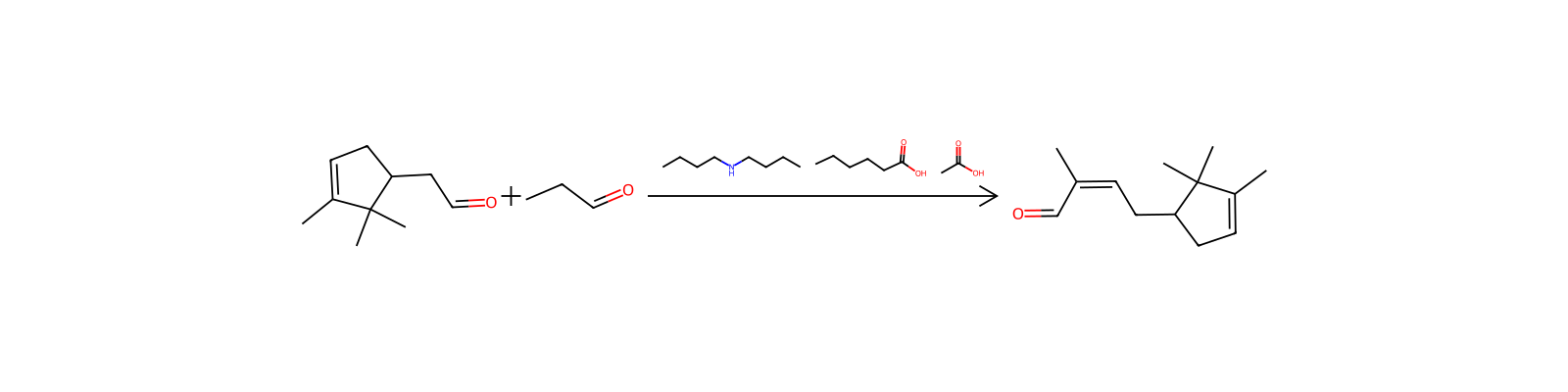
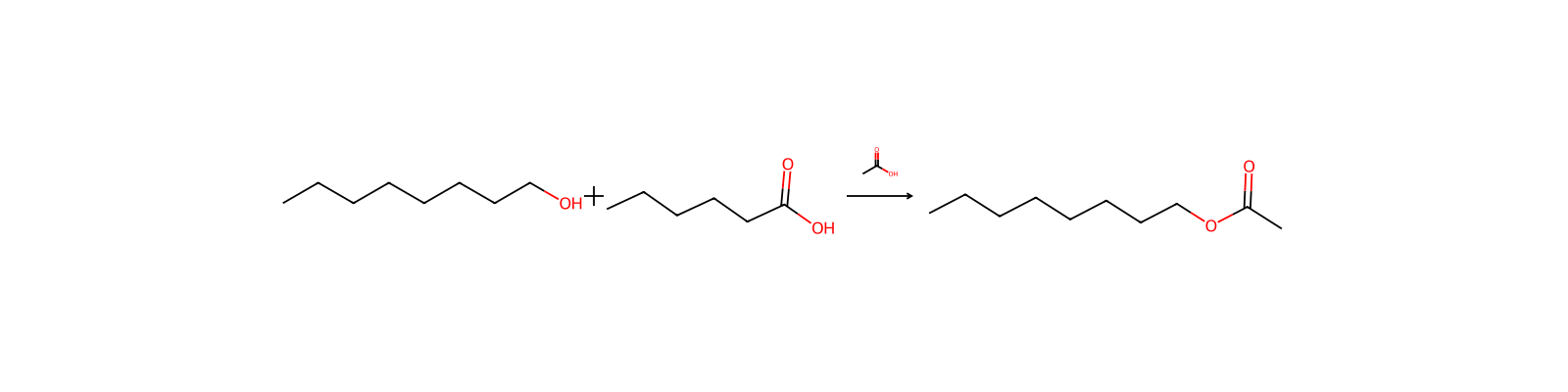
138



Notizen zur Verbindung
Wird geladen…