
Iminodi(essigsure)
Iminodiacetic acid

Grundinformationen
- CAS
142-73-4- Standard-SMILES
O=C(O)CNCC(=O)O- InChIKey
NBZBKCUXIYYUSX-UHFFFAOYSA-N- Summenformel
- C4H7NO4
- Durchschnittliche Molmasse
- 133,1 g/mol
- Monoisotopische Masse
- 133,0375077
Überblick
Iminodiacetic acid is an amino dicarboxylic acid that is glycine in which one of the hydrogens attached to the nitrogen is substituted by a carboxymethyl group. It has a role as a chelator. It is a glycine derivative, an amino dicarboxylic acid and a non-proteinogenic alpha-amino acid. It is a conjugate acid of an iminodiacetate.
Namen und Bezeichner
- Bevorzugter Name
- Iminodiacetic acid
- IUPAC
- 2-(carboxymethylamino)acetic acid
- Lokaler Name
- Iminodi(essigsure)
- Englischer Name
- Iminodiacetic acid
- Summenformel
- C4H7NO4
- Molmasse
- 133.1
Namen und Synonyme
IMINODIACETIC ACID142-73-4Iminodiethanoic acidDiglykokoll2,2'-Iminodiacetic acidAminodiacetic acidDiglycinN-(Carboxymethyl)glycineGlycine, N-(carboxymethyl)-DiglycocollHampshireIminobis(acetic acid)
Weitere Namen anzeigen
IDA2,2'-azanediyldiacetic acid2,2’-iminobis-aceticaciIMinodiacetic2,2’-iminodiaceticacidn-(carboxymethyl)-glycineDIGLYCOLAMIDIC ACIDC4H7NO4
Acetic acid, iminodi-IMDA2-[(carboxymethyl)amino]acetic acidUSAF DO-55IDA (chelating agent)Iminodi(acetic acid)Acetic acid, 2,2'-iminobis-DTXSID2027098
Datenbank-Bezeichner
- CAS
142-73-4- PubChem CID
- 8897
- DTXSID
DTXSID2027098
Eigenschaften
Berechnete Struktureigenschaften
- XLogP
- -3,3
- Polarare Oberfläche (TPSA)
- 86,6 Ų
- H-Brücken-Donoren
- 3
- H-Brücken-Akzeptoren
- 5
- Frei drehbare Bindungen
- 4
- Schwere Atome
- 9
- Formalladung
- 0
- Komplexität
- 108
Experimentelle und physikochemische Eigenschaften
Chemical ClassesOther Uses -> Chelating Agents
Color/FormORTHORHOMBIC CRYSTALS
SolubilityPRACTICALLY INSOL IN ACETONE, METHANOL, ETHER, BENZENE, CARBON TETRACHLORIDE, HEPTANE; SOL IN WATER @ 5 °C: 2.43 G/100 ML
Melting Point247.50 °C. @ 760.00 mm Hg
Physical Description
Dry Powder
Solid; [Merck Index] Light brown crystalline solid; [MSDSonline]
Solid
Dissociation ConstantsPKA1: 2.98; PKA2: 9.89
Other Experimental Properties
FORMS SALTS WITH ACIDS & BASES
220-250 °C (COMMERCIAL)
DECOMP @ 247.5 °C
Physikochemische Eigenschaften
- Schmelzpunkt
Sicherheit und Regulatorisches
Sicherheitsangaben dienen nur zur Orientierung und ersetzen weder das Sicherheitsdatenblatt (SDB) des Lieferanten noch geltende Vorschriften oder eine fachliche Bewertung.
GHS-Klassifizierung
GHS Classification
This chemical does not meet GHS hazard criteria for 20.1% (55 of 274) of reports.
Warning
H315 (56.9%): Causes skin irritation [Warning Skin corrosion/irritation]
P261, P264, P264+P265, P271, P273, P280, P302+P352, P304+P340, P305+P351+P338, P319, P321, P332+P317, P337+P317, P362+P364, P403+P233, P405, and P501 (click each P-code to see the statement)
Aggregated GHS information provided per 274 reports by companies from 14 notifications to the ECHA C&L Inventory. Each notification may be associated with multiple companies.
Gefahrenhinweise
Regulatory Information
Chemical: Glycine, N-(carboxymethyl)-
Glycine, N-(carboxymethyl)- is listed on the EPA's Chemical Data Reporting (CDR) system. Manufacturers and importers of Glycine, N-(carboxymethyl)- are required to report information about their production and use of this chemical to the EPA under the Toxic Substances Control Act (TSCA). (40 eCFR Part 711)
Iminodiacetic acid: Does not have an individual approval but may be used under an appropriate group standard
Hazards SummaryEmergency medical treatment: symptomatic drug ingestion; Not tumorigenic when 0.5% solution added to drinking water of rats for most of their lifespans; [HSDB] Intraperitoneal LD50 (mouse) = 250 mg/kg; [RTECS] An irritant; [MSDSonline]
Hazard Classes and CategoriesSkin Irrit. 2 (56.9%)
Sicherheit und Schutzausrüstung
Protective Action Criteria (PAC)
0.82 [mg/m3]
Chemie und Industrie
Pharmakologische Informationen
Mechanism of Action
LEAD NITRATE ALONE OR CHELATED WITH DIFFERENT CHELATING AGENTS INCL IMINODIACETIC ACID (IDA) WAS ADMIN TO PREGNANT RATS ON DAYS 9, 11 OR 16 OF GESTATION. THE LEAD-CHELATE COMPLEX EITHER REDUCED OR EQUALED BUT DID NOT ENHANCE THE OVERALL EMBRYO OR FETAL TOXICITY. THERE WERE NO QUALITATIVELY DIFFERENT EFFECTS PRODUCED WITH CHELATED LEAD VERSUS LEAD ALONE. THE CHELATING AGENTS WERE MORE EFFECTIVE AFTER DAY 9 THAN DAYS 11 OR 16. EDTA PRODUCED THE GREATEST REDUCTION IN OVERALL EFFECT, WHILE IDA PROVIDED THE LEAST PROTECTION.
MeSH Pharmacological ClassificationChemicals that bind to and remove ions from solutions. Many chelating agents function through the formation of COORDINATION COMPLEXES with METALS.
Absorption, Distribution and ExcretionPLACENTAL PERMEABILITY & TRANSFER OF LEAD NITRATE ALONE & CHELATED WITH IMINODIACETIC ACID (PBIDA) IN RATS WERE STUDIED. LITTLE OR NO DIFFERENCES IN MATERNAL BLOOD OR FETAL LEAD CONTENT WERE OBSERVED WITH PBIDA COMPLEX.
Verwendung und Herstellung
Uses
Used as a buffer/sequestrant in electroplating applications and to make surfactants, chelating resins, and polymeric amides; Used as IDA, a chelating agent; [HSDB]
Electroplating [Category: Plate]
HAS BEEN SUGGESTED AS INTERMEDIATE IN MFR OF COMPLEX SALTS, CHELATING AGENTS
CHEM INT FOR SURFACTANTS, CHELATING RESINS, POLYMERIC AMIDES; BUFFER/SEQUESTRANT IN ELECTROPLATING APPLICATIONS
U.S. Exports
(1972) No Data
(1975) No Data
U.S. Imports
(1972) No Data
(1975) No Data
U.S. Production
2020: 39,683 lb
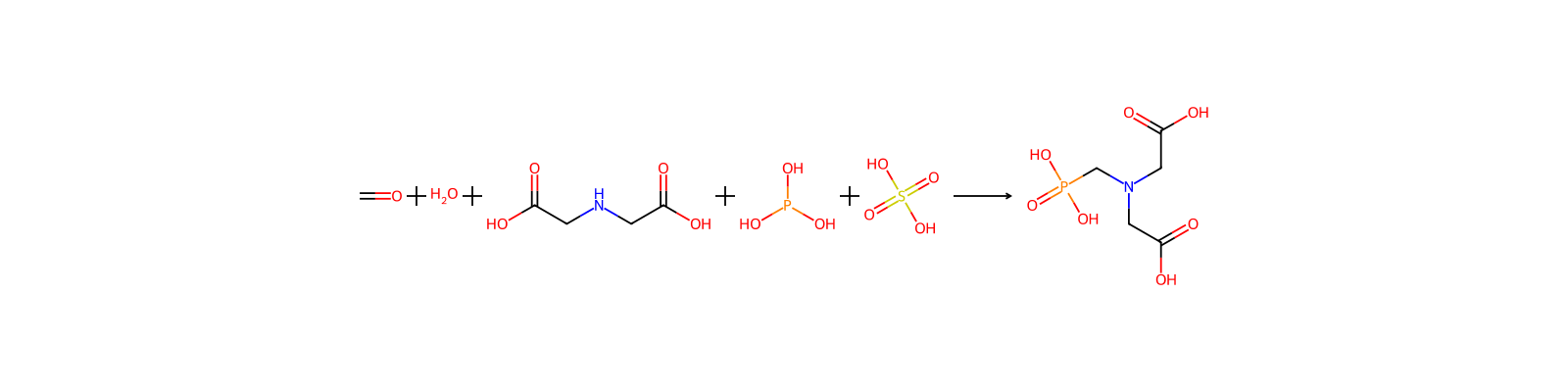
Zugehörige Reaktionen
87



Notizen zur Verbindung
Wird geladen…