StartseiteMCPWorkbenchSkills
StartseiteWorkbenchBenachrichtigungenMein Bereich
llms.txt · MCP-AnleitungDatenschutz · Nutzungsbedingungen · Supportv1.8.0
  1. Startseite
  2. /Verbindung

1,4-Dimethoxybenzol

1,4-Dimethoxybenzene

HCID 9016
Neue NotizNeue ReaktionAnfrage stellen
Druckvorschau
GrundinformationenÜberblickNamen und BezeichnerEigenschaftenSicherheit und RegulatorischesChemie und IndustrieZugehörige ReaktionenNotizen zur Verbindung
TeilstruktursucheÄhnliche Strukturen suchen

Grundinformationen

CAS
150-78-7
Standard-SMILES
COc1ccc(OC)cc1
InChIKey
OHBQPCCCRFSCAX-UHFFFAOYSA-N
Summenformel
C8H10O2
Durchschnittliche Molmasse
138,16 g/mol
Monoisotopische Masse
138,06807956

Überblick

1,4-dimethoxybenzene appears as colorless crystals. (NTP, 1992)

Namen und Bezeichner

Bevorzugter Name
1,4-Dimethoxybenzene
IUPAC
1,4-dimethoxybenzene
Lokaler Name
1,4-Dimethoxybenzol
Englischer Name
1,4-Dimethoxybenzene
Summenformel
C8H10O2
Molmasse
138.16

Namen und Synonyme

1,4-Dimethoxybenzene150-78-7p-Dimethoxybenzenep-MethoxyanisoleHYDROQUINONE DIMETHYL ETHERBenzene, 1,4-dimethoxy-Benzene, p-dimethoxy-4-MethoxyanisoleQuinol dimethyl ether1,4-DimethoxybenzolDimethylhydroquinone etherDimethyl ether hydroquinone
Weitere Namen anzeigen
dimethoxybenzeneDIMETHYLHYDROQUINONEFEMA 23861,4-dimethoxy-benzen4-DiMethoxybenzene1,4-dimethoxybezene
USAF AN-9Dimethyl hydroquinoneHydroquinone, dimethyl etherMethyl p-methoxyphenyl etherDimethylether hydrochinonuFEMA No. 2386para-dimethoxybenzeneDTXSID0022014

Datenbank-Bezeichner

CAS
150-78-7
PubChem CID
9016
DTXSID
DTXSID0022014
ChEMBL
CHEMBL1668604
ChEBI
CHEBI:179261
UNII
24WC6T6X0G
EC Number
205-771-9
Nikkaji
J5.858K

Eigenschaften

Berechnete Struktureigenschaften

XLogP
2
Polarare Oberfläche (TPSA)
18,5 Ų
H-Brücken-Donoren
0
H-Brücken-Akzeptoren
2
Frei drehbare Bindungen
2
Schwere Atome
10
Formalladung
0
Komplexität
73,3

Experimentelle und physikochemische Eigenschaften

Chemical ClassesOther Classes -> Ethers, Other
SpringerMaterials Properties13C nuclear magnetic resonance spectrum
FragrancesFragrance Ingredient (p-Dimethoxybenzene) -> IFRA transparency List
LogP · 4 Einträge

log Kow = 2.03

2.04

2.04

2.03

Odor · 2 Einträge

SWEET CLOVER ODOR

SWEET, NUT-LIKE AROMA

TasteOILY, PHENOLIC TASTE
Food AdditivesFLAVORING AGENT OR ADJUVANT -> FDA Substance added to food
Density · 2 Einträge

1.053 at 131 °F (NTP, 1992) - Denser than water; will sink

1.0526 @ 55 °C/55 °C

Flavoring AgentsEU Flavoring substances
Viscosity

Sicherheit und Regulatorisches

Sicherheitsangaben dienen nur zur Orientierung und ersetzen weder das Sicherheitsdatenblatt (SDB) des Lieferanten noch geltende Vorschriften oder eine fachliche Bewertung.

GHS-Klassifizierung

GHS Classification · 3 Einträge

This chemical does not meet GHS hazard criteria for 97.5% (1792 of 1838) of all reports.

Not Classified

Aggregated GHS information provided per 1838 reports by companies from 7 notifications to the ECHA C&L Inventory.

Gefahrenhinweise

Regulatory Information · 4 Einträge

Chemical: Benzene, 1,4-dimethoxy-

Commission Regulation (EC) No 1565/2000 (Repealed by Com. Implementing Reg. (EU) No 872/2012)

REACH registered substance: 1,4-dimethoxybenzene (EC: 205-771-9)

Benzene, 1,4-dimethoxy-: Does not have an individual approval but may be used under an appropriate group standard

Fire HazardsCombustible. Finely dispersed particles form explosive mixtures in air.
Hazards Summary · 1 Eintrag

Moderate skin irritant; Acts as general anesthetic in lethal-dose feeding studies of rats; [RTECS] Safe as a flavoring agent in food; [JECFA] Emergency treatment: see Hydroquinone and Quinone. [HSDB] No listed effects of short-term or long-term exposure; Insufficient data are available on the effect of this substance on human health, therefore utmost care must be taken. [ICSC] An irritant; [MSDSonline]

Reactive GroupEthers
Special ReportsOPDYKE DL J; FOOD COSMET TOXICOL 16 (1): 715 (1978). REVIEW WITH 18 REFERENCES ON DIMETHYLHYDROQUINONE INCLUDING TOXICITY, IRRITATION, SENSITIZATION, DEPIGMENTATION, METAB & PHARMACOLOGY.
Reactivity Profile1,4-DIMETHOXYBENZENE is an ether. Ethers may react violently with strong oxidizing agents. In other reactions, which typically involve the breaking of the carbon-oxygen bond, ethers are relatively inert.

Chemie und Industrie

Pharmakologische Informationen

Metabolism/Metabolites1,4-DIMETHOXYBENZENE GIVES P-METHOXYPHENOL IN RABBIT. /FROM TABLE/
Cellular LocationsCytoplasm

Verwendung und Herstellung

Uses · 4 Einträge

Used as a weathering agent in paints and plastics, a fixative in perfumes, and a flavoring additive; Also used in dyes, as a resin intermediate, and in cosmetics and suntan creams; [Hawley]

Painting (Pigments, Binders, and Biocides) [Category: Paint]

WEATHERING AGENT IN PAINTS & PLASTICS; FIXATIVE IN PERFUMES; DYES; RESIN INT; COSMETICS; FLAVORING

HYDROQUINONE DIMETHYL ETHER IS USED AS INT IN MFR OF CERTAIN NAPHTHOL DYES & AS WEATHERING AGENT FOR PAINTS & PLASTICS. BECAUSE OF ITS FRAGRANT ODOR, IS ALSO USED...IN SOAP PERFUMES, LOTIONS, & CREAMS.

U.S. Imports · 2 Einträge

(1977) 5.75X10+5 GRAMS (PRINCPL CUSTMS DISTS)

(1979) 2.77X10+7 GRAMS (PRINCPL CUSTMS DISTS)

U.S. Production · 2 Einträge

(1977) PROBABLY GREATER THAN 4.54X10+6 GRAMS

(1979) PROBABLY GREATER THAN 4.54X10+6 GRAMS

Methods of ManufacturingMETHYLATION OF HYDROQUINONE USING DIMETHYLSULFATE & ALKALI
Use Classification · 4 Einträge

Fragrance Ingredients

Flavouring Agent -> FLAVOURING_AGENT -> JECFA Functional Classes

Flavoring Agents -> JECFA Flavorings Index

Flavouring Agent -> FLAVOURING_AGENT -> JECFA Functional Classes

General Manufacturing Information · 2 Einträge

Benzene, 1,4-dimethoxy-: ACTIVE

FEMA NO 2386; REPORTED USES: NON-ALCOHOLIC BEVERAGES, 8.1 PPM; ICE CREAM, ICES, ETC, 5.0 PPM; CANDY, 4.7 PPM; BAKED GOODS, 5.8 PPM. /FROM TABLE/

Zugehörige Reaktionen

59
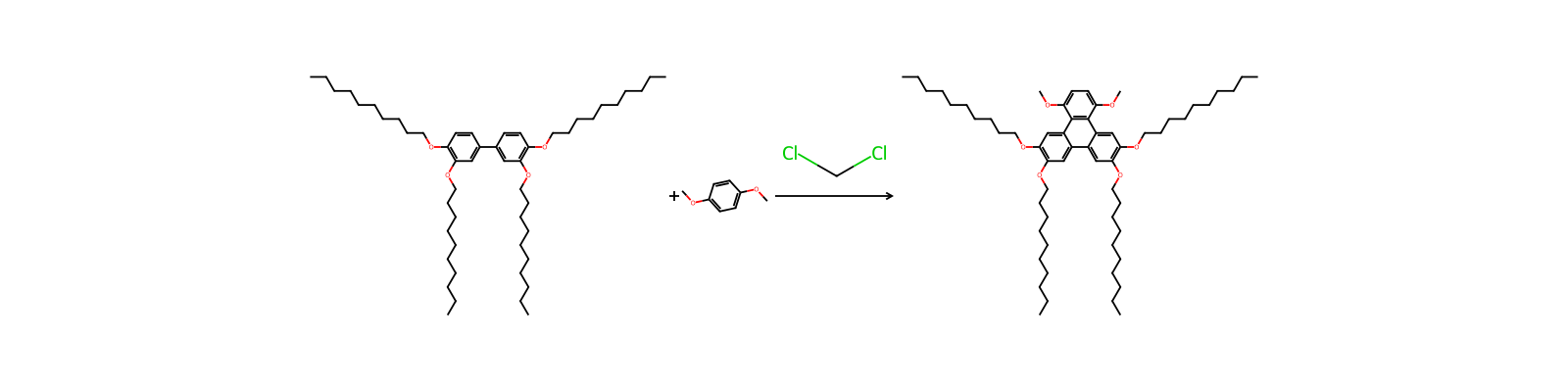
Reaktionsaufzeichnung erstellen
Reaktionsgleichung von HRID 25913
HRID 25913als Eduktuspto-grants-1979_04
Reaktionsgleichung von HRID 217582
HRID 217582als Eduktuspto-grants-2012_06
Reaktionsgleichung von HRID 223557
HRID 223557als Eduktuspto-grants-1982_10
Reaktionsgleichung von HRID 239613
HRID 239613als Eduktuspto-grants-2014_02
Reaktionsgleichung von HRID 294317
HRID 294317als EduktTraining data from https://doi.org/10.1039/C8SC04228D (8/10)
Reaktionsgleichung von HRID 309820
HRID 309820als EduktTraining data from https://doi.org/10.1039/C8SC04228D (8/10)
Reaktionsgleichung von HRID 347395
HRID 347395als Eduktuspto-grants-2007_02
Reaktionsgleichung von HRID 370880
HRID 370880als Eduktuspto-grants-1985_07
Seite 1 von 8

Notizen zur Verbindung

Wird geladen…

Auf dieser SeiteGrundinformationenÜberblickNamen und BezeichnerEigenschaftenSicherheit und RegulatorischesChemie und IndustrieZugehörige ReaktionenNotizen zur Verbindung
Weitere Aktionen
Neue NotizNeue ReaktionAnfrage stellen
1.04 CENTIPOISE @ 65 °C
Color/Form · 2 Einträge

LEAFLETS FROM WATER

WHITE FLAKES

Solubility · 6 Einträge

Slightly soluble (NTP, 1992)

SLIGHTLY SOL IN WATER; VERY SOL IN ETHER, BENZENE

1:10 IN 95% ALCOHOL

SOL IN ACETONE

Solubility in water: none

Slightly soluble in water

Physikochemische Eigenschaften

Schmelzpunkt
54 · 54-56 °C(lit.)
Siedepunkt
213 °C · 213 °C(lit.)
Dichte
1.053 g/mL · 1.053 g/mL at 25 °C(lit.)
Dampfdichte
4.8 · 4.8 (vs air)
Dampfdruck
1 mm · <1 mm Hg ( 20 °C)
Brechungsindex
1.5231 · 1.5231 (estimate)
FEMA
2386 · 2386 | P-DIMETHOXYBENZENE
Flammpunkt
98 °C · 98 °C
storage temp.
Sealed in dry,Room Temperature
Löslichkeit
0.1 g/mL, · dioxane: 0.1 g/mL, clear
Aggregatzustand
Crystalline Powder, Crystals, or Flakes
Farbe
White
Wichte
1.053 · 1.053
Geruch (Odor)
1 % · at 1.00 % in dipropylene glycol. sweet green new mown hay fennel
PH
7 · 7 (H2O, 20℃)(saturated solution)
Explosionsgrenze
1.2 · 1.2-5.6%(V)
Geruchsart
green
Biologische Quelle
synthetic
Wasserlöslichkeit
0.8 g/l · 0.8 g/l (20 ºC)
JECFA Number
1250 · 1250
BRN
774605 · 774605
Henry's Law Constant
2.8 · 2.8×10-3 mol/(m3Pa) at 25℃, HSDB (2015)
Dielectric constant
4.5 · 4.5(23℃)
Stabilität
Stable. Combustible. Incompatible with strong oxidizing agents.
Major Application
cleaning productscosmeticsfood and beveragespersonal care
Kosmetik-Inhaltsstoffe Funktionen
PERFUMING
InChI
1S/C8H10O2/c1-9-7-3-5-8(10-2)6-4-7/h3-6H,1-2H3
InChIKey
OHBQPCCCRFSCAX-UHFFFAOYSA-N
SMILES
COc1ccc(OC)cc1
LogP
2.08 at · 2.08 at 20℃
CAS Datenbank
150 · 150-78-7(CAS DataBase Reference)
NIST chemische Informationen
1 · Benzene, 1,4-dimethoxy-(150-78-7)
EPA chemische Informationen
p-Dimethoxybenzene (150-78-7)
Chemical DangersReacts with strong oxidants.
Physical DangersDust explosion possible if in powder or granular form, mixed with air.
Air and Water ReactionsSlightly water soluble (NTP, 1992).
Hazard Classes and CategoriesNot Classified
Explosive Limits and PotentialExplosive limits , vol% in air: 1.2-5.6

Sicherheit und Schutzausrüstung

Fire FightingUse water spray, powder, alcohol-resistant foam, carbon dioxide.
First Aid Measures · 4 Einträge

Fresh air, rest.

Remove contaminated clothes. Rinse and then wash skin with water and soap. Refer for medical attention .

First rinse with plenty of water for several minutes (remove contact lenses if easily possible), then refer for medical attention.

Rinse mouth.

First Aid · 1 Eintrag

EYES: First check the victim for contact lenses and remove if present. Flush victim's eyes with water or normal saline solution for 20 to 30 minutes while simultaneously calling a hospital or poison control center. Do not put any ointments, oils, or medication in the victim's eyes without specific instructions from a physician. IMMEDIATELY transport the victim after flushing eyes to a hospital even if no symptoms (such as redness or irritation) develop.

Safe StorageSeparated from strong oxidants.
Nonfire Spill Response · 1 Eintrag

SMALL SPILLS AND LEAKAGE: Should a spill occur while you are handling this chemical, FIRST REMOVE ALL SOURCES OF IGNITION, then you should dampen the solid spill material with ethanol and transfer the dampened material to a suitable container. Use absorbent paper dampened with ethanol to pick up any remaining material. Seal the absorbent paper, and any of your clothes, which may be contaminated, in a vapor-tight plastic bag for eventual disposal. Solvent wash all contaminated surfaces with ethanol followed by washing with a soap and water solution. Do not reenter the contaminated area until the Safety Officer (or other responsible person) has verified that the area has been properly cleaned.

Disposal Methods · 1 Eintrag

SRP: At the time of review, criteria for land treatment or burial (sanitary landfill) disposal practices are subject to significant revision. Prior to implementing land disposal of waste residue (including waste sludge), consult with environmental regulatory agencies for guidance on acceptable disposal practices.

Spillage Disposal · 1 Eintrag

Personal protection: particulate filter respirator adapted to the airborne concentration of the substance. Ventilation. Remove all ignition sources. Sweep spilled substance into covered sealable containers. Carefully collect remainder. Then store and dispose of according to local regulations.

Eye PreventionWear safety spectacles.
Fire PreventionNO open flames. NO contact with combustible substances. Closed system, dust explosion-proof electrical equipment and lighting. Prevent deposition of dust.
Inhalation RiskNo indication can be given about the rate at which a harmful concentration of this substance in the air is reached on evaporation at 20 °C.
Skin PreventionProtective gloves.
Ingestion PreventionDo not eat, drink, or smoke during work.

Toxikologische Informationen

Ecotoxicity ValuesLC50 Pimephales promelas (fathead minnow) 117 mg/l 96 hr flow-through bioassay, wt 0.12 g, water hardness 45.5 mg/l calcium carbonate , temp: 25 + or - 1 °C, pH 7.5, dissolved oxygen greater than 60% of saturation
Environmental Fate · 3 Einträge

TERRESTRIAL FATE: An estimated Koc of 300(1,SRC), calculated from an experimental log Kow of 2.03(2,SRC), suggests that hydroquinone dimethyl ether will have moderate mobility in soil(SRC), based upon a recommended classification scheme(3). Hydroquinone dimethyl ether may volatilize from moist soil surfaces based on an estimated Henry's Law constant of 3.5X10⁻³ atm-cu m/mole(4,SRC). It may volatilize from dry soil surfaces based on an estimated vapor pressure of 8.7X10⁻² mm Hg(5,SRC). Incomplete information is available regarding the biodegradation potential of hydroquinone dimethyl ether; however, this compound was completely biodegraded within eight days under aerobic conditions using a mixed soil population(6); another soil isolate was unable to biodegrade this compound(7).

AQUATIC FATE: Hydroquinone dimethyl ether is expected to volatilize from water surfaces based on an estimated Henry's Law constant of 3.54X10⁻³ atm-cu m/mole(1,SRC). The volatilization half-life from a model river was estimated as 4 hours and from a model lake, 5 days(2,SRC) Photooxidation half-lives of 60 hours for continuous sunlight on the water's surface and 150 hours of continous sunlight at a 1 meter depth was measured for hydroquinone dimethyl ether in natural water(3). An estimated BCF value of 20(2,SRC), calculated from an experimental log Kow(4), indicates that hydroquinone dimethyl ether should not bioconcentrate in aquatic organisms(2,SRC). Incomplete information is available regarding the biodegradation potential of hydroquinone dimethyl ether, however, this compound was completely biodegraded within eight days under aerobic conditions using a mixed soil population(5); another soil isolate was unable to biodegrade this compound(6).

ATMOSPHERIC FATE: Based on an estimated vapor pressure of 8.7X10⁻² mm Hg at 25 °C(1,SRC), hydroquinone dimethyl ether will exist mainly in the vapor phase(2,SRC). Hydroquinone dimethyl ether will degrade in the vapor phase by reaction with photochemically produced hydroxyl radicals (5X10+5 hydroxyl radicals per cu cm) with an estimated half-life of about 19 hours(3,SRC).

Adverse EffectsNeurotoxin - Acute solvent syndrome
Exposure RoutesThe substance can be absorbed into the body by inhalation.
Toxicity Summary · 1 Eintrag

IDENTIFICATION AND USE: Hydroquinone dimethyl ether exists as white flakes or leaflets. It has a sweet clover or nut like odor and has an oily phenolic taste. It is slightly soluble in water; very soluble in ether, benzene, alcohol and acetone. It is used as a flavoring agent, weathering agent in paints and plastics, and as a fixative in perfumes, also used in dyes; resin intermediates, and in cosmetics, and flavoring agent. HUMAN EXPOSURE AND TOXICITY: Chronic neurotoxic effects include vision disturbances. Exposure to this chemical could result from industrial handling. ANIMAL STUDIES: In female rats fed a diet containing this chemical at a concentration of 2% or greater produced questionable results on growth. In dogs fed hydroquinone ethers only minor body weight loss was noted. A solution in olive oil containing this chemical caused a slight or moderate irritation to Guinea pig skin.

Effluent ConcentrationsHydroquinone dimethyl ether was detected in one occurrence in the wastewater from a petroleum refining company at unreported concentrations(1).
Soil Adsorption/Mobility · 1 Eintrag

Based on an experimental log Kow of 2.03(1), the Koc of hydroquinone dimethyl ether is estimated as approximately 300 using a regression-derived equation(2,SRC). According to a suggested classification scheme(3), this estimated Koc value suggests that hydroquinone dimethyl ether will have moderate mobility in soil(SRC).

Natural Pollution SourcesREPORTED FOUND IN HYACINTH (HYACINTHUS ORIENTALIS L) ESSENTIAL OIL & IN RHODOPHYLLUS ICTERIUS.
Human Toxicity Excerpts · 2 Einträge

Cell lines Raji and K 562, lacking tyrosinase, and two melanotic human melanoma cell lines (IRE 1 and IRE 2), were exposed to concentrations from 5 X 10(-3) M to 10(-51 M of different phenols which are substrates of tyrosinase, ie 1-dopa, dopamine, hydroquinone, tertbutylcatechol, and of phenols which are not substrates of the tyrosinase ie resorcinol butylated hydroxyanisole and hydroquinone dimethyl ether. Cultures were carried out in the presence or in the absence of oxygen radical scavenger enzymes superoxide dismutase catalase and peroxidase. The stability of each substance in culture medium was assayed by high performance liquid chromatography. Results showed that: catechols which are substrates of tyrosinase decompose fully after 24 hr in medium; they are equally toxic for melanona and non-melanoma cell lines; their toxicity is significantly reduced by addition of scavenger enzymes; on the contrary phenols not substrates of tyrosinase are stable in medium and their toxicity is not reduced by scavenger enzynes. Tyrosinase does not play a major role in catechol toxicity in vitro.

Chronic neurotoxic effects include vision disturbances. /From table/ /Quinones/

Artificial Pollution Sources · 1 Eintrag

Hydroquinone dimethyl ether's production and subsequent use as a weathering agent in paints and plastics, as a fixative in perfumes and in cosmetics, as an intermediate in the production of dyes and resins, and as a flavoring(1) may result in its release to the environment through various waste streams(SRC).

Environmental Biodegradation · 1 Eintrag

Eight days were required to completely degrade hydroquinone dimethyl ether using a mixed soil population, as measured by loss of UV absorbance (indicates ring cleavage)(1). Hydroquinone dimethyl ether, when present as the sole carbon source, was not utilized by a bacterial soil isolate for growth over 30 days(2).

Environmental Bioconcentration · 1 Eintrag

An estimated BCF value of 20 was calculated for hydroquinone dimethyl ether(SRC), using an experimental log Kow of 2.03(2) and a recommended regression-derived equation(1). This BCF value suggests that hydroquinone dimethyl ether will not bioconcentrate in aquatic organisms(SRC).

Sicherheitsdaten

wgk
1
tsca
TSCA listed
hs_code
29093090
RTECS-Nr.
CZ6650000
risk_code
36/37/38
hazard_code
Xi
safety_code
26-36-24/25
Speicherklasse
11 - Combustible Solids
Giftige Stoffe Daten
150-78-7(Hazardous Substances Data)
Selbstentzündungstemperatur
1463 °F
Anwendungen · 2 Einträge

OccurrenceReported found in hyacinth (Hyacinthus orientalis L.) essential oil, Rhodophyllus icterius, papaya, peppermint oil, green tea, cherimoya and cooked shrimp

Verwenden1,4-Dimethoxybenzene is used as Pharmaceutical Intermediate. It is used in some paints and as a diazo dye. It is also used in perfumes and flavors in order to its floral odor. In addition, it is used on greasy skin, and with sulfur to treat acne, or as a dandruff treatment.

Darstellung

synthetischeBy methylation of hydroquinone using dimethyl sulfate and alkali.

Vor- und nachgelagerte Produkte

Vorgelagerte Rohstoffe

1,4-DihydroxybenzolMetaclazepamDimethylsulfat

Nachgelagerte Produkte

Methyl 2-amino-2-(4-hydroxyphenyl)acetateAnetholAcemetacinN-(1-Methylethyl)-2-propensäureamid1-(2,5-Dimethoxyphenyl)-2-oximino-1-propanoneChloroneb2,3-Dichloro-5,8-dihydroxy-1,4-naphthoquinoneAstemizol2',5'-Dimethoxypropiophenon1,4-Dimethoxy-2-nitrobenzol2,5-Dimethoxyphenylessigsure2,5-Dimethoxy-α-methylphenethylamin2,5-Dichlor-p-benzochinon2,5-Dimethoxyanilin2,5-Dihydroxybenzonitril2,5-dimethoxyterephthalohydrazide2-tert-Butyl-1,4-dimethoxybenzol2-Acetoxy-2',5'-methoxybenzophenone(2,5-dimethoxyphenyl)-pyridin-2-ylmethanol