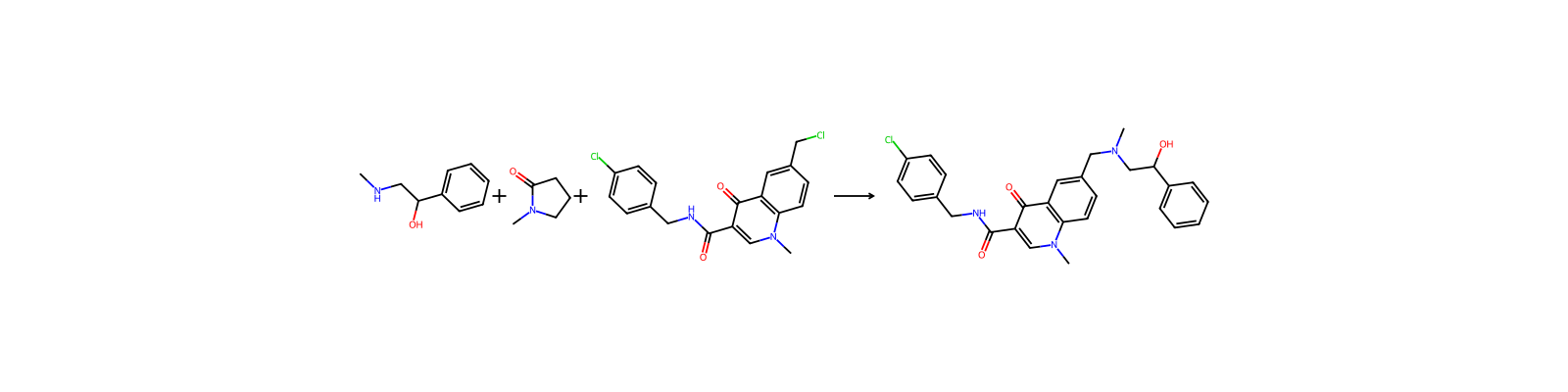
α-[(Methylamino)methyl]benzylalkohol
N-Methylphenylethanolamine
HCID 913

Grundinformationen
- CAS
6589-55-5- Standard-SMILES
CNCC(O)c1ccccc1- InChIKey
ZCTYHONEGJTYQV-UHFFFAOYSA-N- Summenformel
- C9H13NO
- Durchschnittliche Molmasse
- 151,21 g/mol
- Monoisotopische Masse
- 151,09971404
Überblick
N-methylphenylethanolamine is an alkaloid that is ethanolamine having the phenyl group at the 1-position and a methyl group attached to the nitrogen. It has been isolated from Halostachys caspica. It has a role as a plant metabolite and a human metabolite. It is an alkaloid and a member of phenylethanolamines. It is a conjugate base of a N-methylphenylethanolaminium.
Namen und Bezeichner
- Bevorzugter Name
- N-Methylphenylethanolamine
- IUPAC
- 2-(methylamino)-1-phenylethanol
- Lokaler Name
- α-[(Methylamino)methyl]benzylalkohol
- Englischer Name
- DL-alpha-(Methylaminomethyl)benzyl alcohol
- Summenformel
- C9H13NO
- Molmasse
- 151.21
Namen und Synonyme
N-methylphenylethanolamine2-(methylamino)-1-phenylethan-1-ol68579-60-2(+-)-alpha-((Methylamino)methyl)benzenemethanolBenzyl alcohol, alpha-((methylamino)methyl)-, dl-U7B63FX8CHCHEBI:16913MPEOARefChem:830763N-methylphenylethanolamine hydrochloride2-(Methylamino)-1-phenylethanol6589-55-5
Weitere Namen anzeigen
HALOSTACHINEwin5529-2HalogetonGlomeratusAlkaloid2-(methylamino)-1-phenyl-ethanoalpha-(methylamino)benzylalcoholα-(methylaminomethyl)benzyl alcohol±-(Methylaminomethyl)benzyl alcohol
(+-)-Halostachinedl-alpha-(Methylaminomethyl)benzyl alcohol2-Methylamino-1-phenyl-ethanolalpha-(Methylaminomethyl)benzyl alcohol2-Methylamino-1-phenylethanol(+/-)-halostachineMFCD00004506dl-Halostachine
Eigenschaften
Berechnete Struktureigenschaften
- XLogP
- -0,3
- Polarare Oberfläche (TPSA)
- 32,3 Ų
- H-Brücken-Donoren
- 2
- H-Brücken-Akzeptoren
- 2
- Frei drehbare Bindungen
- 3
- Schwere Atome
- 11
- Formalladung
- 0
- Komplexität
- 99,7
Experimentelle und physikochemische Eigenschaften
Melting Point74 - 76 °C
Physical DescriptionSolid
Physikochemische Eigenschaften
- Schmelzpunkt
- 74 · 74-76 °C (lit.)
- Siedepunkt
- 132 · 132-133 °C(Press: 15 Torr)
- Dichte
- 1.02 g/cm3 · 1.02 g/cm3(Temp: 0 °C)
- storage temp.
- 2 · 2-8°C
- Löslichkeit
- Chloroform (Slightly), Methanol (Slightly)
- Aggregatzustand
- Fine Crystalline Needles
- pka
- 14.03 · 14.03±0.20(Predicted)
- Farbe
- White
- Merck
- 14 · 14,4601
- BRN
- 1072841 · 1072841
- Stabilität
- Stable. Incompatible with acids, acid chlorides, acid anhydrides, oxidizing agents.
- InChI
Sicherheit und Regulatorisches
Sicherheitsangaben dienen nur zur Orientierung und ersetzen weder das Sicherheitsdatenblatt (SDB) des Lieferanten noch geltende Vorschriften oder eine fachliche Bewertung.
GHS-Klassifizierung
GHS Classification
Warning
H302 (90.9%): Harmful if swallowed [Warning Acute toxicity, oral]
P261, P264, P264+P265, P270, P271, P280, P301+P317, P302+P352, P304+P340, P305+P351+P338, P317, P319, P321, P330, P332+P317, P337+P317, P362+P364, P403+P233, P405, and P501 (click each P-code to see the statement)
Aggregated GHS information provided per 44 reports by companies from 4 notifications to the ECHA C&L Inventory. Each notification may be associated with multiple companies.
Gefahrenhinweise
Hazard Classes and CategoriesAcute Tox. 4 (90.9%)
Sicherheitsdaten
- wgk
- 3
- hs_code
- 2922199090
- RTECS-Nr.
- DO9625000
- risk_code
- 20/22
- hazard_code
- Xn
- safety_code
- 36
- Speicherklasse
- 11 - Combustible Solids
- Hazard Classifications
- Acute Tox. 4 InhalationAcute Tox. 4 Oral
Chemie und Industrie
Anwendungen
Verwendenα-(Methylaminomethyl)benzyl alcohol was used in the synthesis of 1,4-disubstituted-2,3,4,5-tetrahydro-1H-3-benzazepines. It was also used as internal standard during determination of pseudoephedrine and phenylpropanolamine urine concentrations by HPLC.
Zugehörige Reaktionen
14


