

Grundinformationen
- Standard-SMILES
C#C[C@]1(OC(C)=O)CC[C@H]2[C@@H]3CCC4=C[C@@H](OC(C)=O)CC[C@@H]4[C@H]3CC[C@@]21C- InChIKey
ONKUMRGIYFNPJW-KIEAKMPYSA-N- Summenformel
- C24H32O4
- Durchschnittliche Molmasse
- 384,5 g/mol
- Monoisotopische Masse
- 384,2300595
Namen und Bezeichner
- Bevorzugter Name
- Ethynodiol Diacetate
- IUPAC
- [(3S,8R,9S,10R,13S,14S,17R)-17-acetyloxy-17-ethynyl-13-methyl-2,3,6,7,8,9,10,11,12,14,15,16-dodecahydro-1H-cyclopenta[a]phenanthren-3-yl] acetate
- Lokaler Name
- Etynodioldi(acetat)
- Englischer Name
- Ethynodiol diacetate
- Summenformel
- C24H32O4
- Molmasse
- 384.51
Namen und Synonyme
ETHYNODIOL DIACETATE297-76-7FemulenContinuinEtynodiol AcetateEtynodiol diacetateSC 11800SC-11800DTXSID402061419-Nor-17alpha-pregn-4-en-20-yne-3beta,17-diol diacetateCHEBI:31580NSC-759288
Weitere Namen anzeigen
EthynodiolCB-8080ovulen508080c.b.EtynodiolLuteonormMetrodiolOvulen 50
(3-beta,17-alpha)-19-Norpregn-4-en-20-yne-3,17-diol diacetate17-alpha-Ethynyl-19-norandrost-4-ene-3-beta,17-beta-diol diacetate17alpha-Ethynyl-3,17-dihydroxy-4-estrene diacetate17alpha-Ethynylestr-4-ene-3beta,17beta-diol acetate3beta, 17beta-Diacetoxy-17alpha-ethynyl-4-oestrene17alpha-Ethynyl-4-estrene-3beta,17beta-diol diacetateDTXCID00614[(3S,8R,9S,10R,13S,14S,17R)-17-acetyloxy-17-ethynyl-13-methyl-2,3,6,7,8,9,10,11,12,14,15,16-dodecahydro-1H-cyclopenta[a]phenanthren-3-yl] acetate
Datenbank-Bezeichner
- CAS
297-76-7- PubChem CID
- 9270
- DTXSID
DTXSID4020614- ChEMBL
CHEMBL1200624- ChEBI
CHEBI:31580- UNII
- 62H10A1236
- EC Number
- 206-044-9
- Nikkaji
- J5.459C
Eigenschaften
Berechnete Struktureigenschaften
- XLogP
- 3,9
- Polarare Oberfläche (TPSA)
- 52,6 Ų
- H-Brücken-Donoren
- 0
- H-Brücken-Akzeptoren
- 4
- Frei drehbare Bindungen
- 5
- Schwere Atome
- 28
- Formalladung
- 0
- Komplexität
- 758
Experimentelle und physikochemische Eigenschaften
LogP
5
5
Solubility3.97e-03 g/L
Melting Point126-127
Physical DescriptionSolid
Physikochemische Eigenschaften
- Schmelzpunkt
- 126 · ~126-127°
- Siedepunkt
- 431.17 °C · 431.17°C (rough estimate)
- Dichte
- 1.0474 · 1.0474 (rough estimate)
- Brechungsindex
- 1.486 · 1.4860 (estimate)
- storage temp.
- 2 · 2-8°C
- Löslichkeit
- Chloroform (Slightly), DMSO (Slightly)
- Aggregatzustand
- Solid
- Farbe
- White
- Wasserlöslichkeit
- 1.4 mg/L · 1.4mg/L(25 ºC)
- CAS Datenbank
- 297 · 297-76-7(CAS DataBase Reference)
- NIST chemische Informationen
- Ethynodiol diacetate(297-76-7)
- EPA chemische Informationen
- Ethynodiol diacetate (297-76-7)
Sicherheit und Regulatorisches
GHS-Klassifizierung
GHS Classification
Danger
H302 (95%): Harmful if swallowed [Warning Acute toxicity, oral];H312 (95%): Harmful in contact with skin [Warning Acute toxicity, dermal];H332 (95%): Harmful if inhaled [Warning Acute toxicity, inhalation];H351 (100%): Suspected of causing cancer [Warning Carcinogenicity];H360 (30%): May damage fertility or the unborn child [Danger Reproductive toxicity]
P203, P261, P264, P270, P271, P280, P301+P317, P302+P352, P304+P340, P317, P318, P321, P330, P362+P364, P405, and P501 (click each P-code to see the statement)
Aggregated GHS information provided per 60 reports by companies from 7 notifications to the ECHA C&L Inventory. Each notification may be associated with multiple companies.;Information may vary between notifications depending on impurities, additives, and other factors. The percentage value in parenthesis indicates the notified classification ratio from companies that provide hazard codes. Only hazard codes with percentage values above 10% are shown. For more detailed information, please visit ECHA C&L website.
Gefahrenhinweise
Other Safety InformationIMAP assessments - 19-Norpregn-4-en-20-yne-3,17-diol, diacetate, (3.beta.,17.alpha.)-: Environment tier I assessment;IMAP assessments - 19-Norpregn-4-en-20-yne-3,17-diol, diacetate, (3.beta.,17.alpha.)-: Human health tier I assessment
Hazard Classes and CategoriesAcute Tox. 4 (95%);Acute Tox. 4 (95%);Acute Tox. 4 (95%);Carc. 2 (100%);Repr. 1B (30%)
Toxikologische Informationen
Drug Induced Liver Injury
Drug-Induced Liver Injury Severity and Toxicity (DILIst)
ethynodiol diacetate
DILI Positive
Oral
DOI:10.1016/j.drudis.2019.09.022
Sicherheitsdaten
- wgk
- 3
- hs_code
- 2937230000
- RTECS-Nr.
- RC8963000
- risk_code
- 20/21/22-40
- hazard_code
- Xn
- safety_code
- 22-36
Chemie und Industrie
Pharmakologische Informationen
Protein Binding50-85%
Pharmacodynamics
Ethynodiol Diacetate is used as a female contraceptive. Ethynodiol Diacetate is a progestin or a synthetic form of the naturally occurring female sex hormone, progesterone. In a woman's normal menstrual cycle, an egg matures and is released from the ovaries (ovulation). The ovary then produces progesterone, preventing the release of further eggs and priming the lining of the womb for a possible pregnancy. If pregnancy occurs, progesterone levels in the body remain high, maintaining the womb lining. If pregnancy does not occur, progesterone levels in the body fall, resulting in a menstrual period. Ethynodiol Diacetate tricks the body processes into thinking that ovulation has already occurred, by maintaining high levels of the synthetic progesterone. This prevents the release of eggs from the ovaries.
Mechanism of Action
Binds to the progesterone and estrogen receptors. Target cells include the female reproductive tract, the mammary gland, the hypothalamus, and the pituitary. Once bound to the receptor, progestins like Ethynodiol Diacetate will slow the frequency of release of gonadotropin releasing hormone (GnRH) from the hypothalamus and blunt the pre-ovulatory LH (luteinizing hormone) surge.
MeSH Pharmacological Classification
Oral contraceptives which owe their effectiveness to hormonal preparations.
Oral contraceptives which owe their effectiveness to synthetic preparations.
Cellular LocationsCytoplasm;Extracellular;Membrane
Verwendung und Herstellung
Use ClassificationPharmaceuticals
Anwendungen
BeschreibungEthynodiol diacetate is a synthetic progestogen. It prevents the development of osteoporosis in ovariectomized rats when administered at a dose of 9 μg/animal per day. Ethynodiol diacetate inhibits copulatory ovulation in rabbits. Formulations containing ethynodiol diacetate have been used as oral contraceptives.
VerwendenEthynodiol Diacetate is used as a hormonal contraceptive, birth control.
Vor- und nachgelagerte Produkte
Vorgelagerte Rohstoffe
Anbieter50 Anbieter
国药集团化学试剂有限公司86-21-63210123 · [email protected]
北京华美互利生物化工010-56205725 · [email protected]
阿诺西(上海)生物技术有限公司400-1107768 15058188853 · [email protected]
苏州道澜生物医药科技有限公司15952404857 · [email protected]
上海阿拉丁生化科技股份有限公司400-6206333 13167063860 · [email protected]
南通飞宇生物科技有限公司0513-68819626 15152877458 · [email protected]
成都超九八生物科技有限公司13348960310 13348960310 · [email protected]
艾吉析科技(上海)有限公司17717235263 · [email protected]
广州佳途科技股份有限公司81960175 18933936954 · [email protected]
杭州品高化工有限公司0571-87658025 · [email protected]
上海毕得医药科技股份有限公司400-1647117 13681763483 · [email protected]
Hebei shuoxi biotechnology co. LTD+8613081092107
南京林叶化学试剂有限公司13376084917 13376082704 · [email protected]
陕西缔都化学有限公司029-029-81123119 17391733320 · [email protected]
Dayang Chem (Hangzhou) Co.,Ltd.+86-0571-88938639 17705817739 · [email protected]
上海赛可锐生物科技有限公司021-58000709 13120558703 · [email protected]
上海弘顺生物科技有限公司15901914505 · [email protected]
江西瑞威尔生物科技有限公司400-880-2824 18107960669 · [email protected]
湖南瑞威尔生物科技有限公司15608648206 13297919155 · [email protected]
江西瑞威尔生物科技有限公司18502728206 · [email protected]
安耐吉化学&3A(安徽泽升科技有限公司)021-58432009 400-005-6266 · [email protected]
太原市瑞和丰科贸有限公司+86 351 7031519 · [email protected]
梯希爱(上海)化工贸易有限公司021-61109150 · [email protected]
United Life Science020-82099279 18988941402 · [email protected]
MedBio脉铂医药021-69568360 18916172912 · [email protected]
上海维亦特生物科技有限公司15317051735 · [email protected]
北京博奥森生物技术有限公司400-901-9800 18611424007 · [email protected]
Pure Chemistry Scientific Inc.001-857-928-2050 or 1-888-588-9418 · [email protected]
上海泰坦科技股份有限公司400-6009262 15618770481 · [email protected]
MedChemexpress LLC021-58955995 · [email protected]
武汉丰泰威远科技有限公司+86-27-8746-5837 +86-18627785180 · [email protected]
武汉丰泰威远科技有限公司027-87465837 19945049750 · [email protected]
孝感深远化工有限公司15527621225; 15527621225 · [email protected]
ChemeGen 中国18818260767 · [email protected]
TCI AMERICA800-4238616 · [email protected]
TOKYO CHEMICAL INDUSTRY CO., LTD.03-36680489 · [email protected]
TCI Europe320-37350700 · [email protected]
深圳振强药物研发有限公司0755-66853366 13670046396 · [email protected]
南京生利德生物科技有限公司025-57798810 18652991625 · [email protected]
湖北鑫源顺医药化工有限公司13971561712, 13995564702, 027-50664929 · [email protected]
深圳菲斯生物科技有限公司0755-83725350 13380397412 · [email protected]
上海将来实业股份有限公司400-0066400 13621662912 · [email protected]
上海寰川实业有限公司021-61478794 · [email protected]
Chongqing jooe co., ltd+86-15223382610 · [email protected]
青岛海智微元生物科技有限公司18317699790 18317699790 · [email protected]
湖北巨胜科技有限公司027-59599241 18871490274 · [email protected]
Wuhan Biocar Bio-Pharm Co., Ltd.86 15387057351 · [email protected]
TargetMol中国(陶术生物)021-021-33632979 15002134094 · [email protected]
上海陶术生物科技股份有限公司+1-781-999-5354; +1-00000000000 · [email protected]
BOC Sciences16314854226; +8616314854226 · [email protected]
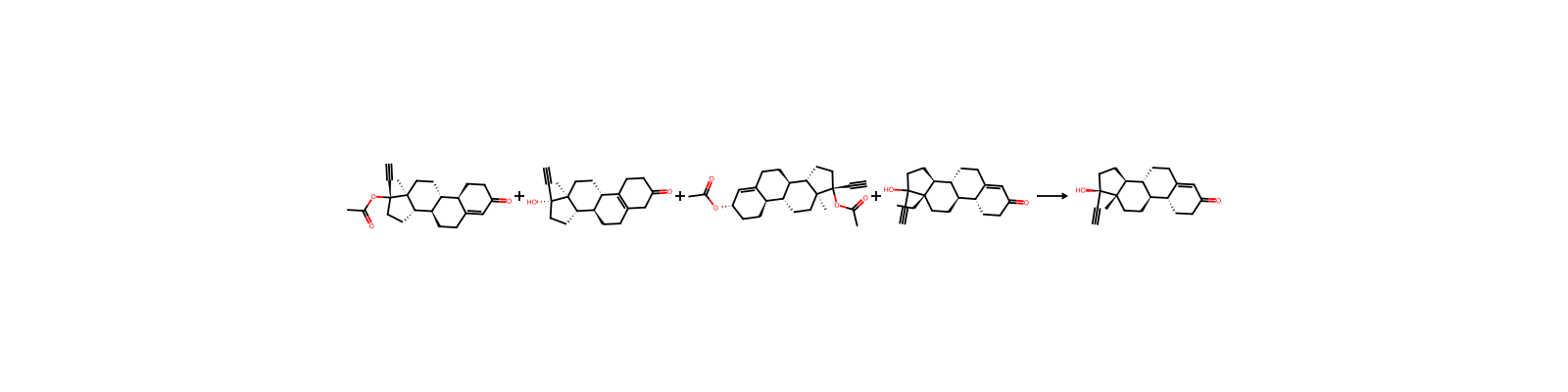
Zugehörige Reaktionen
2
Verknüpfte Notizen
Wird geladen…