tert-Butylchlordiphenylsilan
tert-Butyldiphenylchlorosilane
Grundinformationen
- CAS
58479-61-1- Standard-SMILES
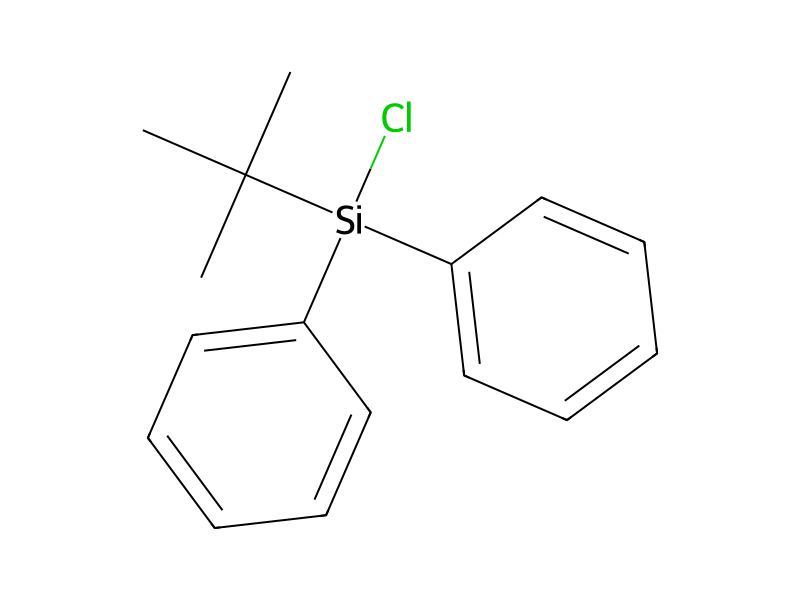
CC(C)(C)[Si](Cl)(c1ccccc1)c1ccccc1- InChIKey
MHYGQXWCZAYSLJ-UHFFFAOYSA-N- Summenformel
- C16H19ClSi
- Durchschnittliche Molmasse
- 274,86 g/mol
- Monoisotopische Masse
- 274,09445482
Namen und Bezeichner
- Bevorzugter Name
- tert-Butyldiphenylchlorosilane
- IUPAC
- tert-butyl-chloro-diphenylsilane
- Lokaler Name
- tert-Butylchlordiphenylsilan
- Englischer Name
- tert-Butylchlorodiphenylsilane
- Summenformel
- C16H19ClSi
- Molmasse
- 274.86
Namen und Synonyme
tert-Butylchlorodiphenylsilane58479-61-1tert-ButyldiphenylchlorosilaneSilane, chloro(1,1-dimethylethyl)diphenyl-TERT-BUTYLDIPHENYLSILYL CHLORIDETBDPS-Cl3BEU48UI4ET-BUPH2SICLEINECS 261-282-0NSC-617386Benzene, 1,1'-(chloro(1,1-dimethylethyl)silylene)bis-DTXSID5069259
Weitere Namen anzeigen
TBDPSTBDPSCITBDPCLTBDPbutylchlorodiphenylsilaneT-BUTYLCHLORODIPHENYLSILANEtert-Butylchlorodiphenylsilane ,97%
TERT-BUTYLDIPHENYLCHLOROSILANE [MI]1,1'-(CHLORO(1,1-DIMETHYLETHYL)SILYLENE)BISBENZENEBENZENE, 1,1'-[CHLORO(1,1-DIMETHYLETHYL)SILYLENE]BIS-RefChem:896568DTXCID8042395261-282-0TBDPSCltert-Butyl(chloro)diphenylsilane
Datenbank-Bezeichner
- CAS
58479-61-1- PubChem CID
- 94078
- DTXSID
DTXSID5069259- UNII
- 3BEU48UI4E
- EC Number
- 261-282-0
- Nikkaji
- J149.823A
Eigenschaften
Berechnete Struktureigenschaften
- Polarare Oberfläche (TPSA)
- 0 Ų
- H-Brücken-Donoren
- 0
- H-Brücken-Akzeptoren
- 0
- Frei drehbare Bindungen
- 3
- Schwere Atome
- 18
- Formalladung
- 0
- Komplexität
- 239
Physikochemische Eigenschaften
- Siedepunkt
- 90 °C0.01 · 90 °C0.01 mm Hg(lit.)
- Dichte
- 1.057 g/mL · 1.057 g/mL at 25 °C(lit.)
- Brechungsindex
- 20 · n20/D 1.568(lit.)
- Flammpunkt
- 230 °F · >230 °F
- storage temp.
- 2 · Inert atmosphere,2-8°C
- Löslichkeit
- miscible in most organic solvents.
- Aggregatzustand
- Liquid
- Wichte
- 1.074 · 1.074
- Farbe
- Clear colorless to yellow or slightly brown
- Wasserlöslichkeit
- reacts
- BRN
- 644023 · 644023
- InChI
- 1S/C16H19ClSi/c1-16(2,3)18(17,14-10-6-4-7-11-14)15-12-8-5-9-13-15/h4-13H,1-3H3
- InChIKey
- MHYGQXWCZAYSLJ-UHFFFAOYSA-N
- SMILES
- CC(C)(C)[Si](Cl)(c1ccccc1)c2ccccc2
- CAS Datenbank
- 58479 · 58479-61-1(CAS DataBase Reference)
- NIST chemische Informationen
Sicherheit und Regulatorisches
Sicherheitsangaben dienen nur zur Orientierung und ersetzen weder das Sicherheitsdatenblatt (SDB) des Lieferanten noch geltende Vorschriften oder eine fachliche Bewertung.
GHS-Klassifizierung
GHS Classification
Danger
H314 (100%): Causes severe skin burns and eye damage [Danger Skin corrosion/irritation]
P260, P264, P280, P301+P330+P331, P302+P361+P354, P304+P340, P305+P354+P338, P316, P321, P363, P405, and P501 (click each P-code to see the statement)
Aggregated GHS information provided per 53 reports by companies from 7 notifications to the ECHA C&L Inventory.
Gefahrenhinweise
Regulatory Information
Chemical: Silane, chloro(1,1-dimethylethyl)diphenyl-
Silane, chloro(1,1-dimethylethyl)diphenyl-: Does not have an individual approval but may be used under an appropriate group standard
Hazard Classes and CategoriesSkin Corr. 1 (100%)
Sicherheitsdaten
- F
- 10
- wgk
- 3
- tsca
- TSCA listed
- ridadr
- UN 2987 8/PG 2
- hs_code
- 29310095
- risk_code
- 14-34-37-29-20/21/22-40
- hazard_code
- C,Xi
- hazard_note
- Irritant/Corrosive
- safety_code
- 26-36/37/39-45-8
- hazard_class
- 8
- packing_group
- II
- Speicherklasse
- 8A - Combustible corrosive hazardous materials
Chemie und Industrie
Verwendung und Herstellung
General Manufacturing InformationBenzene, 1,1'-[chloro(1,1-dimethylethyl)silylene]bis-: ACTIVE
Anwendungen
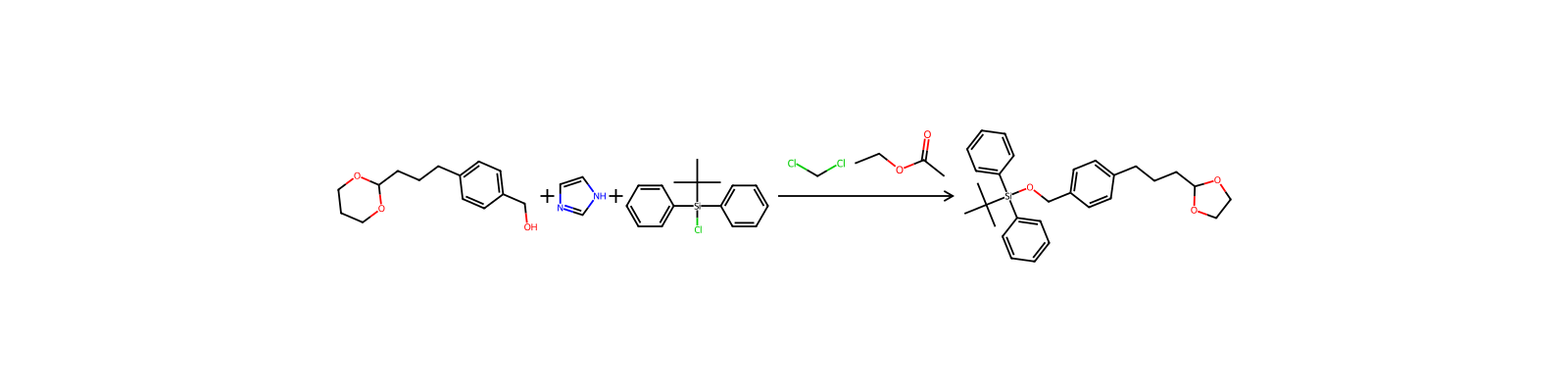
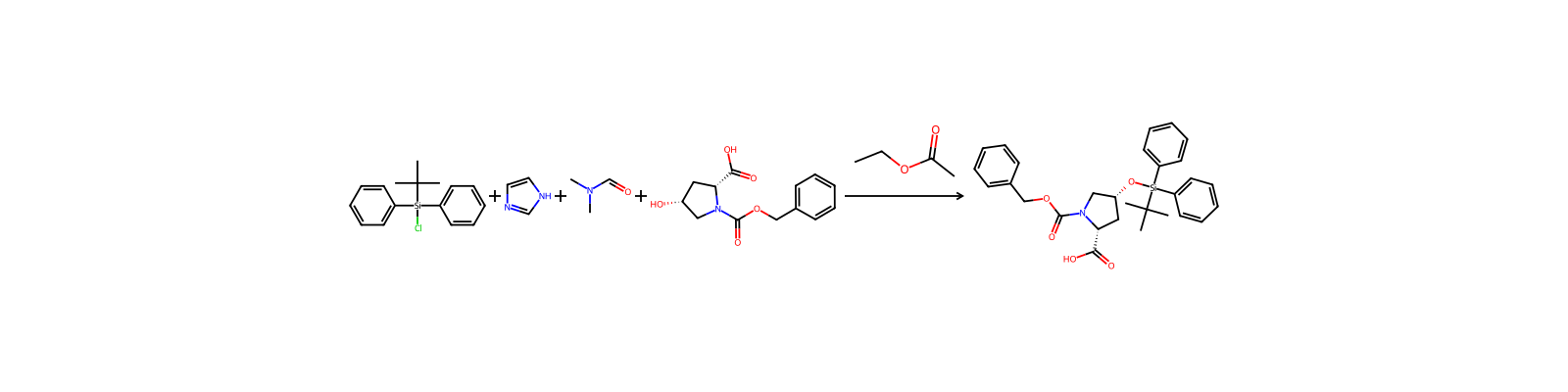
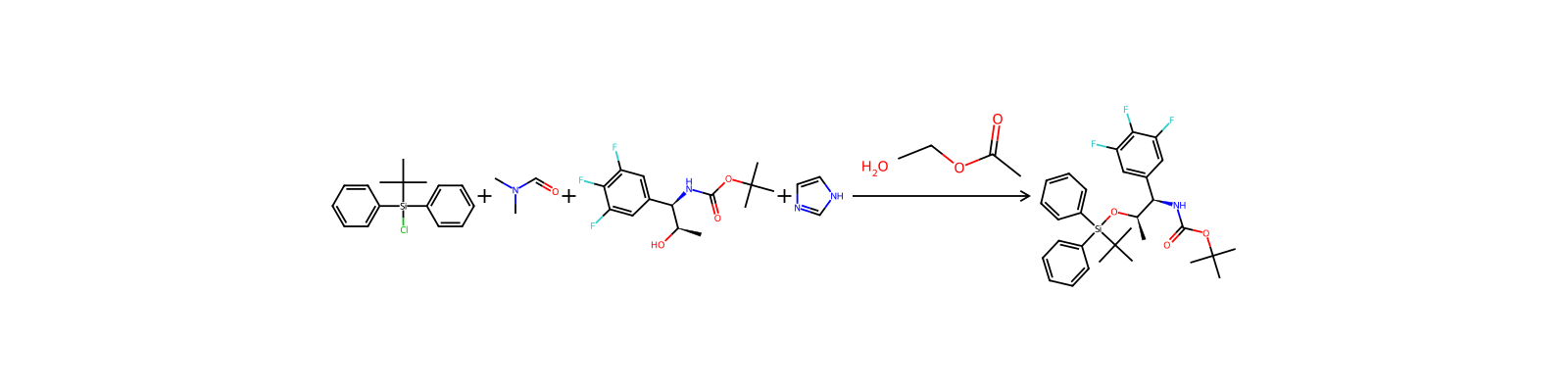
VerwendenSeveral newmethods have been developed for using the reagent to protect primary and secondary alcohols as their TBDPS ethers. In the presence of ammonium nitrate or ammonium perchlorate, reaction between TBDPS-Cl and a primary alcohol, such as benzyl alcohol, in DMF provided excellent yields of the corresponding silyl ethers in just 15 min (eq 1).19 When silver nitrate was used as promoter, the reactions gave inferior yields under otherwise identical conditions.When TBDPS-Cl is used to react with hemiacetals, it converts hemiacetals into ring-opened silyl ether carbonyl compounds, instead of mixed acetals.Presumably, the sizable TBDPS group presents too much steric hindrance for the formation of the corresponding mixed silyl acetals.
Darstellung
synthetischea dry 1 L, three-necked round bottomed flask is equipped with a magnetic stirring bar, a 500mL equalizing dropping funnel fitted with a rubber septum, a reflux condenser, and nitrogen inlet tube. The flask is flushed with nitrogen, then charged with 127 g (0.5 mol) of diphenyldichlorosilane in 300mL of redistilled pentane. A solution of tbutyllithium in pentane (500 mL, 0.55 mol), is transferred under nitrogen pressure to the dropping funnel using a stainless steel, double-tip transfer needle. This solution is slowly added to the contents of the flask and when the addition is complete, the mixture is refluxed 30 h under nitrogen with stirring. The suspension is allowed to cool to rt, the precipitated lithium chloride is rapidly filtered through a pad of Celite, and the latter is washed with 200mL of pentane. The solvent is removed by evaporation, and the colorless residue is distilled through a short (10 cm), Vigreux column, to give 125–132 g of the colorless title compound.
Vor- und nachgelagerte Produkte
Zugehörige Reaktionen
948




Notizen zur Verbindung
Wird geladen…