Grundinformationen
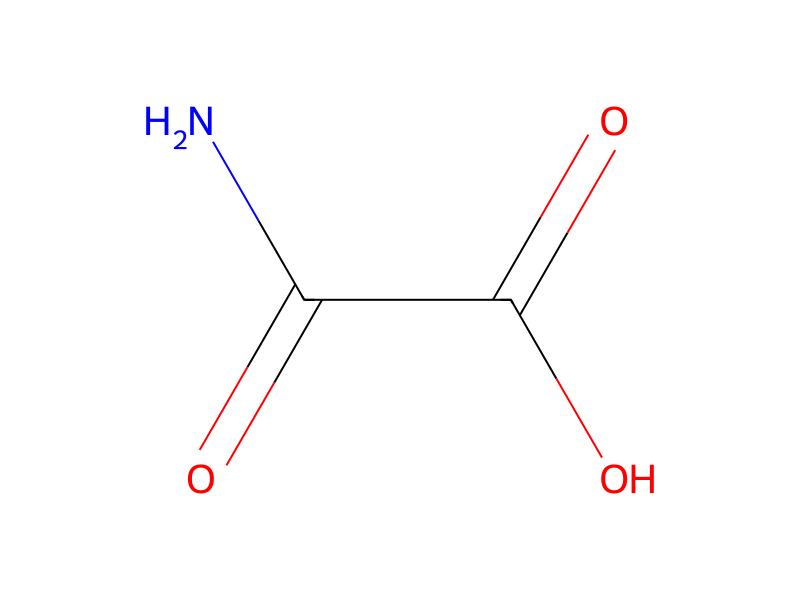
- Standard-SMILES
NC(=O)C(=O)O- InChIKey
SOWBFZRMHSNYGE-UHFFFAOYSA-N- Summenformel
- C2H3NO3
- Durchschnittliche Molmasse
- 89,05 g/mol
- Monoisotopische Masse
- 89,01129296
Überblick
Oxamic acid is a dicarboxylic acid monoamide resulting from the formal condensation of one of the carboxy groups of oxalic acid with ammonia. It has a role as an Escherichia coli metabolite. It is a conjugate acid of an oxamate.
Namen und Bezeichner
- Bevorzugter Name
- Oxamic Acid
- IUPAC
- oxamic acid
- Lokaler Name
- Oxamidsure
- Englischer Name
- Oxamic acid
- Summenformel
- C2H3NO3
- Molmasse
- 89.05
Namen und Synonyme
OXAMIC ACID471-47-6oxamateAcetic acid, aminooxo-Oxalic acid monoamideAminooxoacetic acidOxalamic acidcarbamoylformic acidOxamidic acidGlycine, 2-oxo-Formic acid, (aminocarbonyl)-QU60N5OPLG
Weitere Namen anzeigen
2-aMino-2-oxoacetic acidOxamic acid Oxalic acid monoamideOxamicAcid>Oxamicacid,98%Oxamic acid 98%
Oxalic monoamideDTXSID6060052CHEBI:18058NSC-47001NSC-49416NSC-53102Acid, OxalamicAcid, Oxamidic
Datenbank-Bezeichner
- CAS
471-47-6、66257-53-2- PubChem CID
- 974
- DTXSID
DTXSID6060052- ChEMBL
CHEMBL15976- ChEBI
CHEBI:18058- UNII
- QU60N5OPLG
- EC Number
- 207-443-0
- Nikkaji
- J5.942K
Eigenschaften
Berechnete Struktureigenschaften
- XLogP
- -0,9
- Polarare Oberfläche (TPSA)
- 80,4 Ų
- H-Brücken-Donoren
- 2
- H-Brücken-Akzeptoren
- 3
- Frei drehbare Bindungen
- 1
- Schwere Atome
- 6
- Formalladung
- 0
- Komplexität
- 86,8
Experimentelle und physikochemische Eigenschaften
Chemical ClassesNitrogen Compounds -> Amino Carboxylic Acids
DrugsPharmaceuticals -> Listed in ZINC15
SpringerMaterials PropertiesBoiling point
Pesticides
Pesticides -> Insect Repellents
Environmental transformation -> Pesticide transformation products (metabolite, successor)
Vapor Pressure0.00000046 [mmHg]
Physical DescriptionSolid; [Merck Index] White powder; [Alfa Aesar MSDS]
Physikochemische Eigenschaften
- Schmelzpunkt
- 207 · 207-210 °C (dec.) (lit.)
- Siedepunkt
- 165.08 °C · 165.08°C (rough estimate)
- Dichte
- 1.6193 · 1.6193 (rough estimate)
- Brechungsindex
- 1.4264 · 1.4264 (estimate)
- storage temp.
- 2 · 2-8°C(protect from light)
- Löslichkeit
- DMSO (Slightly), Methanol (Slightly), Water (Slightly)
- Aggregatzustand
- Crystalline Powder
- pka
- 1.6 · 1.60±0.20(Predicted)
- Farbe
- White
- Wasserlöslichkeit
- 108 mg/mL · Soluble in water 108 mg/mL.
- Merck
- 14 · 14,6917
- BRN
- 1743294 · 1743294
- InChI
- InChI=1S/C2H3NO3/c3-1(4)2(5)6/h(H2,3,4)(H,5,6)
- InChIKey
- SOWBFZRMHSNYGE-UHFFFAOYSA-N
- SMILES
- C(O)(=O)C(N)=O
- CAS Datenbank
- 471 · 471-47-6(CAS DataBase Reference)
- EPA chemische Informationen
- Oxamic acid (471-47-6)
Sicherheit und Regulatorisches
GHS-Klassifizierung
GHS Classification
Warning
H315 (100%): Causes skin irritation [Warning Skin corrosion/irritation]
P261, P264, P264+P265, P271, P280, P302+P352, P304+P340, P305+P351+P338, P319, P321, P332+P317, P337+P317, P362+P364, P403+P233, P405, and P501 (click each P-code to see the statement)
Aggregated GHS information provided per 45 reports by companies from 5 notifications to the ECHA C&L Inventory. Each notification may be associated with multiple companies.
Gefahrenhinweise
Regulatory InformationAcetic acid, aminooxo-: Does not have an individual approval but may be used under an appropriate group standard
Hazards Summary
See Oxamic acid.
A skin and strong eye irritant; [Alfa Aesar MSDS] See Oxamide. See Acetic acid.
Hazard Classes and CategoriesSkin Irrit. 2 (100%)
Sicherheitsdaten
- wgk
- 3
- tsca
- TSCA listed
- hs_code
- 29241990
- risk_code
- 36/37/38
- hazard_code
- Xi
- safety_code
- 26-36
- Speicherklasse
- 11 - Combustible Solids
Chemie und Industrie
Verwendung und Herstellung
UsesInsect attractant, repellent and chemosterilant; [ChemIDplus]
Use ClassificationEnvironmental transformation -> Pesticide transformation products (metabolite, successor)
General Manufacturing InformationAcetic acid, 2-amino-2-oxo-: ACTIVE
Anwendungen
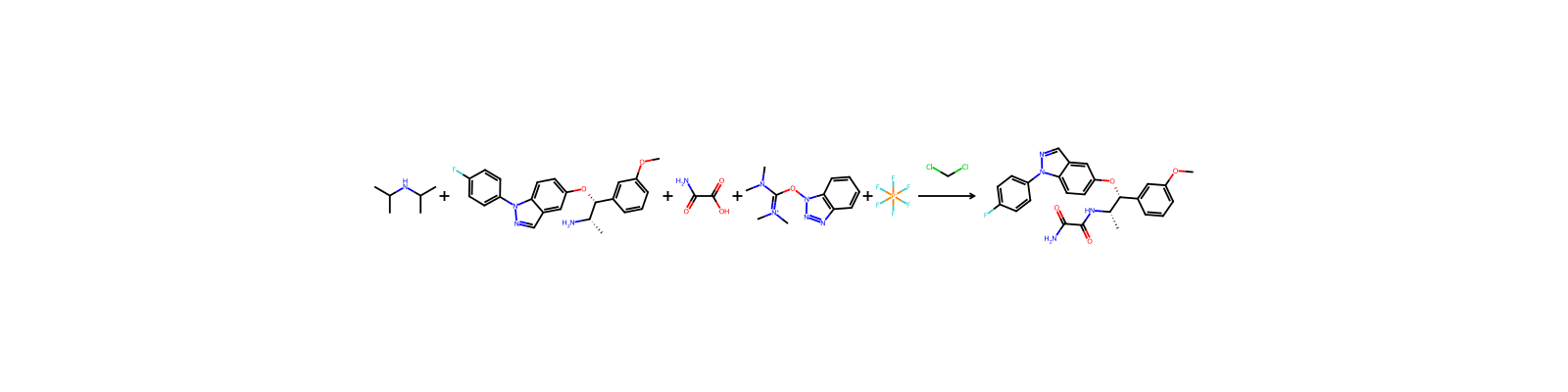
BeschreibungOxamic acids also known to as oxalic acid monoamides have emerged as potent precursors for the generation of the carbamoyl radical. Oxamic acids can easily undergo decarboxylation through a single electron oxidation resulting in the generation of the reactive carbamoyl radical, which can then engage in diverse radical reactions or undergo a second single electron oxidation as originally unveiled by Minisci. Oxamic acids are thus versatile intermediates for the synthesis of nitrogen-containing organic molecules[1]. The oxidative decarboxylation of oxamic acids can be mediated through thermal, photochemical, electrochemical or photoelectrochemical means, generating carbamoyl radicals, which may further add to unsaturated systems to provide a broad range of important amides. Oxidative decarboxylation of oxamic acids also offers a straightforward entry for the preparation of urethanes, ureas, and thioureas.
VerwendenOxamic acid is an ozone oxidation product and is used in the synthesis of hydroxybenzimidazoles preparation as potential anti tumor agents targeting human lactate dehydrogenase A.This compound is suitable for lactate dehydrogenase (LDH) related research.
Vor- und nachgelagerte Produkte
Vorgelagerte Rohstoffe
Nachgelagerte Produkte
Anbieter50 Anbieter
梯希爱(上海)化成工业发展有限公司021-67121386 · [email protected]
郑州阿尔法化工有限公司+86-18530059196 · [email protected]
上海阿拉丁生化科技股份有限公司400-6206333 13167063860 · [email protected]
Hebei Chuanghai Biotechnology Co., Ltd+86-17732866630 · [email protected]
杭州品高化工有限公司0571-87658025 · [email protected]
Dayang Chem (Hangzhou) Co.,Ltd.+86-0571-88938639 17705817739 · [email protected]
毕佳索(上海毕得医药科技股份有限公司)400-6005915 · [email protected]
Syntechem Co.,Ltd[email protected]
上海迈瑞尔生化科技有限公司4006356688 18621169109 · [email protected]
北京索莱宝科技有限公司010-50973130 17801761073 · [email protected]
阿法埃莎(中国)化学有限公司400-6106006 · [email protected]
广东元丰化学试剂有限公司0751-2829979 13318593351 · [email protected]
上海瀚鸿科技股份有限公司021-54306202 13764082696 · [email protected]
MedBio脉铂医药021-69568360 18916172912 · [email protected]
南京哈柏医药科技有限公司13376080562 13376090521 · [email protected]
上海隆盛化工有限公司58099637 13585536065 · [email protected]
贵州迪大科技有限责任公司0851-8475-2296 18096062265 · [email protected]
Aceschem Inc.+1-817863-6948 +1-(817)863-6948 · [email protected]
上海耐士化工科技有限公司400-188-0725 +86 21 34310725 13611771617
天津希恩思生化科技有限公司400 638 7771 · [email protected]
斯百全化学(上海)有限公司021-021-021-67601398-809-809-809 15221380277 · [email protected]
TargetMol 中国(陶术生物)400-821-0310 15002144251 · [email protected]
赛默飞世尔科技(中国)有限公司800-810-5118 · [email protected]
北京伊诺凯科技有限公司400-810-7969 010-59572699 · [email protected]
江苏艾康生物医药研发有限公司025-66113011 13913916777 · [email protected]
上海健超生物科技有限公司150-2103-5486 18017383231 · [email protected]
TCI AMERICA800-4238616 · [email protected]
TOKYO CHEMICAL INDUSTRY CO., LTD.03-36680489 · [email protected]
TCI Europe320-37350700 · [email protected]
上海麦克林生化科技股份有限公司15221275939 15221275939 · [email protected]
杭州杰恒化工有限公司0571-87396432 · [email protected]
上海永叶生物科技有限公司86-021-61559134 15921386130 · [email protected]
Sigma-Aldrich西格玛奥德里奇(上海)贸易有限公司021-61415566 800-8193336 · [email protected]
武汉德拜技术有限公司18086626237 18086626237 · [email protected]
韶远科技(上海)有限公司021-50795510 4000665055 · [email protected]
九鼎化学(上海)科技有限公司4009209199 · [email protected]
上海超岚化工科技中心(原宁波市超明生物科技有限公司)13301662590 · [email protected]
艾吉析科技(上海)有限公司17721401538;17717235263 17721401538 · [email protected]
风咏生物(AbMole)021-10000000 13000000000 · [email protected]
嘉兴市浙嘉生物科技有限公司0573-85609002 · [email protected]
郑州阿尔法化工有限公司0371-53765687 18937137882 · [email protected]
上海源叶生物科技有限公司13636370518 · [email protected]
上海瀚思化工有限公司17717618050 · [email protected]
湖北齐飞医药化工有限公司027-59322506 18071128681 · [email protected]
山东西亚化学有限公司4009903999 13395398332 · [email protected]
成都华纯科技有限公司400-1166-196 15982826727 · [email protected]
Hongxiong+86-18915499068 · [email protected]
广州市金华大化学试剂有限公司020-84383047 · [email protected]
上海贤鼎生物科技有限公司021-021-52271985 17721149837 · [email protected]
Shanghai Acmec Biochemical Technology Co., Ltd.+86-18621343501 · [email protected]
Ergänzende Hinweise
DefinitionChEBI: Oxamic acid is a dicarboxylic acid monoamide resulting from the formal condensation of one of the carboxy groups of oxalic acid with ammonia. It has a role as an Escherichia coli metabolite. It is a conjugate acid of an oxamate.
Zugehörige Reaktionen
24




Verknüpfte Notizen
Wird geladen…