

Grundinformationen
- CAS
38222-83-2- Standard-SMILES
Cc1cc(C(C)(C)C)nc(C(C)(C)C)c1- InChIKey
HVHZEKKZMFRULH-UHFFFAOYSA-N- Summenformel
- C14H23N
- Durchschnittliche Molmasse
- 205,34 g/mol
- Monoisotopische Masse
- 205,18304974
Namen und Bezeichner
- Bevorzugter Name
- 2,6-Di-tert-butyl-4-methylpyridine
- IUPAC
- 2,6-ditert-butyl-4-methylpyridine
- Lokaler Name
- 2,6-Di-tert-butyl-4-methylpyridin
- Englischer Name
- 2,6-Di-tert-butyl-4-methylpyridine
- Summenformel
- C14H23N
- Molmasse
- 205.34
Namen und Synonyme
2,6-Di-tert-butyl-4-methylpyridine38222-83-2DTBMP2,6-di-t-Butyl-4-methylpyridine4-methyl-2,6-di-tert-butylpyridine2,6-di-tert-butyl-4-picolineUNII-83004E89V52,6-di-t-butyl-4-methyl-pyridineEINECS 253-834-4NSC-17579283004E89V52,6-bis(1,1-dimethylethyl)-4-methylpyridine
Weitere Namen anzeigen
Dibutylmethylpyridine2,6-Di-tert-butyl-4-methylpyridinD2419AB1003AC-5133AC1L40I3Di-tert-butyl-4-Methylpyr
DTXSID10191615NSC 1757922,6-DI-TERT-BUTYL-4-METHYLPYRIDINE [MI]IDINE, 2,6-BIS(1,1-DIMETHYLETHYL)-4-METHYL-RefChem:831052,6Ditertbutyl4picoline4Methyl2,6ditertbutylpyridineDTXCID50114106
Datenbank-Bezeichner
- CAS
38222-83-2- PubChem CID
- 98898
- DTXSID
DTXSID10191615- UNII
- 83004E89V5
- EC Number
- 253-834-4
- Nikkaji
- J89.216E
Eigenschaften
Berechnete Struktureigenschaften
- XLogP
- 4,6
- Polarare Oberfläche (TPSA)
- 12,9 Ų
- H-Brücken-Donoren
- 0
- H-Brücken-Akzeptoren
- 1
- Frei drehbare Bindungen
- 2
- Schwere Atome
- 15
- Formalladung
- 0
- Komplexität
- 184
Experimentelle und physikochemische Eigenschaften
Chemical ClassesNitrogen Compounds -> Pyridines
Physical DescriptionColorless liquid that slowly solidifies; mp = 31-32 deg C; [Merck Index] White or light brown solid; mp = 30-35 deg C; [Alfa Aesar MSDS]
Physikochemische Eigenschaften
- Schmelzpunkt
- 33 · 33-36 °C (lit.)
- Siedepunkt
- 233 °C · 233 °C (lit.)
- Dichte
- 1 · 1,476 g/cm3
- Brechungsindex
- 20 · n20/D 1.4763(lit.)
- Flammpunkt
- 183 °F · 183 °F
- storage temp.
- 2 · 2-8°C
- Löslichkeit
- 5 %, · ethanol: soluble5%, clear to slightly hazy, colorless to dark yellow
- Aggregatzustand
- Liquid or Low Melting Solid
- pka
- 6.88 · 6.88±0.10(Predicted)
- Farbe
- brown
- Wasserlöslichkeit
- Sparingly soluble in water. Soluble in ethanol, acetic acid and diethyl ether.
- BRN
- 130503 · 130503
- InChI
- 1S/C14H23N/c1-10-8-11(13(2,3)4)15-12(9-10)14(5,6)7/h8-9H,1-7H3
- InChIKey
- HVHZEKKZMFRULH-UHFFFAOYSA-N
- SMILES
- Cc1cc(nc(c1)C(C)(C)C)C(C)(C)C
- CAS Datenbank
- 38222 · 38222-83-2(CAS DataBase Reference)
Sicherheit und Regulatorisches
GHS-Klassifizierung
GHS Classification
Warning
H302 (89.1%): Harmful if swallowed [Warning Acute toxicity, oral]
P261, P264, P264+P265, P270, P271, P280, P301+P317, P302+P352, P304+P340, P305+P351+P338, P319, P321, P330, P332+P317, P337+P317, P362+P364, P403+P233, P405, and P501 (click each P-code to see the statement)
Aggregated GHS information provided per 46 reports by companies from 6 notifications to the ECHA C&L Inventory. Each notification may be associated with multiple companies.
Gefahrenhinweise
Regulatory InformationPyridine, 2,6-bis(1,1-dimethylethyl)-4-methyl-: Does not have an individual approval but may be used under an appropriate group standard
Hazards SummaryAn irritant; [Alfa Aesar MSDS]
Hazard Classes and CategoriesAcute Tox. 4 (89.1%)
Sicherheitsdaten
- F
- 8-10-23
- wgk
- 3
- hs_code
- 29333990
- risk_code
- 22-36/37/38
- hazard_code
- Xn,Xi
- safety_code
- 26-37/39
- Speicherklasse
- 11 - Combustible Solids
- Hazard Classifications
- Acute Tox. 4 OralEye Irrit. 2Skin Irrit. 2STOT SE 3
Chemie und Industrie
Verwendung und Herstellung
UsesUsed as a reagent in synthetic organic chemistry (acid scavenger); [Merck Index]
Anwendungen
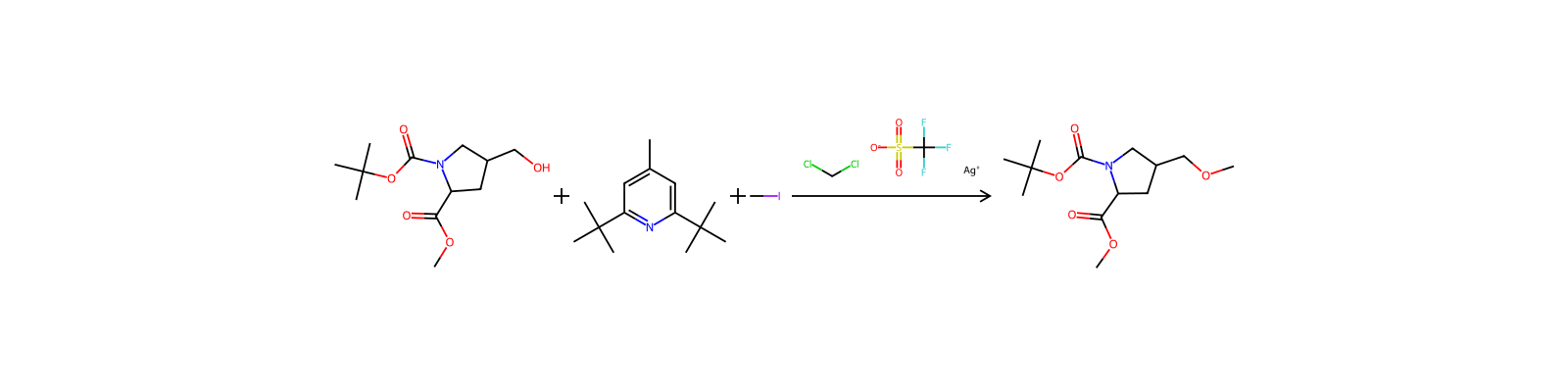
Verwenden2,6-Di-tert-butyl-4-methylpyridine is used for the generation of enol triflates from ketones using trifluoromethanesulfonic anhydride. It is also used in the synthesis of 1,2-dihydro-2-silanaphthalene derivatives, as base in PtCl4-catalyzed cyclization reactions of homopropargyl azide derivatives and in diastereoselective synthesis of β-thiomannopyranosides.
Vor- und nachgelagerte Produkte
Vorgelagerte Rohstoffe
Nachgelagerte Produkte
Anbieter100 Anbieter
国药集团化学试剂有限公司86-21-63210123 · [email protected]
梯希爱(上海)化成工业发展有限公司021-67121386 · [email protected]
上海阿拉丁生化科技股份有限公司400-6206333 13167063860 · [email protected]
INTATRADE GmbH+49 3493/605464 · [email protected]
韶远科技(上海)有限公司021-50795510 4000665055 · [email protected]
科瑞迪化学400-821-5857 021-64326257 · [email protected]
Ark Pharm, Inc.847-367-3680 · [email protected]
上海迈瑞尔生化科技有限公司4006356688 18621169109 · [email protected]
北京华威锐科化工有限公司0757-86329057 18934348241 · [email protected]
Wuhan EnTai Technology Development Co,.Ltd86-27-82330560 · [email protected]
阿法埃莎(中国)化学有限公司400-6106006 · [email protected]
苏州艾缇克药物化学有限公司0512-68323967 18015559028 · [email protected]
安耐吉化学&3A(安徽泽升科技股份有限公司)400-0056266 · [email protected]
武汉凯威斯科技有限公司86-027-67849912 · [email protected]
上海柏卡化学技术有限公司400-026-1533/(021) 6478-0600 · [email protected]
上海瀚鸿科技股份有限公司021-54306202 13764082696 · [email protected]
上海相辉医药科技有限公司13761987713 · [email protected]
上海景颜化工科技有限公司13817811078 · [email protected]
嘉兴市艾森化工有限公司0573-85285100 18627885956 · [email protected]
Pure Chemistry Scientific Inc.001-857-928-2050 or 1-888-588-9418 · [email protected]
武汉丰泰威远科技有限公司027-87465837 19945049750 · [email protected]
四川库利南科技有限公司400-1166-196 18981987031 · [email protected]
天津希恩思生化科技有限公司400 638 7771 · [email protected]
苏州盖德精细材料有限公司0512-66627360 13914021065 · [email protected]
上海思域化工科技有限公司86-21-34053660 · [email protected]
赛默飞世尔科技(中国)有限公司800-810-5118 · [email protected]
北京伊诺凯科技有限公司400-810-7969 010-59572699 · [email protected]
上海特伯化学科技有限公司+86-21-60341587 · [email protected]
江苏艾康生物医药研发有限公司025-66113011 13913916777 · [email protected]
TCI AMERICA800-4238616 · [email protected]
TOKYO CHEMICAL INDUSTRY CO., LTD.03-36680489 · [email protected]
TCI Europe320-37350700 · [email protected]
上海贤鼎生物科技有限公司4009209199 · [email protected]
Shanghai Witofly Chemical Co.,Ltd[email protected]
越林试剂021-62960152 · [email protected]
上海睿升化工科技有限公司+86-021-50935922
上海熙誉化学科技有限公司021-15000143735 15221126179 · [email protected]
上海宸香医药科技有限公司021-20960837 · [email protected]
上海将来实业股份有限公司400-0066400 13621662912 · [email protected]
上海将来实业股份有限公司021-61552785 · [email protected]
安徽科迪达化工有限公司0554-2106669 · [email protected]
HBCChem, Inc.+1-510-219-6317 · [email protected]
上海石洋化工有限公司021-56795766 · [email protected]
雷丁试剂0510-85629785 18013409632 · [email protected]
上海马氏化学科技有限公司19916721580 · [email protected]
深圳利斯康医药科技有限公司0755-89396905 · [email protected]
上海嵩爰化工科技有限公司010-1234567 18521000990 · [email protected]
上海有朋化工有限公司021-69005955 13701776567 · [email protected]
北京海力扬化学科技有限公司13718199399 · [email protected]
北京欣赛维化学科技有限公司010-56218822 13717722232 · [email protected]
Zugehörige Reaktionen
97



Notizen zur Verbindung
Wird geladen…