
Grundinformationen
- Standard-SMILES
COC(O)C(F)(F)F- InChIKey
GWTBCUWZAVMAQV-UHFFFAOYSA-N- Summenformel
- C3H5F3O2
- Durchschnittliche Molmasse
- 130,07 g/mol
- Monoisotopische Masse
- 130,02416388
Namen und Bezeichner
- Bevorzugter Name
- 2,2,2-Trifluoro-1-methoxyethanol
- IUPAC
- 2,2,2-trifluoro-1-methoxyethanol
- Lokaler Name
- 2,2,2-Trifluor-1-methoxyethanol
- Englischer Name
- Trifluoroacetaldehyde methyl hemiacetal
- Summenformel
- C3H5F3O2
- Molmasse
- 130.07
Namen und Synonyme
2,2,2-Trifluoro-1-methoxyethanolRefChem:592096207-072-4Trifluoroacetaldehyde methyl hemiacetal431-46-9MFCD000135722,2,2-trifluoro-1-methoxyethan-1-olEthanol, 2,2,2-trifluoro-1-methoxy-TRIFLUOROACETALDEHYDEMETHYLHEMIACETALTrifluoroacetaldehyde methyl hemiacetal (tech.)Trifluoroacetaldehyde methyl hemiacetal, tech.SCHEMBL501205
Weitere Namen anzeigen
fluoralmethylhemiacetalFLUORAL HEMIMETHYLACETALTRIFLUOROACETALDEHYDE METHYL2,2,2-trifluoro-1-methoxy-ethano1-methoxy-2,2,2-trifluoro-ethanoTRIFUOROACETALDEHYDE HEMIMETHYLACETALTRIFLUOROACETALDEHYDE METHYL HEMIACETA
ETHANOL, 1-METHOXY-2,2,2-TRIFLUORO-DTXSID30883383EN300-179568Fluoral methyl hemiacetalTrifluoroacetaldehyde methyl hemiacetal, AldrichCPRTrifluoroacetaldehyde methyl hemiacetal, tech grade1-Methoxy-2,2,2-trifluoroethanolTrifluoroacetaldehyde Methyl Hemiacetal (contains ca. 10% Methanol)
Datenbank-Bezeichner
- CAS
431-46-9- PubChem CID
- 9892
- DTXSID
DTXSID30883383- EC Number
- 207-072-4
- Nikkaji
- J49.839D
Eigenschaften
Berechnete Struktureigenschaften
- XLogP
- 0,7
- Polarare Oberfläche (TPSA)
- 29,5 Ų
- H-Brücken-Donoren
- 1
- H-Brücken-Akzeptoren
- 5
- Frei drehbare Bindungen
- 1
- Schwere Atome
- 8
- Formalladung
- 0
- Komplexität
- 69
Physikochemische Eigenschaften
- Siedepunkt
- 104 · 104-106°C
- Dichte
- 1 · 1,36 g/cm3
- Brechungsindex
- 1.33 · 1.33
- Flammpunkt
- 42 °C · 42°C
- pka
- 10.43 · 10.43±0.20(Predicted)
- Aggregatzustand
- clear liquid
- Farbe
- Colorless to Almost colorless
- BRN
- 1737758 · 1737758
- InChI
- InChI=1S/C3H5F3O2/c1-8-2(7)3(4,5)6/h2,7H,1H3
- InChIKey
- GWTBCUWZAVMAQV-UHFFFAOYSA-N
- SMILES
- C(O)(OC)C(F)(F)F
- CAS Datenbank
- 431 · 431-46-9(CAS DataBase Reference)
- EPA chemische Informationen
- 2 · Ethanol, 2,2,2-trifluoro-1-methoxy- (431-46-9)
Sicherheit und Regulatorisches
GHS-Klassifizierung
GHS Classification
Danger
H226 (100%): Flammable liquid and vapor [Warning Flammable liquids];H302 (90%): Harmful if swallowed [Warning Acute toxicity, oral];H312 (40%): Harmful in contact with skin [Warning Acute toxicity, dermal];H315 (20%): Causes skin irritation [Warning Skin corrosion/irritation];H319 (30%): Causes serious eye irritation [Warning Serious eye damage/eye irritation];H332 (40%): Harmful if inhaled [Warning Acute toxicity, inhalation];H335 (30%): May cause respiratory irritation [Warning Specific target organ toxicity, single exposure; Respiratory tract irritation];H370 (10%): Causes damage to organs [Danger Specific target organ toxicity, single exposure]
P210, P233, P240, P241, P242, P243, P260, P261, P264, P264+P265, P270, P271, P280, P301+P317, P302+P352, P303+P361+P353, P304+P340, P305+P351+P338, P308+P316, P317, P319, P321, P330, P332+P317, P337+P317, P362+P364, P370+P378, P403+P233, P403+P235, P405, and P501 (click each P-code to see the statement)
Aggregated GHS information provided per 10 reports by companies from 6 notifications to the ECHA C&L Inventory. Each notification may be associated with multiple companies.;Information may vary between notifications depending on impurities, additives, and other factors. The percentage value in parenthesis indicates the notified classification ratio from companies that provide hazard codes. Only hazard codes with percentage values above 10% are shown. For more detailed information, please visit ECHA C&L website.
Gefahrenhinweise
Hazard Classes and CategoriesFlam. Liq. 3 (100%);Acute Tox. 4 (90%);Acute Tox. 4 (40%);Skin Irrit. 2 (20%);Eye Irrit. 2 (30%);Acute Tox. 4 (40%);STOT SE 3 (30%);STOT SE 1 (10%)
Sicherheitsdaten
- tsca
- TSCA listed
- ridadr
- 1993
- hs_code
- 29110000
- RTECS-Nr.
- KL6600000
- risk_code
- 10-20/21/22-36
- hazard_code
- T,F,Xi
- hazard_note
- Toxic
- safety_code
- 16-26-36/37/39
- hazard_class
- 3
- packing_group
- III
Chemie und Industrie
Verwendung und Herstellung
General Manufacturing InformationEthanol, 2,2,2-trifluoro-1-methoxy-: ACTIVE
Vor- und nachgelagerte Produkte
Nachgelagerte Produkte
Anbieter50 Anbieter
梯希爱(上海)化成工业发展有限公司021-67121386 · [email protected]
Career Henan Chemica Co+86-0371-86658258 +86-13203830695 · [email protected]
毕佳索(上海毕得医药科技股份有限公司)400-6005915 · [email protected]
上海麦克林生化科技股份有限公司021-50706066 15221275939 · [email protected]
常州新氟化学有限公司13275212658 · [email protected]
上海腾准生物科技有限公司19821570922 · [email protected]
湖南嘉航医药科技有限公司85521272 15200744171 · [email protected]
广东百科试剂有限公司13532366769 13686183698 · [email protected]
阿法埃莎(中国)化学有限公司400-6106006 · [email protected]
安耐吉化学&3A(安徽泽升科技股份有限公司)400-0056266 · [email protected]
Allfluoro Pharmaceutical Company Limited+86-400-0216110 +86-15958047586 · [email protected]
梯希爱(上海)化工贸易有限公司021-61109150 · [email protected]
上海瀚鸿科技股份有限公司021-54306202 13764082696 · [email protected]
上海相辉医药科技有限公司13761987713 · [email protected]
上海景颜化工科技有限公司13817811078 · [email protected]
湖北成海化工有限公司027-59220433 18327245847 · [email protected]
TOKYO CHEMICAL INDUSTRY CO., LTD.03-36680489 · [email protected]
上氟科技021-65170832 15601903708
Clearsynth Labs Limited+91-22-26355700 · [email protected]
上海毕得医药科技股份有限公司400-164-7117 18317119277 · [email protected]
韶远科技(上海)有限公司021-50795510 4000665055 · [email protected]
XIAMEN EQUATION CHEMICAL CO.,LTD+86-5926515854 +86-18060954864 · [email protected]
HANGZHOU LEAP CHEM CO., LTD.+86-571-87711850 +86-15355479329 · [email protected]
上海阿拉丁生化科技股份有限公司6206333 13167063860 · [email protected]
陕西缔都医药化工有限公司029-029-81120477 17792793610 · [email protected]
南京世洲生物科技有限公司025-85563444 18351873721 · [email protected]
上海源叶生物科技有限公司13636370518 · [email protected]
武汉克米克生物医药技术有限公司027-13163388153 13163388153 · [email protected]
广州市金华大化学试剂有限公司020-84383047 · [email protected]
上海贤鼎生物科技有限公司021-021-52271985 17721149837 · [email protected]
Shanghai Acmec Biochemical Technology Co., Ltd.+86-18621343501 · [email protected]
江苏艾康生物医药研发有限公司025-58859352 13913916777 · [email protected]
上海启乔生物科技有限公司021-37653318 15221675714 · [email protected]
厦门盈融达化工有限公司+86-0592-6210733 · [email protected]
艾览(上海)化工科技有限公司400-668-9898 · [email protected]
广东翁江化学试剂有限公司0751-2815688 13927872512 · [email protected]
TCI Chemicals (India) Pvt. Ltd.[email protected]
中科双航化学(大连)有限公司+86-411-66858498 13941194417 · [email protected]
Aladdin Scientific[email protected]
上海皓鸿生物医药科技有限公司400-8210725 4008210725 · [email protected]
XIAMEN AMITY INDUSTRY AND TRADE CO., LTD.+8618950047208 · [email protected]
SHANGHAI FLUORORING PHARMACEUTICAL CO LTD17501600223 · [email protected]
上海迈瑞尔生化科技有限公司18621169109 · [email protected]
SHANGHAI KEAN TECHNOLOGY CO., LTD.+8613817748580 · [email protected]
北京偶合科技有限公司13552068683 13522913783 · [email protected]
重庆卡兰医药有限公司[email protected]
北京百灵威科技有限公司18210857532 18210857532 · [email protected]
上海齐奥化工科技有限公司021-58892003 · [email protected]
Hefei TNJ Chemical Industry Co.,Ltd.+86-0551-65418671 +86-189 4982 3763 · [email protected]
上海氟锐医药科技有限公司18018698069 · [email protected]
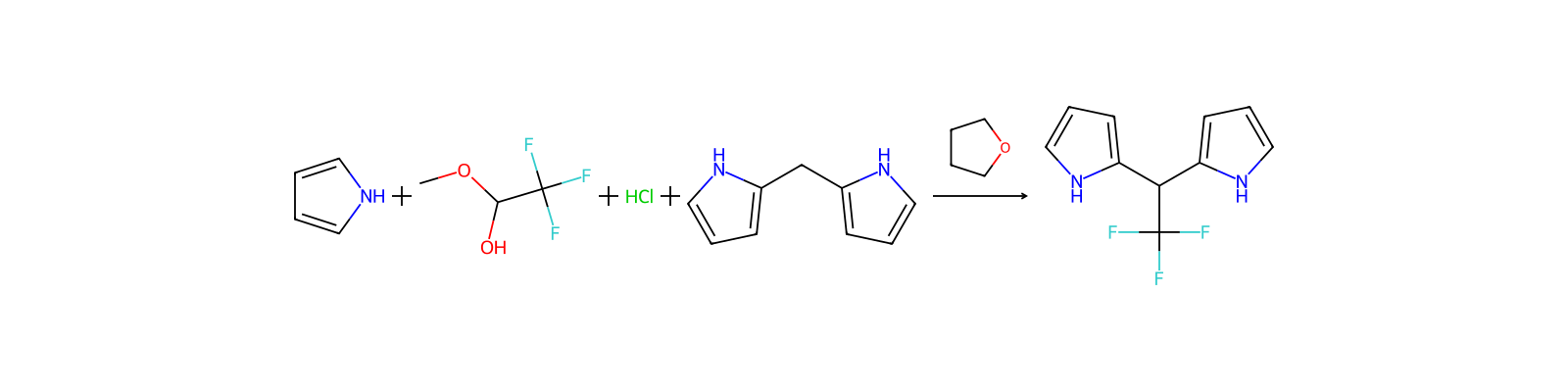
Zugehörige Reaktionen
54


Verknüpfte Notizen
Wird geladen…