StartseiteMCPWorkbenchSkills
StartseiteWorkbenchBenachrichtigungenMein Bereich
llms.txt · MCP-AnleitungDatenschutz · Nutzungsbedingungen · Supportv1.8.0
  1. Startseite
  2. /Verbindung

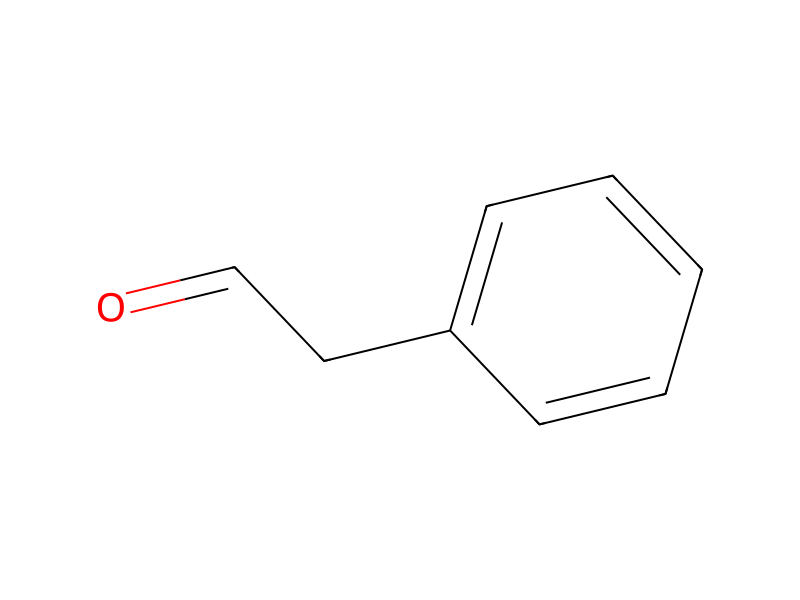
Phenylacetaldehyd

Phenylacetaldehyde

HCID 998
Neue NotizNeue ReaktionAnfrage stellen
Druckvorschau

Daten werden ergänzt – lade die Seite später neu, um den aktuellen Stand zu sehen
GrundinformationenÜberblickNamen und BezeichnerEigenschaftenSicherheit und RegulatorischesChemie und IndustrieZugehörige ReaktionenNotizen zur Verbindung
TeilstruktursucheÄhnliche Strukturen suchen

Grundinformationen

CAS
122-78-1
Standard-SMILES
O=CCc1ccccc1
InChIKey
DTUQWGWMVIHBKE-UHFFFAOYSA-N
Summenformel
C8H8O
Durchschnittliche Molmasse
120,15 g/mol
Monoisotopische Masse
120,05751487

Überblick

Phenylacetaldehyde is an aldehyde that consists of acetaldehyde bearing a methyl substituent; the parent member of the phenylacetaldehyde class of compounds. It has a role as a mouse metabolite, a Saccharomyces cerevisiae metabolite, an Escherichia coli metabolite and a human metabolite. It is a member of phenylacetaldehydes and an alpha-CH2-containing aldehyde.

Namen und Bezeichner

Bevorzugter Name
Phenylacetaldehyde
IUPAC
2-phenylacetaldehyde
Lokaler Name
Phenylacetaldehyd
Englischer Name
Phenylacetaldehyde
Summenformel
C8H8O
Molmasse
120.15

Namen und Synonyme

phenylacetaldehyde2-phenylacetaldehyde122-78-1Benzeneacetaldehyde2-Phenylethanalalpha-TolualdehydePhenylethanalPhenylacetic aldehydealpha-Toluic aldehydeOxophenylethaneAcetaldehyde, phenyl-Benzylcarboxaldehyde
Weitere Namen anzeigen
HyacinthinFEMA 2874phenylacetadehydeBenzenacetaldehydeα-Tolualdehydeα-tolyaldehyde
1-Oxo-2-phenylethanePhenacetaldehydealpha-PhenylacetaldehydeFEMA No. 2974DTXSID3021483U8J5PLW9MRNSC-406309DTXCID501483

Datenbank-Bezeichner

CAS
122-78-1
PubChem CID
998
DTXSID
DTXSID3021483
ChEMBL
CHEMBL1233464
ChEBI
CHEBI:16424
UNII
U8J5PLW9MR

Eigenschaften

Berechnete StruktureigenschaftenWird ergänzt

XLogP
1,8
Polarare Oberfläche (TPSA)
17,1 Ų
H-Brücken-Donoren
0
H-Brücken-Akzeptoren
1
Frei drehbare Bindungen
2
Schwere Atome
9
Formalladung
0
Komplexität
82,6

Experimentelle und physikochemische Eigenschaften

Chemical ClassesOther Classes -> Aldehydes
DrugsPharmaceuticals -> Listed in ZINC15
SpringerMaterials Properties13C nuclear magnetic resonance spectrum
FragrancesFragrance Ingredient (Phenylacetaldehyde) -> IFRA transparency List
LogP · 2 Einträge

1.78

1.78

Food AdditivesFLAVOR ENHANCER, FLAVORING AGENT OR ADJUVANT -> FDA Substance added to food
Density1.023-1.045
Flavoring AgentsEU Flavoring substances
Solubility · 2 Einträge

Slightly soluble in water; insoluble in water; soluble in oils, propylene glycol

1 mL in 2 mL 80% ethanol (in ethanol)

Sicherheit und Regulatorisches

Sicherheitsangaben dienen nur zur Orientierung und ersetzen weder das Sicherheitsdatenblatt (SDB) des Lieferanten noch geltende Vorschriften oder eine fachliche Bewertung.

GHS-Klassifizierung

GHS Classification · 4 Einträge

Danger

H302 (99.8%): Harmful if swallowed [Warning Acute toxicity, oral]

P260, P261, P264, P264+P265, P270, P272, P280, P301+P317, P301+P330+P331, P302+P352, P302+P361+P354, P304+P340, P305+P354+P338, P316, P317, P321, P330, P333+P317, P362+P364, P363, P405, and P501 (click each P-code to see the statement)

Aggregated GHS information provided per 1836 reports by companies from 21 notifications to the ECHA C&L Inventory. Each notification may be associated with multiple companies.

Gefahrenhinweise

Regulatory Information · 4 Einträge

Chemical: Benzeneacetaldehyde

Commission Regulation (EC) No 1565/2000 (Repealed by Com. Implementing Reg. (EU) No 872/2012)

REACH registered substance: Phenylacetaldehyde (EC: 204-574-5)

Phenylacetaldehyde: Does not have an individual approval but may be used under an appropriate group standard

Hazards Summary · 1 Eintrag

Causes somnolence in acute inhalation studies of mice; Causes somnolence and ataxia in oral lethal-dose studies of rats; Causes cutaneous sensitization in 3-day intermittent dermal studies of mice; [RTECS] Has been reported to be a fragrance allergen in consumers, and is a moderately potent allergen; [EC: SCCP] Safe when used as a flavoring agent in food; [JECFA] May cause irritation; May cause skin sensitization; Harmful by ingestion; [Acros Organics MSDS]

Hazard Classes and CategoriesAcute Tox. 4 (99.8%)

Toxikologische Informationen

Adverse EffectsSkin Sensitizer - An agent that can induce an allergic reaction in the skin.

Chemie und Industrie

Pharmakologische Informationen

Metabolism/MetabolitesPhenylacetaldehyde is a known human metabolite of fentanyl.
Cellular LocationsCytoplasm

Verwendung und Herstellung

Uses · 2 Einträge

Permitted for use as an inert ingredient in non-food pesticide products; [EPA] Used in perfumery and as an intermediate in organic synthesis; [Merck Index] Used as flavoring agent or adjuvant; [FDA]

This is an endogenously produced metabolite found in the human body. It is used in metabolic reactions, catabolic reactions or waste generation.

IFRA Fragrance Standards · 6 Einträge

Phenylacetaldehyde

Benzeneacetaldehyde; Benzylcarboxaldehyde; Hyacinthin; 1-Oxo-2-phenylethane; α-Tolualdehyde; α-Toluic aldehyde; Phenylacetic aldehyde; Phenyl acetic aldehyde (pure) (commercial name)

IFRA_STD_073.pdf

49

IFRA 51st Amendment - Guidance for the use of IFRA Standards

Restriction: This material should be used only in the limited quantity as stated in the Standard

Household ProductsInformation on 5 consumer products that contain Phenylacetaldehyde in the following categories is provided:
Use Classification · 6 Einträge

Fragrance Ingredients

Flavouring Agent -> FLAVOURING_AGENT -> JECFA Functional Classes

Flavoring Agents -> JECFA Flavorings Index

Flavouring Agent -> FLAVOURING_AGENT -> JECFA Functional Classes

Flavouring Agent -> FLAVOURING_AGENT -> JECFA Functional Classes

Flavouring Agent -> FLAVOURING_AGENT -> JECFA Functional Classes

General Manufacturing InformationBenzeneacetaldehyde: ACTIVE

Zugehörige Reaktionen

262
Reaktionsaufzeichnung erstellen
Reaktionsgleichung von HRID 6386
HRID 6386als Eduktuspto-grants-1993_09
Reaktionsgleichung von HRID 8771
HRID 8771als Eduktuspto-grants-2006_08
Reaktionsgleichung von HRID 27845
HRID 27845als Produktuspto-grants-1980_09
Reaktionsgleichung von HRID 29065
HRID 29065als Eduktuspto-grants-2008_09
Reaktionsgleichung von HRID 40617
HRID 40617als Eduktuspto-grants-2013_09
Reaktionsgleichung von HRID 74234
HRID 74234als Eduktuspto-grants-2014_09
Reaktionsgleichung von HRID 89096
HRID 89096als EduktTraining data from https://doi.org/10.1039/C8SC04228D (2/10)
Reaktionsgleichung von HRID 101765
HRID 101765als EduktTraining data from https://doi.org/10.1039/C8SC04228D (2/10)
Seite 1 von 33

Notizen zur Verbindung

Wird geladen…

Auf dieser SeiteGrundinformationenÜberblickNamen und BezeichnerEigenschaftenSicherheit und RegulatorischesChemie und IndustrieZugehörige ReaktionenNotizen zur Verbindung
Weitere Aktionen
Neue NotizNeue ReaktionAnfrage stellen
EC Number
204-574-5
Nikkaji
J2.494E
Endocrine Disruptors
Potential endocrine disrupting compound
Boiling Point195 °C
Melting Point120.5 - 121.5 °C

Physikochemische Eigenschaften

Schmelzpunkt
10 °C · −10 °C(lit.)
Siedepunkt
195 °C · 195 °C
Dichte
1.079 g/mL · 1.079 g/mL at 20 °C
Dampfdruck
2.09 hPa · 2.09hPa at 20℃
FEMA
2874 · 2874 | PHENYLACETALDEHYDE
Brechungsindex
20 · n20/D 1.535(lit.)
Flammpunkt
188 °F · 188 °F
storage temp.
2 · 2-8°C
Löslichkeit
2.21 g/l · 2.21g/l slightly soluble
Aggregatzustand
Liquid
Wichte
1.075 · 1.075 (20/4℃)
Farbe
Clear colorless to pale yellow
Geruch (Odor)
10 % · at 10.00 % in dipropylene glycol. green sweet floral hyacinth clover honey cocoa
Geruchsart
green
Biologische Quelle
synthetic
Wasserlöslichkeit
2.21 g/L · 2.210 g/L (25 ºC)
Merck
14 · 14,7265
JECFA Number
1002 · 1002
BRN
385791 · 385791
Henry's Law Constant
1.6 · 1.6×100 mol/(m3Pa) at 25℃, Dupeux et al. (2022)
Dielectric constant
4.8 · 4.8(20℃)
Stabilität
Stable. Combustible. Incompatible with strong oxidizing agents, strong bases.
Kosmetik-Inhaltsstoffe Funktionen
PERFUMINGFLAVOURINGFRAGRANCE
InChI
1S/C8H8O/c9-7-6-8-4-2-1-3-5-8/h1-5,7H,6H2
InChIKey
DTUQWGWMVIHBKE-UHFFFAOYSA-N
SMILES
O=CCc1ccccc1
LogP
1.44 at · 1.44 at 25℃
CAS Datenbank
122 · 122-78-1(CAS DataBase Reference)
NIST chemische Informationen
Benzeneacetaldehyde(122-78-1)
EPA chemische Informationen
Phenylacetaldehyde (122-78-1)
Carcinogen ClassificationNot listed by IARC.
Toxicity DataLC50 (mouse) = 2,000 mg/m3

Sicherheitsdaten

wgk
2
tsca
TSCA listed
ridadr
UN 1170 3/PG 2
hs_code
29122990
RTECS-Nr.
CY1420000
risk_code
22-36/37/38-43-11
Toxizität
LD50 orl-rat: 1550 mg/kg FCTXAV 17,377,79
hazard_code
Xn,F
safety_code
26-36-37-24-16-7
Speicherklasse
8A - Combustible corrosive hazardous materials
Hazard Classifications
Acute Tox. 4 OralAquatic Chronic 3Eye Dam. 1Skin Corr. 1BSkin Sens. 1A
Restriction Limits in the Finished Product (%) · 6 Einträge

0.045 [Products applied to the lips]

0.014 [Products applied to the axillae]

0.27 [Products applied to the face/body using fingertips]

0.25 [Products related to fine fragrances]

0.064 [Products applied to the body using the hands (palms), primarily leave-on (Body lotion)]

0.064 [Products applied to the face using the hands (palms), primarily leave-on (Face moisturizer)]

Anwendungen · 3 Einträge

BeschreibungPhenylacetaldehyde is an organic compound which can be naturally found in buckwheat, flowers, and communication pheromones from various insect orders. It is commonly used for the preparation of fragrance as well as flavors, and applied in flavored cigarettes and beverages because of its honey-like sweet character. It is also applied in the synthesis of polymers, such as polyesters, as a rate controlling additive in polymerization reactions and used in the preparation of more complex chemicals like resmethrin, where it acts as a building block.

OccurrenceIdentified among the constituents of several essential oils: neroli, Citrus sinensis leaves, other citrus species (flowers and leaves), narcissus, magnolia, lily, rose and tea. It is reported found in over 170 natural products including apricot, sour cherry, cooked apple, peach, fresh blackberry, crispbread, other types of bread, green tea, unprocessed rice, lemon balm, red sage, black currant, bilberry, cranberry, other berries, grapes, raisins, melon, papaya, guava fruit, pineapple, asparagus, celery leaves, carrot, parsley, peas, bell pepper, sweet pepper, peach, cabbage, peppermint oil, Scotch spearmint oil, mustard, vinegar, onion, cooked potato, tomato, cinnamon bark, cassia leaf, ginger, many cheeses, milk, yogurt, boiled egg, cooked and cured meats, beer, cognac, grape wines, cocoa, coffee, tea, roasted filbert, roasted peanut, soybean, pecans, cauliflower, broccoli, honey, avocado, passion fruit, beans, mushrooms, trassi, mango, tamarind, rice, licorice, buckwheat, lovage root, pumpkin, sweet potato, cassava, corn oil, malt, wort, dried bonito, loquat, pawpaw, maté, sweet grass oil, orange peel oil, grapefruit juice, endive, clam and Chinese quince.

VerwendenPhenylacetaldehyde is used for the preparation of fragrances and polymers like polyesters, which find application as a rate controlling additive in polymerization reactions. It is an active component of fragrances and floral scent due to its honey-like sweet character and finds application in flavored cigarettes and beverages. It is an insect attractant and utilized in blacklight trap for pests. It is also used as a building block in the synthesis of more complex chemicals, such as resmethrin. Furthermore, it is used in association with acetic anhydride and allyltrimethylsilane in three-component coupling process catalyzed by LiBF4 providing homoallylic acetates.

Vor- und nachgelagerte Produkte

Vorgelagerte Rohstoffe

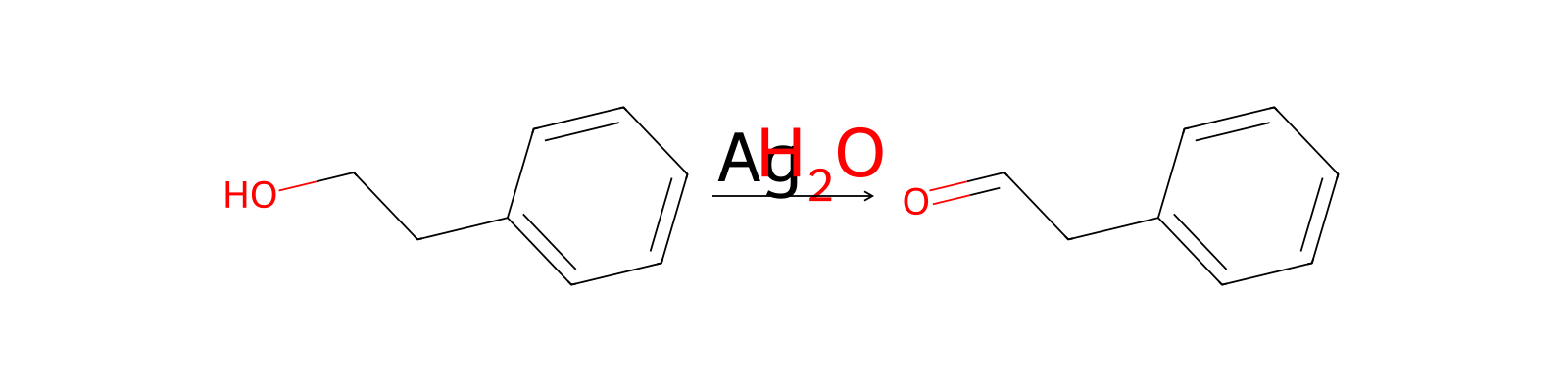
StyrolTrimangantetraoxidPhenyloxiran2-Phenylethanoltrans-zimtsurePhenylessigsure2-Phenylethane-1,1-diol diacetateα-Bromtoluol

Nachgelagerte Produkte

2-Phenylcrotonaldehyd2-AMINO-5-PHENYL-THIOPHENE-3-CARBOXYLIC ACID METHYL ESTER1,1-Dimethoxy-2-phenylethan2-Methyl-6-phenyl-4H-thieno[2,3-d][1,3]oxazin-4-one ,97%3-Phenyl-L-alanin5-Methyl-2-phenylhex-2-enalBendroflumethiazid2-AMINO-5-PHENYL-3-THIOPHENECARBOXAMIDE6-PHENYL-3H-THIENO[2,3-D]PYRIMIDIN-4-ONEAtropaldehydeETHYL 2-AMINO-5-PHENYLTHIOPHENE-3-CARBOXYLATE1-(4-Bromophenyl)-naphthlene2-PHENYLPROPIONALDEHYDE1,2-Ethanedione, 1-phenyl-2-(1-piperidinyl)- Piperidine, 1-(oxophenylacetyl)- (9CI)1-Chlor-2-phenylethan1-AMINO-3-PHENYL-PROPAN-2-OL(2S,3S)-3-AMINO-2-HYDROXY-4-PHENYL-BUTYRIC ACID
Ergänzende Hinweise · 1 Eintrag

DefinitionChEBI: Phenylacetaldehyde is an aldehyde that consists of acetaldehyde bearing a methyl substituent; the parent member of the phenylacetaldehyde class of compounds. It has a role as a human metabolite, a Saccharomyces cerevisiae metabolite, an Escherichia coli metabolite and a mouse metabolite. It is an alpha-CH2-containing aldehyde and a member of phenylacetaldehydes.