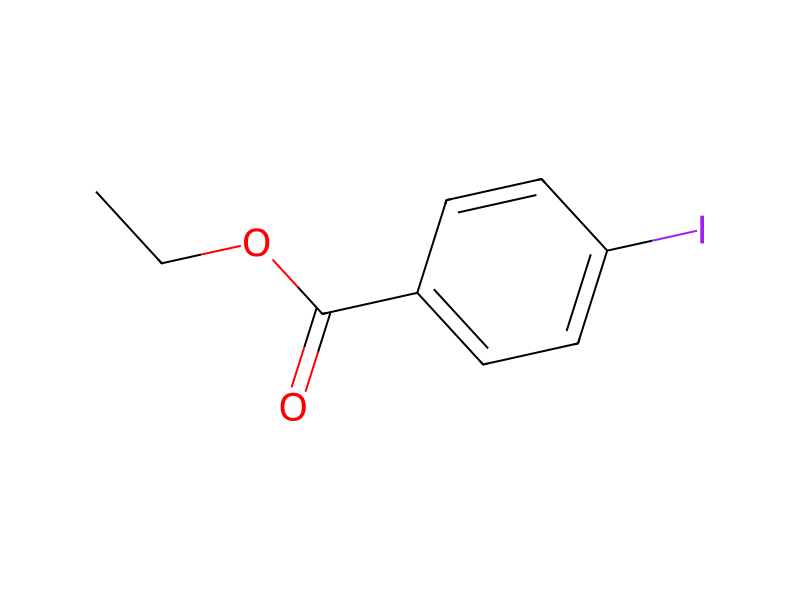
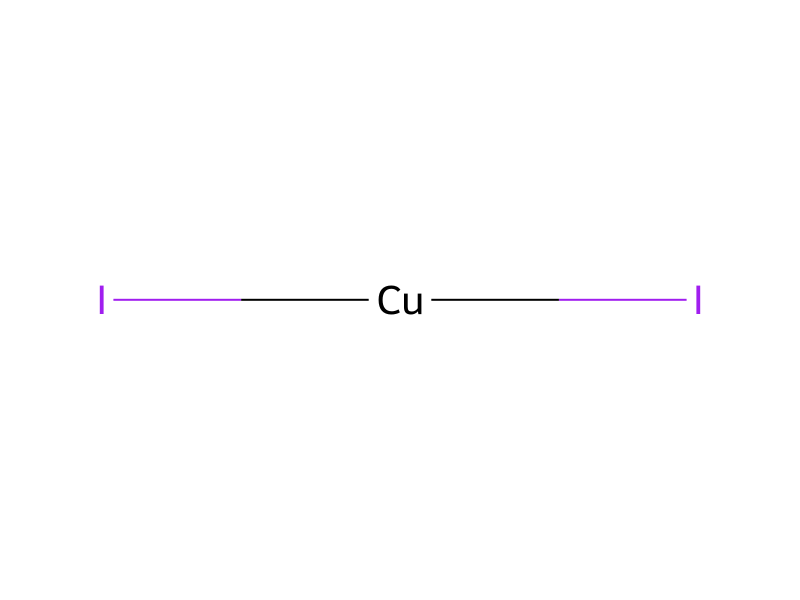
[CH3:1][C:2]1([CH3:17])[CH2:11][CH2:10][C:9]([CH3:13])([CH3:12])[C:8]2[CH:7]=[C:6]([CH2:14][C:15]#[CH:16])[CH:5]=[CH:4][C:3]1=2.I[C:19]1[CH:29]=[CH:28][C:22]([C:23]([O:25][CH2:26][CH3:27])=[O:24])=[CH:21][CH:20]=1>Cl[Pd](Cl)([P](C1C=CC=CC=1)(C1C=CC=CC=1)C1C=CC=CC=1)[P](C1C=CC=CC=1)(C1C=CC=CC=1)C1C=CC=CC=1.[Cu](I)I.C(N(CC)CC)C>[CH3:1][C:2]1([CH3:17])[CH2:11][CH2:10][C:9]([CH3:12])([CH3:13])[C:8]2[CH:7]=[C:6]([CH2:14][C:15]#[C:16][C:19]3[CH:29]=[CH:28][C:22]([C:23]([O:25][CH2:26][CH3:27])=[O:24])=[CH:21][CH:20]=3)[CH:5]=[CH:4][C:3]1=27.4 g (32.7 mmol) of 3-(5,6,7,8-tetrahydro-5,5,8,8-tetramethyl-2-naphthyl)-1-propyne, 8.2 g (29.7 mmol) of ethyl 4-iodobenzoate and 50 ml of triethylamine are introduced into a three-necked flask under a stream of nitrogen. The reaction medium is degassed by bubbling nitrogen through, 360 mg (0.5 mmol) of bis(triphenylphosphine)palladium(II) chloride and 130 mg of copper iodide are introduced and the mixture is stirred at room temperature for eight hours. The reaction medium is evaporated to dryness, the residue is taken up in ethyl acetate and hydrochloric acid (1 N) and the organic phase is separated out after settling has taken place, dried over magnesium sulphate and evaporated. The residue is purified by chromatography on a column of silica eluted with a mixture of heptane and ethyl acetate (70/30). After evaporation of the solvents, a solid is collected which is triturated from heptane, filtered and dried. 9.3 g (84%) of the expected ethyl ester are collected, with a melting point of 59-60° C.