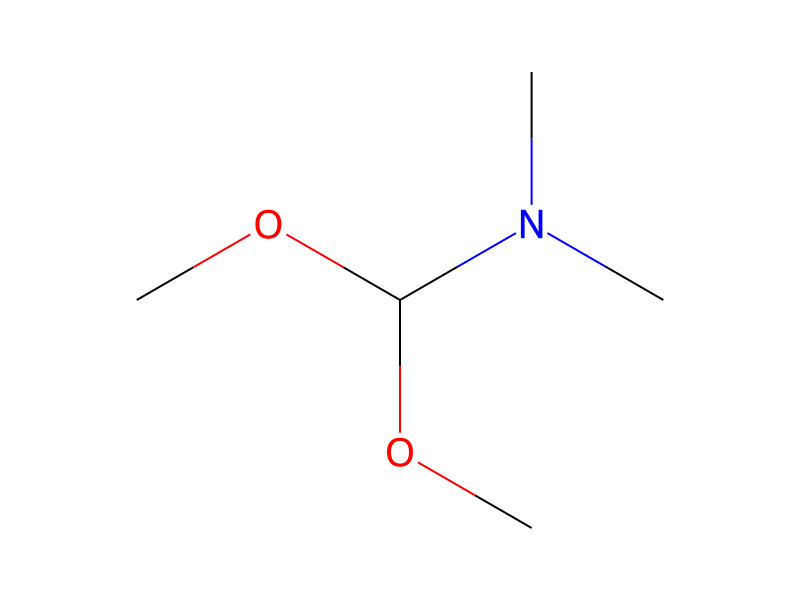
[C:1]([O:5][C:6]([N:8]1[CH2:13][CH2:12][N:11]([C:14]2[CH:19]=[CH:18][CH:17]=[C:16]([CH3:20])[C:15]=2[N+:21]([O-])=O)[CH2:10][CH2:9]1)=[O:7])([CH3:4])([CH3:3])[CH3:2].[CH3:24]OC(OC)N(C)C.N1CCCC1>CN(C=O)C>[C:1]([O:5][C:6]([N:8]1[CH2:13][CH2:12][N:11]([C:14]2[CH:19]=[CH:18][CH:17]=[C:16]3[C:15]=2[NH:21][CH:24]=[CH:20]3)[CH2:10][CH2:9]1)=[O:7])([CH3:4])([CH3:3])[CH3:2]A solution of 4-(3-methyl-2-nitrophenyl)-piperazine-1-carboxylic acid tert-butyl ester (10 g, 31 mmol), N,N-dimethylformamide dimethyl acetal (13.2 mL, 100 mmol) and pyrrolidine (4 mL, 50 mmol) in 45 mL of DMF was heated under reflux for 20 h. The mixture was concentrated in vacuo and the residue was partitioned between ethyl acetate and water. The ethyl acetate was dried and evaporated. The residue was hydrogenated in 200 mL of THF containing 2.5 g of 10% Pd-C at 50 psi for 6 h. The mixture was filtered, concentrated in vacuo, and partitioned between ethyl acetate and aqueous HCl. The ethyl acetate was washed with brine, dried and evaporated. Silica gel chromatography (10% ethyl acetate-hexane) afforded 2.5 g of 4-(1H-Indol-7-yl)-piperazine-1-carboxylic acid tert-butyl ester (19) as a white solid, m.p. 150-151° C.