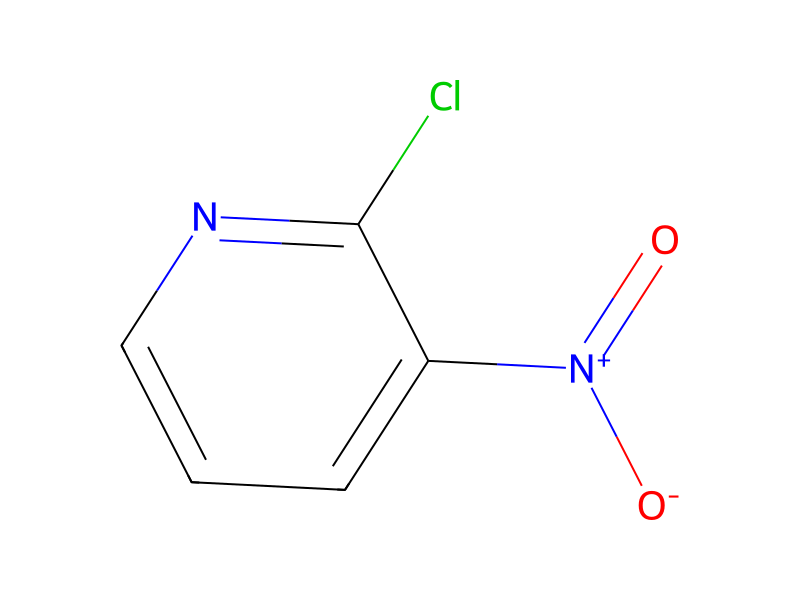
[F:1][C:2]1[CH:7]=[CH:6][C:5]([CH2:8][C:9]([C:11]2[CH:16]=[CH:15][N:14]=[CH:13][CH:12]=2)=[O:10])=[CH:4][CH:3]=1.Cl[C:18]1[C:23]([N+:24]([O-:26])=[O:25])=[CH:22][CH:21]=[CH:20][N:19]=1.[H-].[Na+]>CN(C)C=O>[F:1][C:2]1[CH:7]=[CH:6][C:5]([CH:8]([C:18]2[C:23]([N+:24]([O-:26])=[O:25])=[CH:22][CH:21]=[CH:20][N:19]=2)[C:9]([C:11]2[CH:16]=[CH:15][N:14]=[CH:13][CH:12]=2)=[O:10])=[CH:4][CH:3]=1To a solution of 2-(4-fluorophenyl)-1-(pyridin-4-yl)ethanone (4.0 g, 18.6 mmol) [prepared as described in Example 1 above] and 2-chloro-3-nitropyridine (6.50 g, 41.13 mmol) in dimethylformamide (50 ml) at 0° C. was added sodium hydride (1.65 g, 41 mmol, 60% in oil) under an argon atmosphere. The reaction mixture was warmed to room temperature and stirred for an hour. The reaction mixture was quenched with water and the product was extracted into ethyl acetate. The combined organic extracts were washed with brine, dried over MgSO4 and concentrated in vacuo to give a dark brown oil. Purification by flash column chromatography (10% to 50% ethyl acetate/hexanes gradient) gave 2-(4-fluorophenyl)-2-(3-nitropyridin-2-yl)-1-(pyridin-4-yl)ethanone as a brown oil (4.08 g).