Ethanol → 3-(1H-Benzimidazol-2-yl)-8-methoxy-2(1H)-quinolinone
HRID 1017724
Reaktionsgleichung

[CH:1]([C:3]1[C:8](OC)=[CH:7][CH:6]=[CH:5][C:4]=1[NH:11][C:12](=[O:18])OC(C)(C)C)=O.[NH:19]1[C:23]2[CH:24]=[CH:25][CH:26]=[CH:27][C:22]=2[N:21]=[C:20]1[CH2:28]C(OCC)=O.N1CCCCC1.[CH2:40]([OH:42])C>>[NH:19]1[C:23]2[CH:24]=[CH:25][CH:26]=[CH:27][C:22]=2[N:21]=[C:20]1[C:28]1[C:12](=[O:18])[NH:11][C:4]2[C:3]([CH:1]=1)=[CH:8][CH:7]=[CH:6][C:5]=2[O:42][CH3:40]Komponenten
5



Versuchsvorschrift
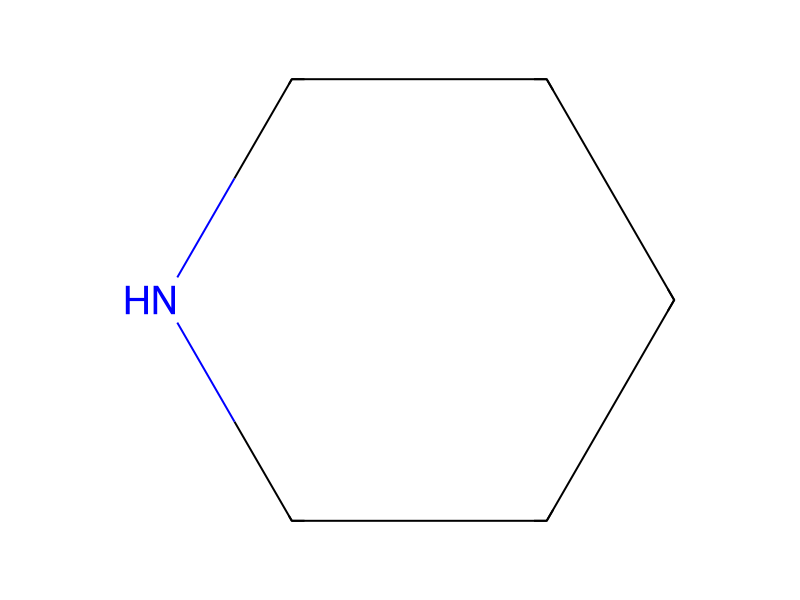
A solution of tert-butyl 2-formyl-3-methoxyphenylcarbamate (13-1, 0.50 g, 1.9 mmol, 1 equiv, prepared by the formylation method utilized in the examples above), ethyl 1H-benzimidazol-2-ylacetate (0.39 g, 1.9 mmol, 1.0 equiv, prepared by the method of Rahmouni, M, Derdour, A., Bazureau, J., and Hamelin Tetrahedron Lett. 1994, 35, 4563-4564), and piperidine (0.090 mL, 0.91 mmol, 0.48 equiv) in ethanol (50 mL) was heated at reflux for 20 h. The reaction mixture was cooled and the precipitate which formed was filtered and air dried to give 3-(1H-benzimidazol-2-yl)-8-methoxy-2(1H)-quinolinone (13-2). 1H NMR (400 MHz, DMSO-d6) δ 12.59 (s, 1H), 12.43 (s, 1H), 9.25 (s, 1H), 7.71 (m, 1H), 7.66 (m, 1H), 7.55 (t, 1H, J=8.2 Hz), 7.20 (m, 2H), 7.03 (d, 1H, J=8.2 Hz), 6.85 (d, 1H, J=8.2 Hz).