Reaktionsgleichung

[OH:1][CH2:2][C@@H:3]([C@H:5]([C@@H:7]([C@@H:9]([CH2:11][OH:12])[OH:10])[OH:8])[OH:6])[OH:4].[CH2:13]([OH:24])[C@H:14]([C@H:16]([C@@H:18]([C@@H:20]([CH2:22][OH:23])[OH:21])[OH:19])[OH:17])[OH:15]>>[CH2:11]([OH:12])[C@H:9]([C@@H:7]([C@H:5]([C@@H:3]([CH2:2][OH:1])[OH:4])[OH:6])[OH:8])[OH:10].[O:23]=[CH:22][C@@H:20]([C@H:18]([C@H:16]([C@@H:14]([CH2:13][OH:24])[OH:15])[OH:17])[OH:19])[OH:21]Komponenten
4
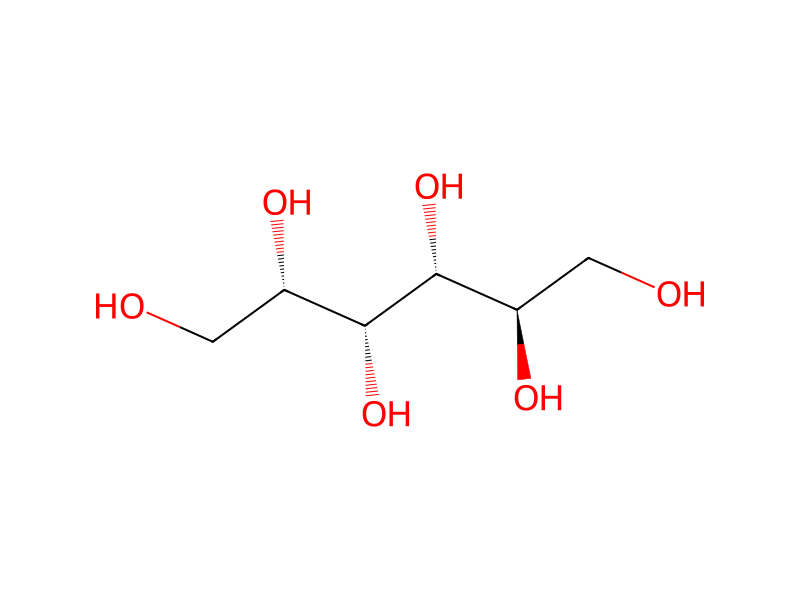
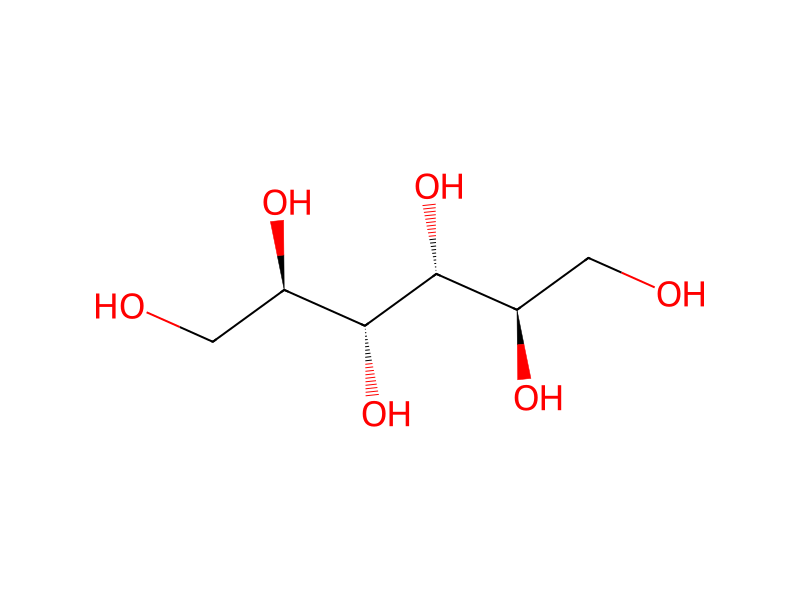

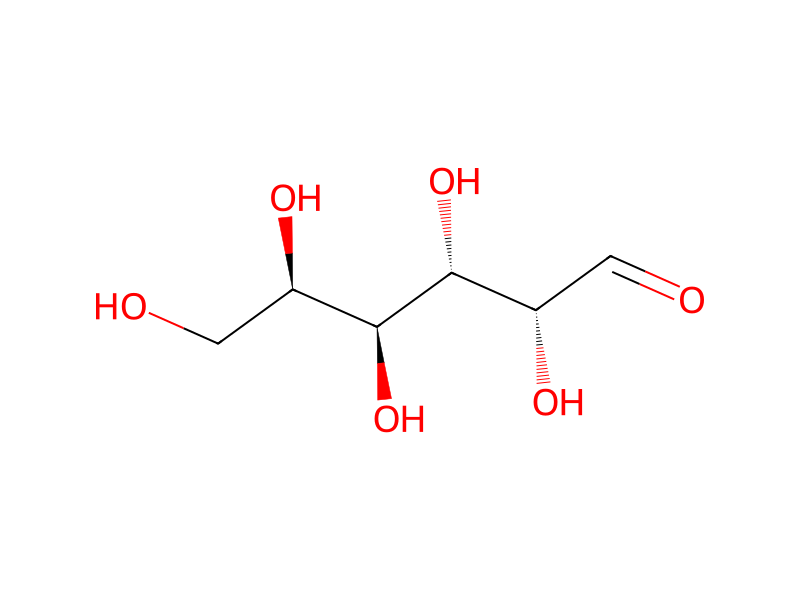
Versuchsvorschrift
Both glucose and fructose can be hydrogenated into the sugar alcohol or corresponding hexitol. The hexitol produced by the hydrogenation of glucose is sorbitol, while the hydrogenation of fructose leads to a mixture of sorbitol and mannitol. Iditol is produced by the hydrogenation of galactose, an hexose.
Quellen und Nachweise
- ORD-Eintrag
- ord-df44b4908ad746eea4f396f8806ee6a3
- Quelldatensatz
- uspto-grants-2014_05
- Patentnummer
- US08715372B2
Verknüpfte Notizen
Wird geladen…