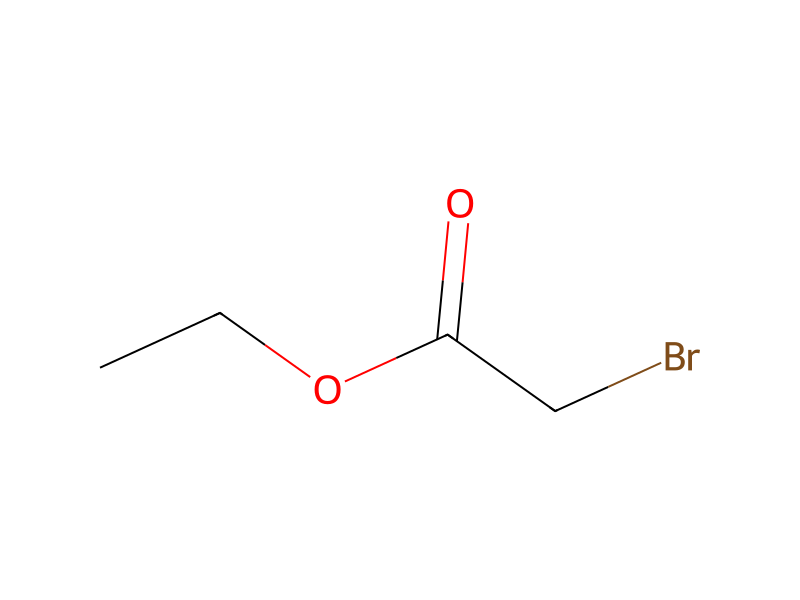
To a stirred solution of 6-hydroxy-3,4-dihydroquinolin-2(1H)-one (2.5 g, 15.3 mmol) in dry DMF (10 ml) was added potassium carbonate (4.2 g, 30.3 mmol) and ethyl bromoacetate (2.4 g, 14.3 mmol). The reaction was stirred at room temperature for 2 h. Completion of the reaction was monitored by TLC. Solvent was removed under vacuum. The residue was dissolved in ethyl acetate (150 mL), washed with water (20 mL), brine (20 mL), and dried over sodium sulfate. The organic layer was concentrated under vacuum to afford 2.7 g of crude material which was purified by silica gel flash chromatography (24 g, 2% methanol in chloroform) to afford 2.8 g (73%) of ethyl 2-(2-oxo-1,2,3,4-tetrahydroquinolin-6-yloxy)acetate as a white solid. 1H NMR: 400 MHz, DMSO-d6: δ 1.21 (t, J=7.20 Hz, 3H), 2.40 (t, J=7.20 Hz, 2H), 2.83 (t, J=8.00 Hz, 2H), 4.17 (q, J=7.20 Hz, 2H), 4.69 (s, 2H), 6.71-6.80 (m, 3H), 9.92 (s, 1H). LCMS: RT 1.31 min. LCMS (ES-API), m/z 250.0 (M+H).