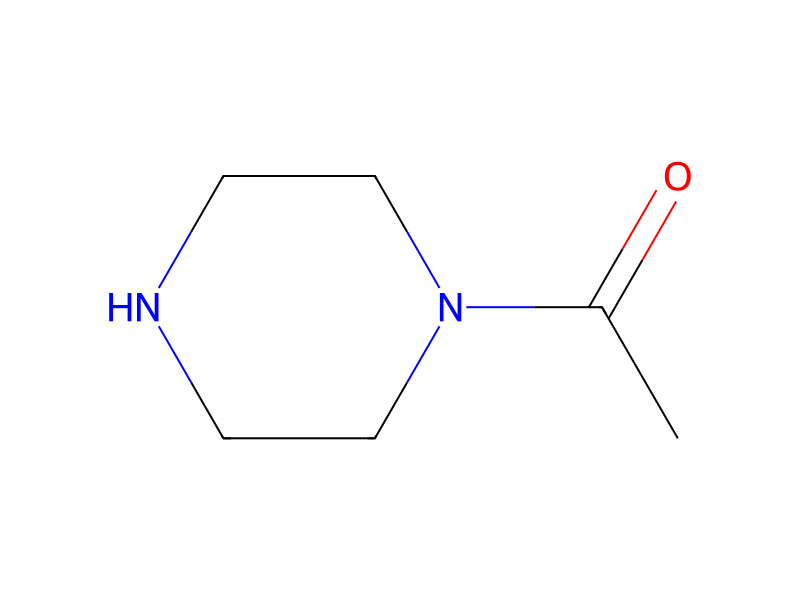
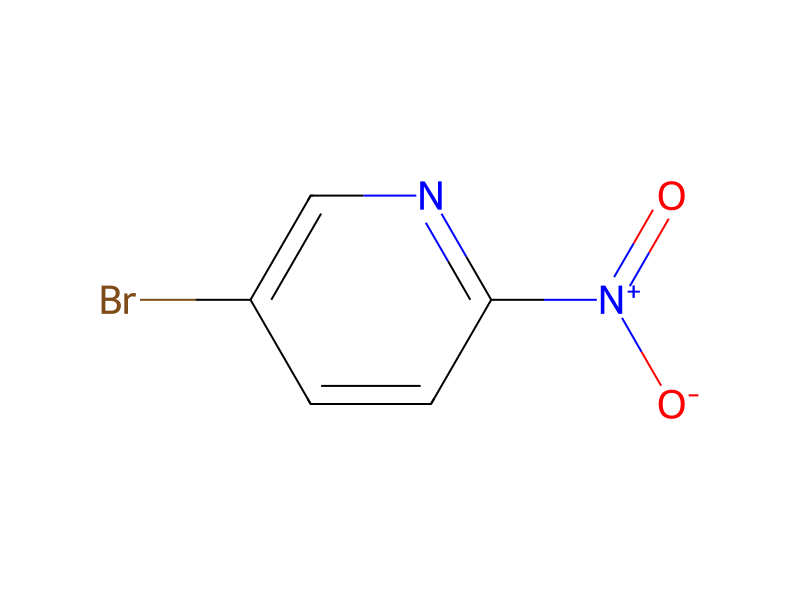
Br[C:2]1[CH:3]=[CH:4][C:5]([N+:8]([O-:10])=[O:9])=[N:6][CH:7]=1.[N:11]1([C:17](=[O:19])[CH3:18])[CH2:16][CH2:15][NH:14][CH2:13][CH2:12]1.C(N(CC)CC)C>CS(C)=O>[N+:8]([C:5]1[N:6]=[CH:7][C:2]([N:14]2[CH2:15][CH2:16][N:11]([C:17](=[O:19])[CH3:18])[CH2:12][CH2:13]2)=[CH:3][CH:4]=1)([O-:10])=[O:9]To a sealed tube was added 5-bromo-2-nitropyridine 111-1 (2.3 g, 11.4 mmol), 1-(piperazin-1-yl)ethanone 111-2 (1.6 g, 12.8 mmol), triethylamine (4.8 mL, 34.2 mmol) and DMSO (5 mL). The reaction was heated to 120° C. and stirred for 16 hours. The reaction was cooled to room temperature. Triethylamine was removed by rotary evaporation. The residue was triturated in 15 mL ethyl acetate. The solid was collected by filtration and washed with small amount of ethyl acetate to give 1-(4-(6-nitropyridin-3-yl)piperazin-1-yl)ethanone 111-3 as a light yellow solid. MS m/z 251.1 (M+1).