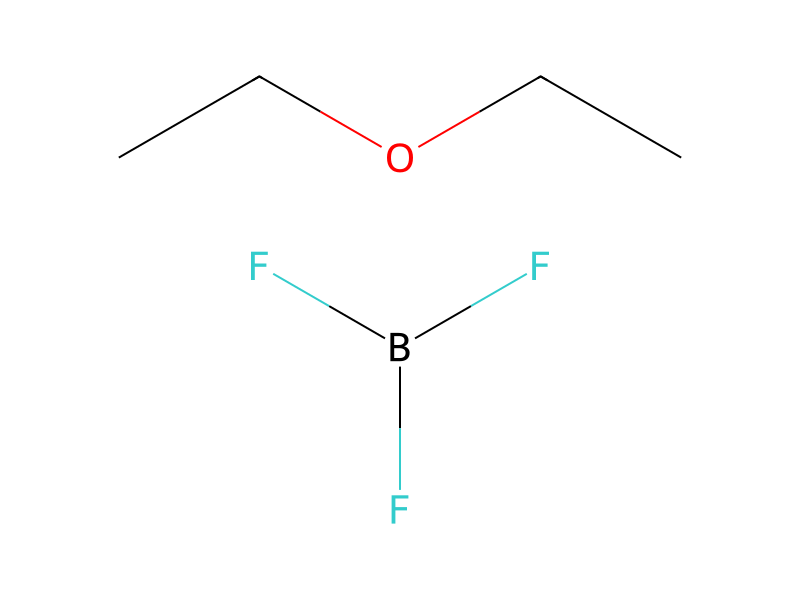
[CH2:1]=[C:2]([CH3:4])[CH3:3].[N+:5]([C:8]1[CH:9]=[C:10](/[CH:14]=[N:15]/[C:16]2[CH:23]=[CH:22][C:19]([C:20]#[N:21])=[CH:18][CH:17]=2)[CH:11]=[CH:12][CH:13]=1)([O-:7])=[O:6]>C(#N)C.B(F)(F)F.CCOCC>[CH3:1][C:2]1([CH3:4])[C:17]2[C:16](=[CH:23][CH:22]=[C:19]([C:20]#[N:21])[CH:18]=2)[NH:15][CH:14]([C:10]2[CH:11]=[CH:12][CH:13]=[C:8]([N+:5]([O-:7])=[O:6])[CH:9]=2)[CH2:3]1To a small reactor, isobutene (100 mL, 1.19 mol) was added to a mixture of boron trifluoride etherate (12 mL, 0.96 mmol) and 4-{[1-(3-nitro-phenyl)-meth-(E)-ylidene]-amino}-benzonitrile (30 g, 0.12 mol) in dry acetonitrile (300 mL), sealed. The resultant mixture was allowed to stir at 30° C. for 10 h. The reaction mixture was washed by brine and dried over anhydrous sodium sulfate. It was filtered and concentrated to provide the crude product (30 g). The residue was purified by column chromatography (silica gel, petroleum ether:ethyl acetate=5:1) to afford 4,4-dimethyl-2-(3-nitro-phenyl)-1,2,3,4-tetrahydro-quinoline-6-carbonitrile as yellow solid (10.2 g, yield: 27.8%).