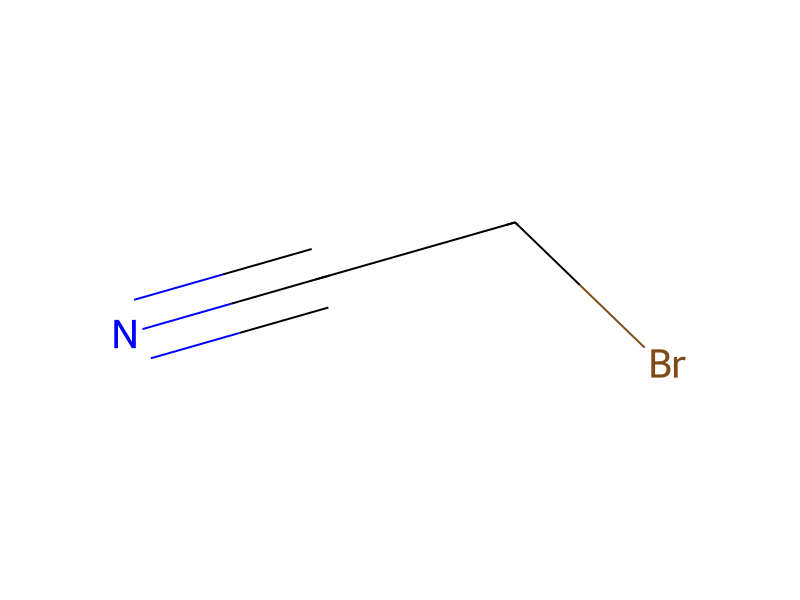
10-Aza-tricyclo[6.3.2.0*2,7*]trideca-2,4,6-trien-4-ylamine (193 mg, 1.02 mmol) was dissolved in acetone (20 mL) and Cs2CO3 (994 mg, 3.06 mmol, 3.0 eq) and bromoacetonitrile (134 mg, 1.13 mmol, 91 μL, 1.1 eq) were added. The reaction was stirred at room temperature for 2 hours and was then concentrated under reduced pressure. The residue was taken up in CH2Cl2 (10 mL) and washed with water (10 mL). The organic layer was dried (sodium sulfate), filtered, and concentrated under reduced pressure. Purification by silica gel chromatography using a gradient of 0-10% MeOH/CH2Cl2 as the eluting solvent to obtain (4-amino-10-aza-tricyclo[6.3.2.0*2,7*]trideca-2,4,6-trien-10-yl)-acetonitrile as a brown oil (123 mg, 53%). LCMS (m/e) 227 (M+1); 1H-NMR (CDCl3, 400 MHz) δ 6.87 (d, 1H, J=7.7 Hz), 6.50 (dd, 1H, J=2.4 and 7.7 Hz), 6.47 (d, 1H, J=2.3 Hz), 3.57 (bs, 2H), 3.52 (s, 2H), 3.00-2.90 (m, 2H), 2.99-2.80 (m, 2H), 2.61-2.50 (m, 2H), 2.20-2.05 (m, 2H), 1.70-1.63 (m, 2H).