StartseiteMCPWorkbenchSkills
StartseiteWorkbenchBenachrichtigungenMein Bereich
llms.txt · MCP-AnleitungDatenschutz · Nutzungsbedingungen · Supportv1.8.3
  1. Startseite
  2. /Reaktion

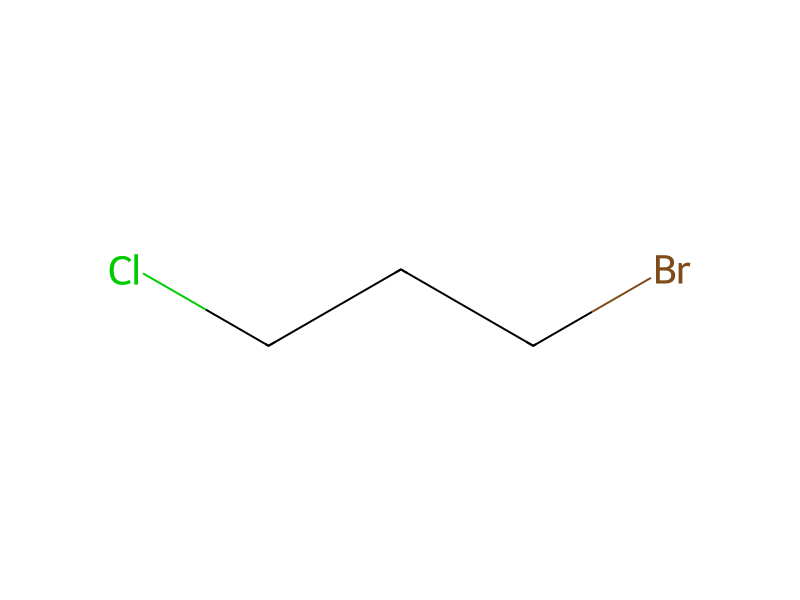
1-Bromo-3-chloropropane → 5-(3-Chloropropoxy)-2-nitrobenzaldehyde

HRID 1048733
Drucken

Reaktionsgleichung

Reaktionsgleichung von HRID 1048733
Br[CH2:2][CH2:3][CH2:4][Cl:5].[OH:6][C:7]1[CH:8]=[CH:9][C:10]([N+:15]([O-:17])=[O:16])=[C:11]([CH:14]=1)[CH:12]=[O:13].C(=O)([O-])[O-].[K+].[K+]>CN(C=O)C.C(OCC)(=O)C>[Cl:5][CH2:4][CH2:3][CH2:2][O:6][C:7]1[CH:8]=[CH:9][C:10]([N+:15]([O-:17])=[O:16])=[C:11]([CH:14]=1)[CH:12]=[O:13]
KomponentenReaktionsbedingungenVersuchsvorschriftAufarbeitungQuellen und NachweiseNotizen zur Reaktion

Komponenten

6

Edukt 3

HCID 80061-Bromo-3-chloropropaneHCID 11430Potassium CarbonateHCID 392115-Hydroxy-2-nitrobenzaldehyde

Produkt 1

HCID 233188275-(3-Chloropropoxy)-2-nitrobenzaldehydeAusbeute 87 %

Reagenzien, Katalysatoren, Lösungsmittel 2

HCID 6228DimethylformamideLösungsmittel
HCID 8857
Ethyl Acetate
Lösungsmittel

Reaktionsbedingungen

Temperatur
40 °C

Versuchsvorschrift

Compound b2 may be prepared according to reported methods (see, e.g., Gumbley, P.; Koylu, D.; Thomas, S. W. Macromolecules 2011, 44, 7956). 1-Bromo-3-chloropropane (0.650 mL, 0.00658 moles) was added to a solution of 5-hydroxy-2-nitrobenzaldehyde (1.0 g, 0.00598 moles), and potassium carbonate (1.66 g, 0.0120 moles) in anhydrous DMF (6 mL). The solution was stirred at 40° C. for 24 hours. The reaction was diluted with ethyl acetate (75 mL) and washed with saturated sodium bicarbonate solution (75 mL), water (75 mL), and brine (75 mL). The organic layer was dried with anhydrous magnesium sulfate, which was removed by filtration. The filtrate was concentrated, and the resulting residue was subject to silica gel chromatography using a gradient of 100% hexanes to 50% ethyl acetate in hexanes. The fractions containing the product were collected, and volatiles were removed by rotary evaporation. The resulting residue was dried overnight to yield 5-(3-chloropropoxy)-2-nitrobenzaldehyde as a bright-green yellow solid (yield 87%*). 1H NMR (400 MHz, CD2Cl2) δ 10.42 (s, 1H), 8.15 (d, J=9.1 Hz, 1H), 7.32 (d, J=2.9 Hz, 1H), 7.18 (dd, J=9.0, 2.9 Hz, 1H), 4.27 (t, J=5.9 Hz, 2H), 3.76 (t, J=6.3 Hz, 2H), 2.35-2.24 (m, 2H). 13C-NMR (100 MHz, CD2Cl2) δ 189.05, 163.84, 135.04, 127.84, 119.16, 114.57, 66.28, 41.74, 32.35 HRMS m/z: calculated for C10H10ClNO4 [M+H]+, 244.0371. found, 244.0366.

Aufarbeitung

  1. washwashed with saturated sodium bicarbonate solution (75 mL), water (75 mL), and brine (75 mL)
  2. dry with materialThe organic layer was dried with anhydrous magnesium sulfate, which
  3. customwas removed by filtration
  4. concentrationThe filtrate was concentrated
  5. additionThe fractions containing the product
  6. customwere collected
  7. customvolatiles were removed by rotary evaporation
  8. customThe resulting residue was dried overnight

Quellen und Nachweise

ORD-Eintrag
ord-0cbc9c23da664dc0a45018a3224a00fa
Quelldatensatz
uspto-grants-2016_07
DOI
10.6084/m9.figshare.5104873.v1
Patentnummer
US09381253B2

Notizen zur Reaktion

Auf dieser SeiteKomponentenReaktionsbedingungenVersuchsvorschriftAufarbeitungQuellen und NachweiseNotizen zur Reaktion


