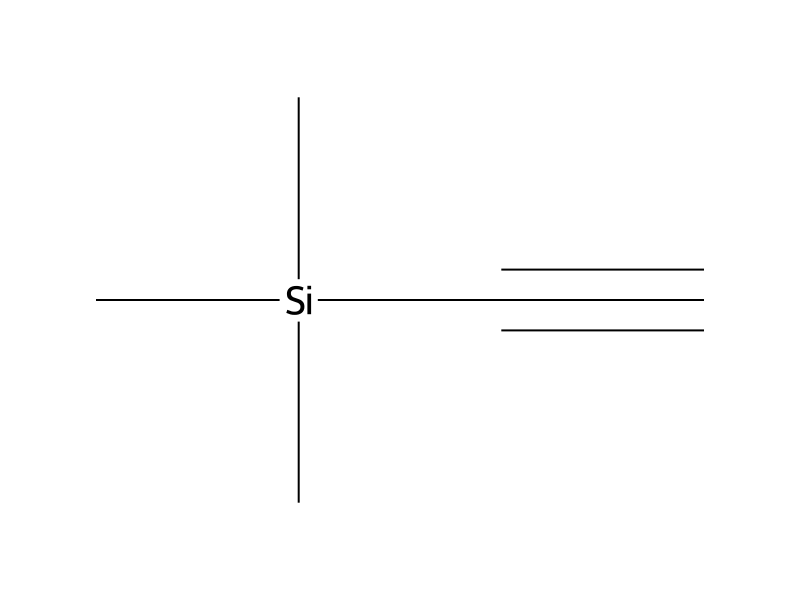
Trimethylsilylacetylene → 1-(Tetrahydro-2H-pyran-2-yl)-5-((trimethylsilyl)ethynyl)-1H-indazole
HRID 1057099
Reaktionsgleichung

Br[C:2]1[CH:3]=[C:4]2[C:8](=[CH:9][CH:10]=1)[N:7]([CH:11]1[CH2:16][CH2:15][CH2:14][CH2:13][O:12]1)[N:6]=[CH:5]2.[CH3:17][Si:18]([C:21]#[CH:22])([CH3:20])[CH3:19]>Cl[Pd](Cl)([P](C1C=CC=CC=1)(C1C=CC=CC=1)C1C=CC=CC=1)[P](C1C=CC=CC=1)(C1C=CC=CC=1)C1C=CC=CC=1.[Cu]I.C1COCC1.C(N(CC)CC)C>[O:12]1[CH2:13][CH2:14][CH2:15][CH2:16][CH:11]1[N:7]1[C:8]2[C:4](=[CH:3][C:2]([C:22]#[C:21][Si:18]([CH3:20])([CH3:19])[CH3:17])=[CH:10][CH:9]=2)[CH:5]=[N:6]1Komponenten
6