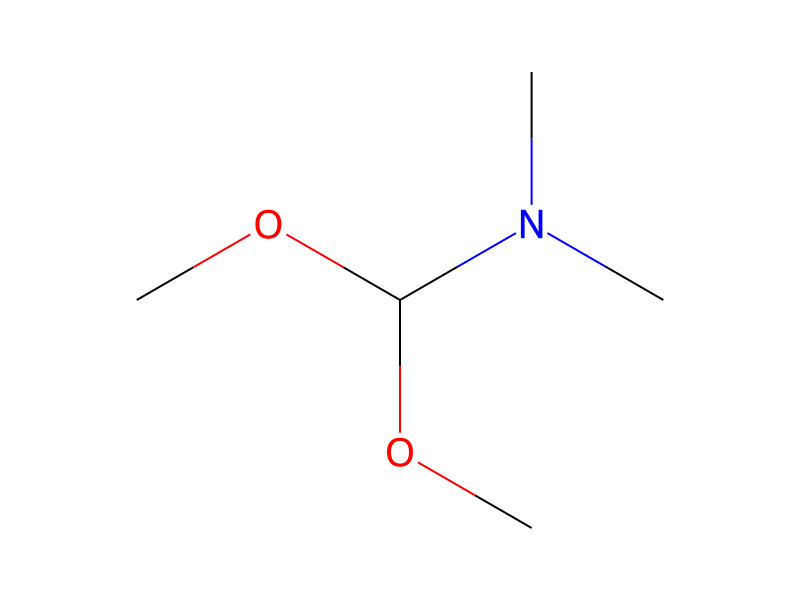
[CH3:1][C:2]1[CH:7]=[CH:6][N:5]=[C:4]([C:8]2[CH:13]=[CH:12][C:11]([CH3:14])=[C:10]([N+:15]([O-:17])=[O:16])[CH:9]=2)[CH:3]=1.C[O:19]C(OC)N(C)C>CN(C)C=O>[CH3:1][C:2]1[CH:7]=[CH:6][N:5]=[C:4]([C:8]2[CH:13]=[CH:12][C:11]([CH:14]=[O:19])=[C:10]([N+:15]([O-:17])=[O:16])[CH:9]=2)[CH:3]=1To a solution of 4-(4-methylpyridin-2-yl)-2-nitrotoluene (3.42 g) in N,N-dimethylformamide (20 ml) was added N,N-dimethylformamide dimethyl acetal (2.59 ml), and the mixture was stirred at 150° C. for 18 hours under a nitrogen atmosphere. The reaction mixture was evaporated under reduced pressure, and the residue was dissolved in tetrahydrofuran (80 ml) and water (80 ml). Sodium metaperiodate (10.59 g) was added to the solution, and the mixture was stirred at ambient temperature for 4 hours. The reaction mixture was filtered, and the filtrate was extracted with ethyl acetate. The separated organic layer was washed with brine, dried over magnesium sulfate and evaporated under reduced pressure. The residue was purified by column chromatography (silica gel 75 g, 0-1% ethanol in dichloromethane) to give 4-(4-methylpyridin-2-yl)-2-nitrobenzaldehyde (3.58 g).