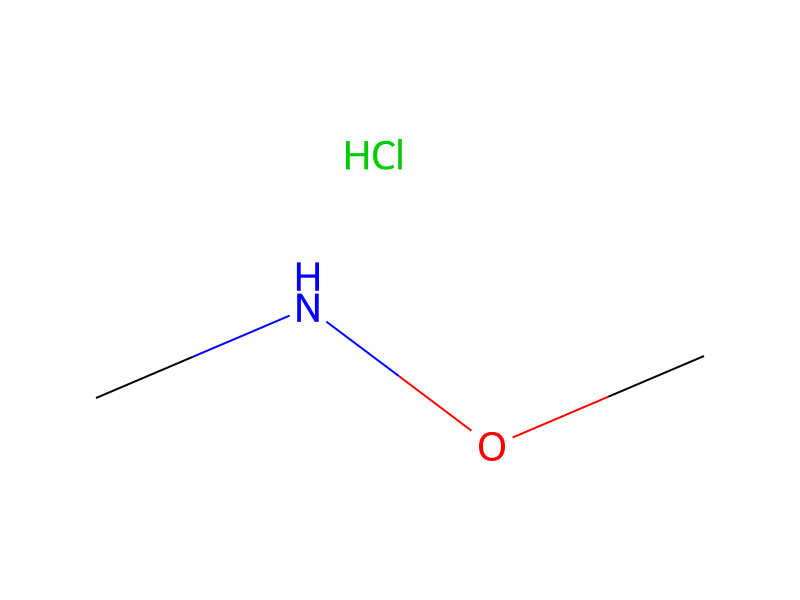
[Cl:1][C:2]1[CH:7]=[CH:6][CH:5]=[CH:4][C:3]=1[C:8]1[N:9]([C:16]2[CH:21]=[CH:20][C:19]([Cl:22])=[CH:18][CH:17]=2)[CH:10]=[C:11]([C:13](Cl)=[O:14])[N:12]=1.Cl.[CH3:24][NH:25][O:26][CH3:27].C(N(CC)CC)C>ClCCl>[Cl:1][C:2]1[CH:7]=[CH:6][CH:5]=[CH:4][C:3]=1[C:8]1[N:9]([C:16]2[CH:21]=[CH:20][C:19]([Cl:22])=[CH:18][CH:17]=2)[CH:10]=[C:11]([C:13]([N:25]([O:26][CH3:27])[CH3:24])=[O:14])[N:12]=1A solution of 2-(2-chlorophenyl)-1-(4-chlorophenyl)-1H-imidazole-4-carbonyl chloride (4.71 g, 13.4 mmol, prepared by the method described in Example 13, step 1) in 10 mL dichloromethane was added to a solution of N,O-dimethylhydroxyamine hydrochloride (1.44 g, 14.7 mmol) and triethylamine (5.6 mL, 40.2 mmol) in 60 mL dichloromethane in an ice water bath under argon with stirring. The bath was removed upon completion of addition. Stirring was continued for 1 h. Water was added and the mixture was extracted with ethyl acetate. The organic layer was dried over Na2SO4 and concentrated down under reduced pressure. The crude product was purified on silica gel, eluting with ethyl acetate to yield 2-(2-chlorophenyl)-1-(4-chlorophenyl)-N-methoxy-N-methyl-1H-imidazole-4-carboxamide as an off-white solid (4.20 g, 83%): Rf=0.22 (ethyl acetate).