StartseiteMCPWorkbenchSkills
StartseiteWorkbenchBenachrichtigungenMein Bereich
llms.txt · MCP-AnleitungDatenschutz · Nutzungsbedingungen · Supportv1.8.3
  1. Startseite
  2. /Reaktion

N-bromobutanimide → 2-Bromo-1-bromomethyl-3-nitrobenzene

HRID 1065581
Drucken

Reaktionsgleichung

Reaktionsgleichung von HRID 1065581
[Br:1][C:2]1[C:7]([N+:8]([O-:10])=[O:9])=[CH:6][CH:5]=[CH:4][C:3]=1[CH3:11].[Br:12]N1C(=O)CCC1=O>C(Cl)(Cl)(Cl)Cl>[Br:1][C:2]1[C:7]([N+:8]([O-:10])=[O:9])=[CH:6][CH:5]=[CH:4][C:3]=1[CH2:11][Br:12]
KomponentenVersuchsvorschriftAufarbeitungQuellen und NachweiseNotizen zur Reaktion

Komponenten

4

Edukt 2

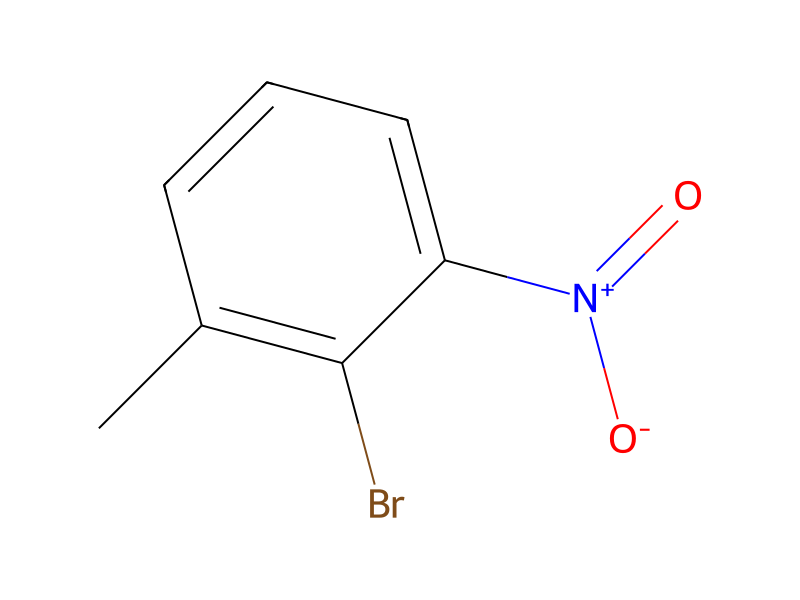
HCID 67184N-bromobutanimideHCID 2318282-Bromo-3-nitrotoluene

Produkt 1

HCID 110663422-Bromo-1-bromomethyl-3-nitrobenzeneAusbeute 90,4 %

Reagenzien, Katalysatoren, Lösungsmittel 1

HCID 5943Carbon TetrachlorideLösungsmittel

Versuchsvorschrift

A stirred solution of 1-bromo-2-methyl-6-nitrobenzene (16.2 g, 0.075 mole) in 200 ml of carbon tetrachloride was irradiated and heated at reflux with a 250 watt brooder lamp. N-bromosuccinimide (13.5 g, 0.075 mole) was added to the refluxing reaction mixture, and the mixture was stirred for approximately 23 hours. The mixture was cooled, filtered, and washed with two 200 ml portions of saturated aqueous sodium chloride solution. The organic phase was passed through phase separation filter paper. The filtrate was evaporated under reduced pressure to give 2-bromo-1-bromomethyl-3-nitrobenzene (20 g).

Aufarbeitung

  1. temperatureheated
  2. temperatureat reflux with a 250 watt brooder lamp
  3. temperatureThe mixture was cooled
  4. filtrationfiltered
  5. washwashed with two 200 ml portions of saturated aqueous sodium chloride solution
  6. customThe organic phase was passed through phase separation
  7. filtrationfilter paper
  8. customThe filtrate was evaporated under reduced pressure

Quellen und Nachweise

ORD-Eintrag
ord-d03f1c232dac41b58abd871426e77eea
Quelldatensatz
uspto-grants-1982_05
DOI
10.6084/m9.figshare.5104873.v1
Patentnummer
US04329518

Notizen zur Reaktion

Auf dieser SeiteKomponentenVersuchsvorschriftAufarbeitungQuellen und NachweiseNotizen zur Reaktion