tert-Butyl bromoacetate → Benzyl 1-(tert-butoxycarbonylmethyl)-2-indolecarboxylate
HRID 1071692
Reaktionsgleichung

[CH2:1]([O:8][C:9]([C:11]1[NH:12][C:13]2[C:18]([CH:19]=1)=[CH:17][CH:16]=[CH:15][CH:14]=2)=[O:10])[C:2]1[CH:7]=[CH:6][CH:5]=[CH:4][CH:3]=1.[C:20]([O:24][C:25](=[O:28])[CH2:26]Br)([CH3:23])([CH3:22])[CH3:21]>CN(C)C=O>[CH2:1]([O:8][C:9]([C:11]1[N:12]([CH2:26][C:25]([O:24][C:20]([CH3:23])([CH3:22])[CH3:21])=[O:28])[C:13]2[C:18]([CH:19]=1)=[CH:17][CH:16]=[CH:15][CH:14]=2)=[O:10])[C:2]1[CH:3]=[CH:4][CH:5]=[CH:6][CH:7]=1Komponenten
4
Edukt 2
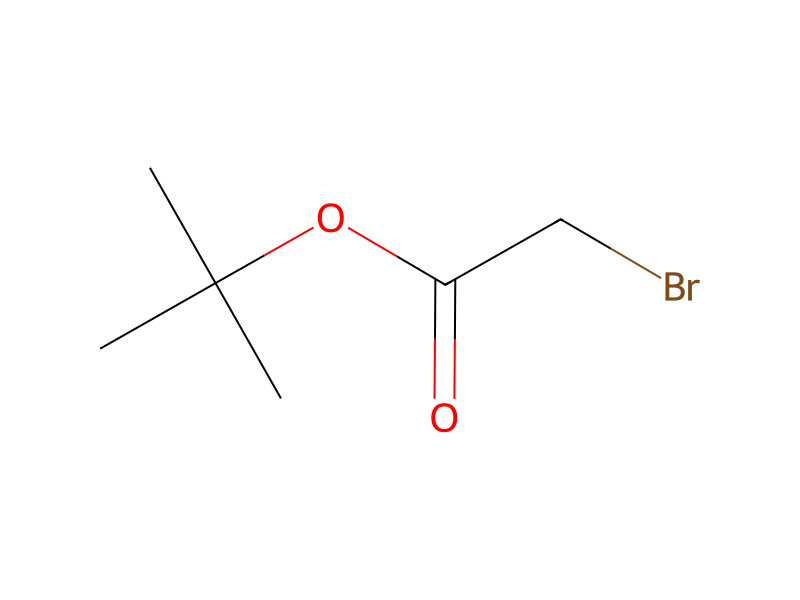

Produkt 1

Reagenzien, Katalysatoren, Lösungsmittel 1

Versuchsvorschrift
To a solution of 18.80 g 1H-indole-2-carboxylic acid benzyl ester in 70 ml N,N-dimethylformamide 1.98 g sodium hydride were added at 0C. After stirring for 1 hour 15.91 ml bromo-acetic acid tert.-butyl ester were added to the mixture and the reaction mixture was stirred for 2 hours at room temperature. After removal of the solvent under reduced pressure the residue was partitioned between 300 ml water and 300 ml dichloromethane. The aqueous layer was washed twice with additional 200 ml dichloromethane. Subsequently the combined organic phases were washed with a saturated aqueous solution of sodium chloride. After filtration the solvent was removed under reduced pressure and the residue was crystallized from ethoxy-ethane/heptane. The product was obtained as a white solid.