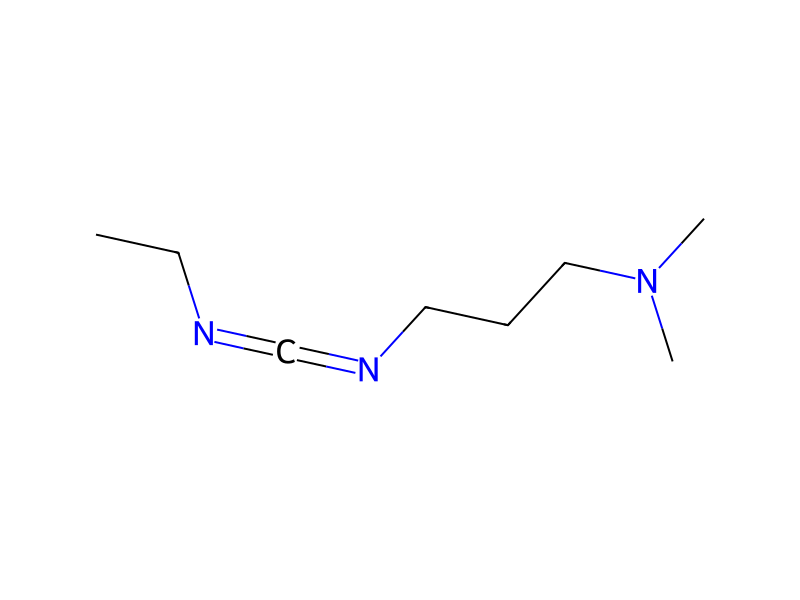
[CH3:1][N:2]1[C:6]2[C:7]([CH3:14])=[C:8]([C:11]([OH:13])=[O:12])[CH:9]=[CH:10][C:5]=2[S:4][C:3]1=[O:15].[C:16]1(=O)[CH2:21][CH2:20][CH2:19][C:18](=[O:22])[CH2:17]1.C(N=C=NCCCN(C)C)C>C(#N)C>[CH3:1][N:2]1[C:6]2[C:7]([CH3:14])=[C:8]([C:11]([O:13][C:16]3[CH2:21][CH2:20][CH2:19][C:18](=[O:22])[CH:17]=3)=[O:12])[CH:9]=[CH:10][C:5]=2[S:4][C:3]1=[O:15]1.1 g (5 mmol) of 3,4-dimethylbenzothiazol-2-one-5-carboxylic acid, 0.58 g of 1,3-cyclohexanedione and 1.25 g of ethyl(3′-dimethylaminopropyl)carbodiimide were dissolved in 40 ml of acetonitrile, and the solution was stirred at 50° C. for 4 hours. After the reaction had ended, the precipitate was filtered off and the solution was concentrated. The residue was taken up in water and extracted with methylene chloride. The organic phase was washed and dried and the solvent was then removed. Chromatography of the residue on silica gel (mobile phase: cyclohexane/ethyl acetate, gradient from 100:0 to 50:50) gave 0.77 g (2.4 mmol, 48% yield) of cyclohexenone-3-yl 3,4-dimethylbenzothiazol-2-one-5-carboxylate of m.p. 144° C.-146° C.