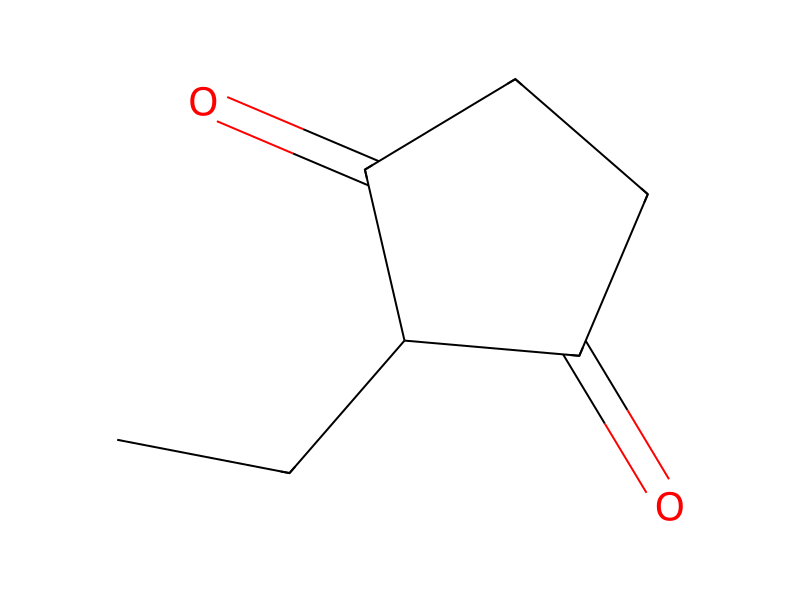
2-Ethylcyclopentane-1,3-dione → 2-Ethyl-2-(6-m-methoxyphenyl-5-methyl-3-oxohexyl)cyclopentane-1,3-dione
HRID 1077140
Reaktionsgleichung

C(N(CC)[CH2:4][CH2:5][C:6](=[O:19])[CH2:7][CH:8]([CH3:18])[CH2:9][C:10]1[CH:15]=[CH:14][CH:13]=[C:12]([O:16][CH3:17])[CH:11]=1)C.CC(CC1C=CC=C(OC)C=1)CC(=O)C=C.[CH2:38]([CH:40]1[C:44](=[O:45])[CH2:43][CH2:42][C:41]1=[O:46])[CH3:39]>[OH-].[K+]>[CH2:38]([C:40]1([CH2:4][CH2:5][C:6](=[O:19])[CH2:7][CH:8]([CH3:18])[CH2:9][C:10]2[CH:15]=[CH:14][CH:13]=[C:12]([O:16][CH3:17])[CH:11]=2)[C:44](=[O:45])[CH2:43][CH2:42][C:41]1=[O:46])[CH3:39]Komponenten
5