Reaktionsgleichung

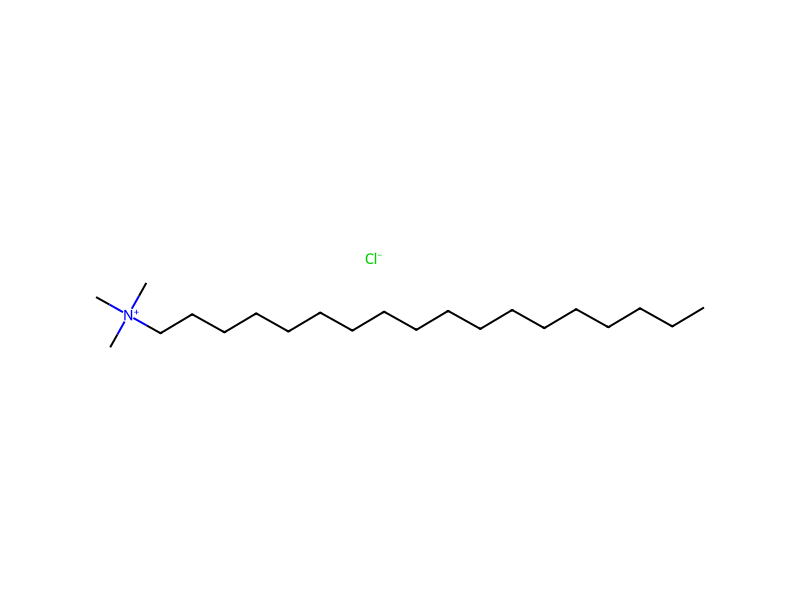
[Cl-].C([N+](C)(C)C)CCCCCCCCCCCCCCCCC.[Cl:24][C:25]1[CH:26]=[C:27]([N+:32]([O-:34])=[O:33])[CH:28]=[CH:29][C:30]=1[Cl:31].[F-:35].[K+]>>[Cl:24][C:25]1[CH:26]=[C:27]([N+:32]([O-:34])=[O:33])[CH:28]=[CH:29][C:30]=1[F:35].[Cl:24][C:25]1[CH:26]=[C:27]([N+:32]([O-:34])=[O:33])[CH:28]=[CH:29][C:30]=1[Cl:31]Komponenten



Reaktionsbedingungen
- Temperatur
- 180 °C
Versuchsvorschrift
70 g (0.2 mol) of octadecyltrimethylammonium chloride were dissolved in a melt of 2020 g (10.5 mol) of 3,4-dichloronitrobenzene at 50° C. with stirring, 580 g (10.0 mol) of potassium fluoride were suspended at 100° C. and this suspension was heated to 180° C. for 9 h. After cooling to about 60° C., the reaction suspension was filtered with suction, the liquid adhering to the residue was distilled off at 150° C./70 torr and the combined organic phases were fractionated with the addition of an auxiliary base as an acid scavenger. 1445 g (90.6%, relative to 3,4-dichloronitrobenzene converted) of 3-chloro-4-fluoronitrobenzene and 324 g (13.6%, relative to 3,4-dichioronitrobenzene employed) of unreacted 3,4-dichloronitrobenzene were obtained.
Aufarbeitung
- customwere suspended at 100° C.
- temperatureAfter cooling to about 60° C.
- filtrationthe reaction suspension was filtered with suction
- distillationthe liquid adhering to the residue was distilled off at 150° C./70 torr
- additionthe combined organic phases were fractionated with the addition of an auxiliary base as an acid scavenger
Quellen und Nachweise
- ORD-Eintrag
- ord-75a60b16d1cf4861ae8b4f00980cd542
- Quelldatensatz
- uspto-grants-1996_08
- Patentnummer
- US05545768
Verknüpfte Notizen
Wird geladen…