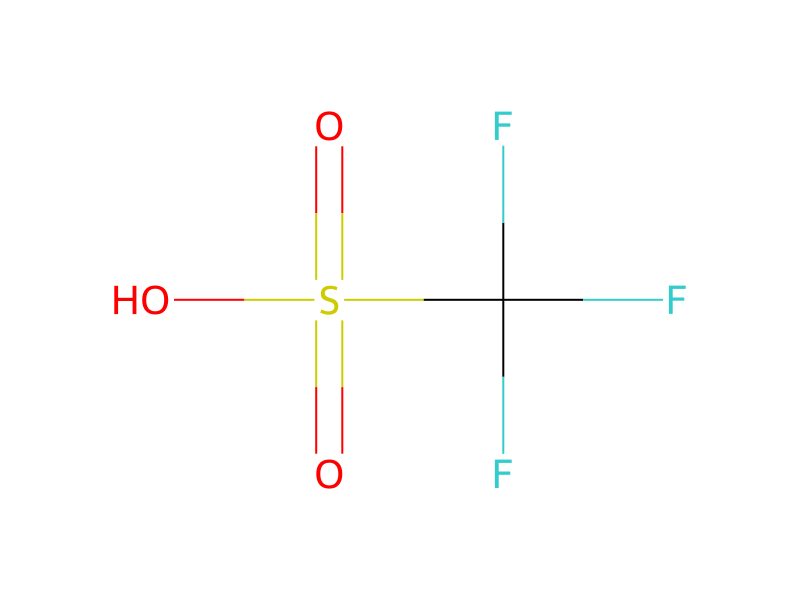
A three liter round-bottom flask fitted with a reflux condenser and a gas inlet was charged with 9-fluorenone (36.6 g, 201 mmol) and excess ortho-xylene (710 ml) and stirred under nitrogen atmosphere. Trifluoromethanesulfonic acid (30.0 g, 201 mmol) was slowly added to the solution causing the solution to turn brown/black. The reaction mixture was warmed to 120+/-2° C. for 2 days. A small sample of the reaction mixture (0.5 mol) was removed, neutralized with saturated aqueous NaHCO3 and the organic layer was spotted on a silica TLC plate and eluted with hexanes. Chromatographic results demonstrated complete conversion of the starting materials and the development of a new single fluorescing spot. The entire reaction mixture was neutralized with saturated aqueous NaHCO3, diluted with ethyl acetate (730 ml) decolorized with activated carbon, dried with magnesium sulfate and concentrated to a pale yellow powder. The product was triturated with ethanol and ethyl acetate to afford 50 g (66%) of crude beige product, mp 168°-70° C., which was sufficiently pure for the next step. IR (KBr) 3065w, 3042w, 3020w, 2970w, 2960s, 2945w, 2880vw, 1610vw, 1502m, 1475w, 1448s, 1384w, 1022w, 827w, 812w, 742 +/-2 cm-1.