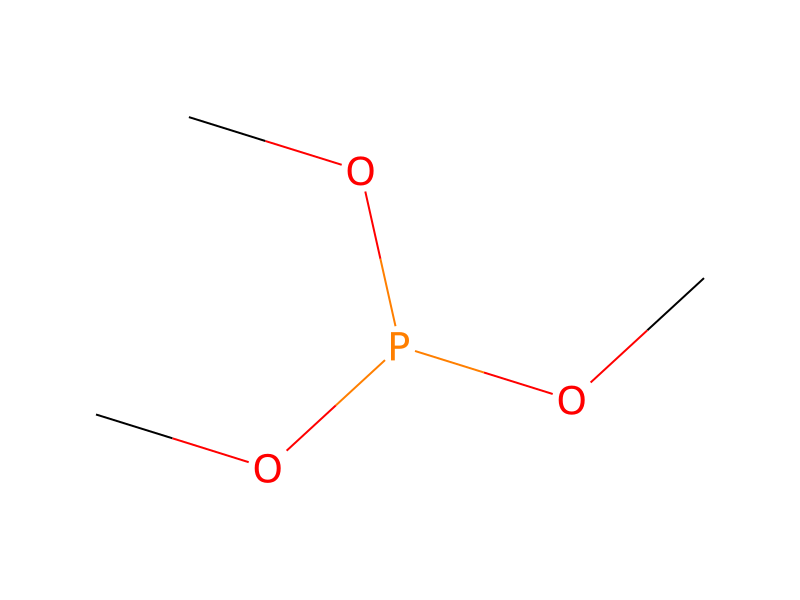
Trimethyl phosphite → HCID 14877956, Verbindung
HRID 1085749
Reaktionsgleichung

[F:1][C:2]1[CH:7]=[CH:6][C:5]([C:8]([C:17]2[CH:22]=[CH:21][C:20]([F:23])=[CH:19][CH:18]=2)=[C:9]([N:12]2[CH:16]=[N:15][N:14]=[N:13]2)[CH2:10]Br)=[CH:4][CH:3]=1.[CH3:24][O:25][P:26]([O:29]C)[O:27][CH3:28]>>[F:1][C:2]1[CH:7]=[CH:6][C:5]([C:8]([C:17]2[CH:22]=[CH:21][C:20]([F:23])=[CH:19][CH:18]=2)=[C:9]([N:12]2[CH:16]=[N:15][N:14]=[N:13]2)[CH2:10][P:26](=[O:29])([O:27][CH3:28])[O:25][CH3:24])=[CH:4][CH:3]=1Komponenten
3


Versuchsvorschrift
A suspension of 3,3-bis(4-fluorophenyl)-1-bromo-2-(tetrazol-1-yl)-2-propene (108 mg, 0.29 mmol) and trimethylphosphite (4 mL, 34 mmol) was heated to reflux under an inert atmosphere for five minutes. After cooling to room temperature, excess trimethylphosphite was evaporated under reduced pressure to give a pale crystalline material. The crude product was crystallized from a 10:1 mixture of hexanes: ethyl acetate to give 98 mg (83%) of the title compound as rhombic, colorless crystals; m.p.=132.8-133.7° C.