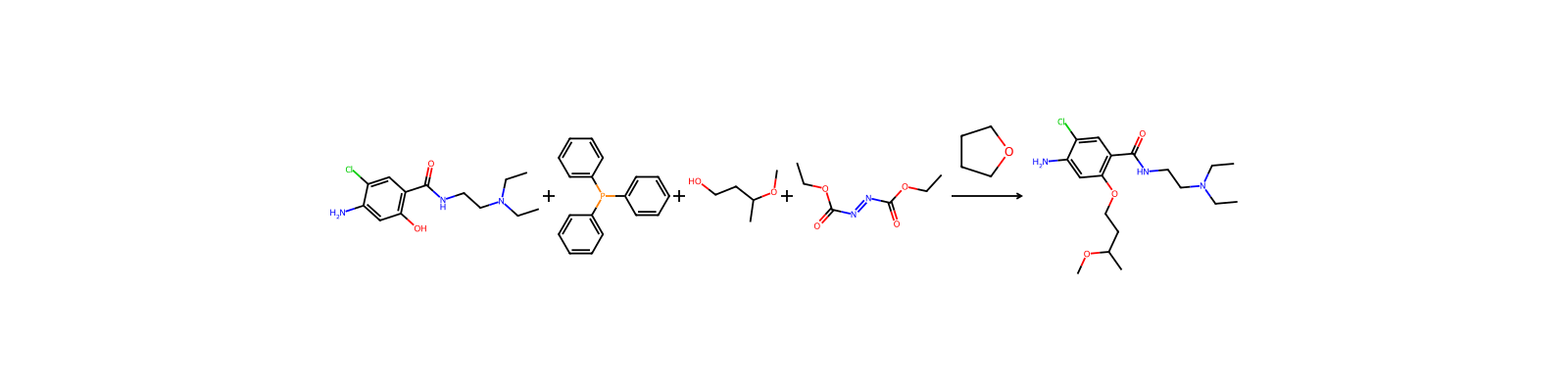
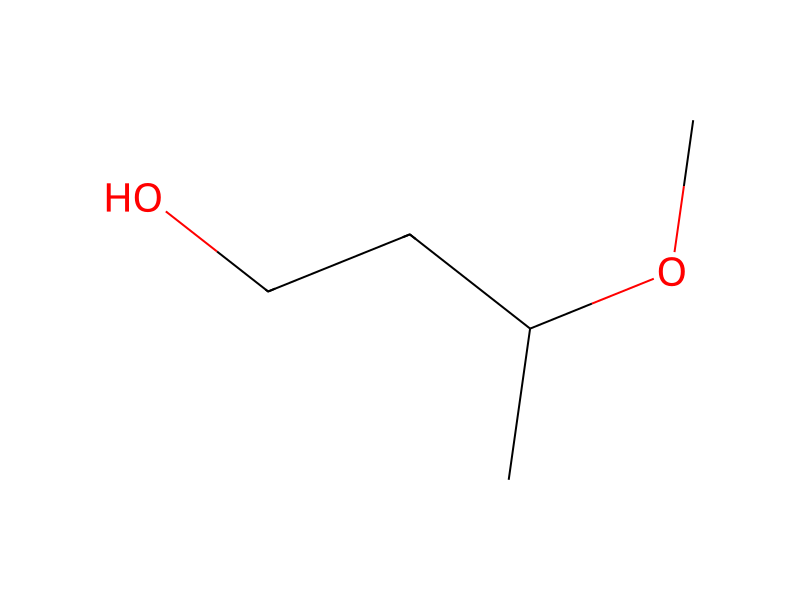
[NH2:1][C:2]1[C:17]([Cl:18])=[CH:16][C:5]([C:6]([NH:8][CH2:9][CH2:10][N:11]([CH2:14][CH3:15])[CH2:12][CH3:13])=[O:7])=[C:4]([OH:19])[CH:3]=1.C1(P(C2C=CC=CC=2)C2C=CC=CC=2)C=CC=CC=1.[CH3:39][O:40][CH:41]([CH3:45])[CH2:42][CH2:43]O.N(C(OCC)=O)=NC(OCC)=O>O1CCCC1>[NH2:1][C:2]1[C:17]([Cl:18])=[CH:16][C:5]([C:6]([NH:8][CH2:9][CH2:10][N:11]([CH2:12][CH3:13])[CH2:14][CH3:15])=[O:7])=[C:4]([O:19][CH2:43][CH2:42][CH:41]([O:40][CH3:39])[CH3:45])[CH:3]=1A stirred solution of 4-amino-5-chloro-N-[2-(diethylamino)ethyl]-2-hydroxybenzamide (1.715 g, 6 mmoles; prepared according to Preparation 1B), triphenylphosphine (1.58 g, 6 mmoles), 3-methoxy-1-butanol (0.62 g, 6 mmoles) in dry tetrahydrofuran (50 ml) was treated dropwise with diethyl azodicarboxylate (1.1 g of 95% purity material, 6 mmoles). The solution was left to stir overnight. After evaporation of the solvent the residue was dissolved in methylene chloride. The solution was washed with 0.4N NaOH, water, dried and the solvent evaporated. The residue was chromatographed over deactivated silica using methylene chloride (100), methanol (2.5), ammonium hydroxide (0.5) solvent system. The appropriate fractions were combined and the solvent evaporated. The residue (1.7 g) was crystallized from toluene to yield 1.17 g (52%) of the title compound, m.p. 76°-78° C.
Wird geladen…