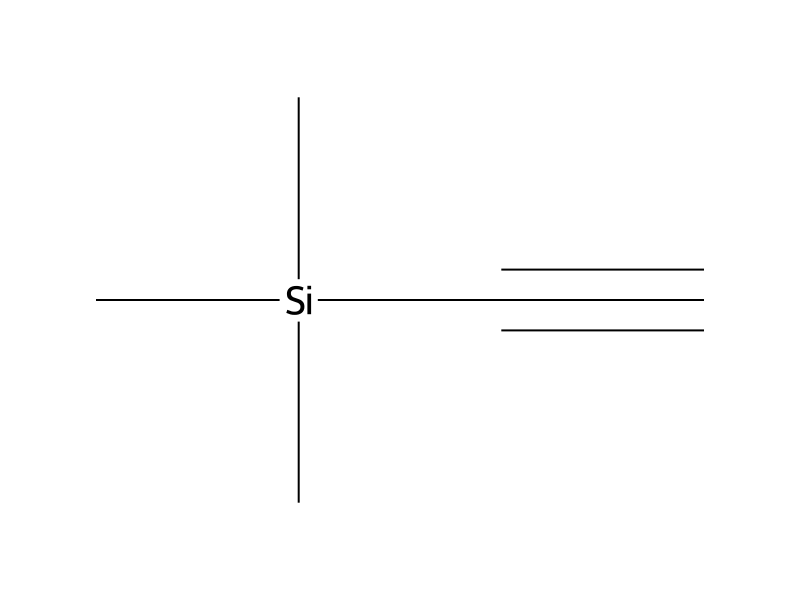
Trimethylsilylacetylene → 4-Ethyl-1-[4-(2-trimethylsilylethynyl)-phenyl]2,6,7-trioxabicyclo[2,2,2]octane
HRID 1089136
Reaktionsgleichung

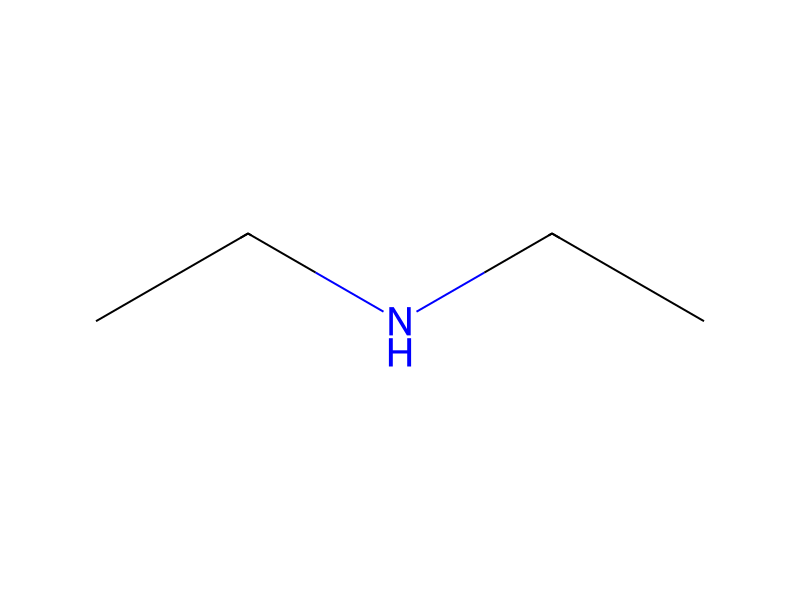
[CH2:1]([C:3]12[CH2:10][O:9][C:6]([C:11]3[CH:16]=[CH:15][C:14](I)=[CH:13][CH:12]=3)([O:7][CH2:8]1)[O:5][CH2:4]2)[CH3:2].[CH3:18][Si:19]([C:22]#[CH:23])([CH3:21])[CH3:20]>C(NCC)C>[CH2:1]([C:3]12[CH2:10][O:9][C:6]([C:11]3[CH:16]=[CH:15][C:14]([C:23]#[C:22][Si:19]([CH3:21])([CH3:20])[CH3:18])=[CH:13][CH:12]=3)([O:7][CH2:8]1)[O:5][CH2:4]2)[CH3:2]Komponenten
4
Edukt 2

Produkt 1

Reagenzien, Katalysatoren, Lösungsmittel 1
Versuchsvorschrift
Bis-triphenylphosphine palladium dichloride (60 mg) and cuprous iodide (10 mg) were added to a stirred solution of 4-ethyl-1-(4-iodophenyl)-2,6,7-trioxabicyclo[2,2,2]octane (1.5 gms) and trimethylsilylacetylene (0.92 ml) in dry diethylamine (40 ml) under nitrogen. The resulting mixture was stirred at room temperature for 16 hours. After this time the solvent was removed under vacuum and the residue extracted with diethylether. The ethereal solution was washed with water, dried over anhydrous magnesium sulphate and evaporated in vacuo. The residue was purified by column chromatography on alumina, eluting with 30% dichloromethane in hexane saturated with ammonia. 4-Ethyl-1-[4-(2-trimethylsilylethynyl)-phenyl]-2,6,7-trioxabicyclo[2,2,2]octane (1.2 gms) was obtained as an off-white solid (1.2 gms) after recrystallisation from hexane.