4-Hydroxymethylpyridine → ethyl 5-fluoro-1-[(pyridin-4-yl)methyl]-1H-indole-2-carboxylate
Reaktionsgleichung

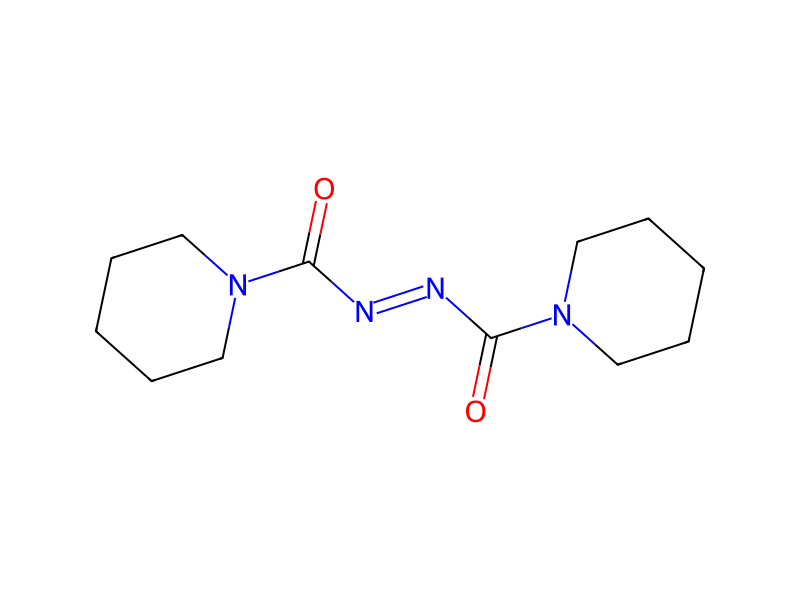
N(C(N1CCCCC1)=O)=NC(N1CCCCC1)=O.[F:19][C:20]1[CH:21]=[C:22]2[C:26](=[CH:27][CH:28]=1)[NH:25][C:24]([C:29]([O:31][CH2:32][CH3:33])=[O:30])=[CH:23]2.[N:34]1[CH:39]=[CH:38][C:37]([CH2:40]O)=[CH:36][CH:35]=1>C1(C)C=CC=CC=1>[F:19][C:20]1[CH:21]=[C:22]2[C:26](=[CH:27][CH:28]=1)[N:25]([CH2:40][C:37]1[CH:38]=[CH:39][N:34]=[CH:35][CH:36]=1)[C:24]([C:29]([O:31][CH2:32][CH3:33])=[O:30])=[CH:23]2Komponenten
5
Edukt 3


Produkt 1

Reagenzien, Katalysatoren, Lösungsmittel 1

Reaktionsbedingungen
- Temperatur
- 20 °C
Versuchsvorschrift
A solution of 5.5 g (21.72 mmol) of 1,1′-azodicarbonyl-dipiperidine, in solution in 15 ml of dry toluene, is added, under argon at 20° C., dropwise, to a solution of 3 g (14.48 mmol) of ethyl 5-fluoro-1H-indole-2-carboxylate, 2.37 g (21.72 mmol) of 4-pyridylcarbinol and 5.45 ml (21.72 mmol) of n-tributylphosphine in 200 ml of toluene. The mixture is stirred at 20° C. for 48 h. The reaction mixture is subsequently concentrated under reduced pressure. The residue is purified by silica column chromatography (eluent: heptane/ethyl acetate). 3.2 g of the expected product are thus isolated, which product is used as it is in the subsequent synthesis.
Aufarbeitung
- concentrationThe reaction mixture is subsequently concentrated under reduced pressure
- customThe residue is purified by silica column chromatography (eluent: heptane/ethyl acetate)
Quellen und Nachweise
- ORD-Eintrag
- ord-c92795dc8c2d45d1a1b10dd8956f8ed7
- Quelldatensatz
- uspto-grants-2012_03
- Patentnummer
- US08143248B2
Notizen zur Reaktion
Wird geladen…